Case studies
Incense Wholesale Suppliers: What We Actually Delivered
Five programmes, each written to the same four parts: the situation before, the constraint, what changed in the specification, and the result with the way it was counted. Buyers are described rather than named, because we have not asked for permission to name them.
No quotes. No unit prices. No order volumes. The reasons for all three are set out further down this page.
The programmes
Each one with its result, and how that result was counted
Two Oud Oils and a Filled Retail Vial, in One Season
Two oil grades and the filled retail vial from one supplier, so the fill schedule stayed inside one timetable.
Perfumery and private label · Saudi Arabia · since 2022
A Document Pack That Arrives Before the Container
Three border holds in six months under the previous supplier, fixed by moving when the documents are produced.
Wholesale distribution into specialty retail · Germany · since 2022
Koh-Grade Material a Blender Does Not Have to Correct For
Single-block material and a GC-MS report tied to the lot, so the blender stopped correcting every batch.
Incense manufacture · Japan · since 2021
Full Ingredient Disclosure for a Temple Cooperative
A previous supplier had substituted filler without disclosure. The fix was printing the breakdown on the box.
Religious institution procurement · Japan · since 2024
A Launch That Started at Published Minimums
A first order at published minimums rather than a negotiated exception, and a cap redesign found at ten units.
Online retail · United States · since 2023
Before you read them
What a useful case study has to contain
What a useful case study needs, and why most of them do not have it. A buyer reading one is trying to answer a single question: has this supplier solved a problem shaped like mine? That question is answered by numbers and specification changes. It is not answered by adjectives about service. So the format below has four fixed parts, and none of them is a quote.
First, the situation before. What was the buyer selling, into which channel, and what specifically was going wrong. Second, the constraint. Every real programme has one: a price ceiling, a lead time, a shelf date, a regulatory requirement that ruled out the obvious answer. Third, what changed in the specification. Not that we worked closely together, but which number moved and to what.
Fourth, the result, with the measurement method attached. A breakage rate is only meaningful if you know whether it was counted at the port or at the shelf. A reorder rate is only meaningful over a stated period. Every result on these pages carries the counting point next to it, and where we cannot give a number because the buyer considers it commercially sensitive, we say so in that sentence rather than substituting a vaguer claim.
Each case also carries a paragraph on what went wrong during the engagement. That paragraph is the one worth reading closely. A programme described as smooth from end to end has either been sanded down for publication or was too small to test anything.
In more detail
What incense wholesale suppliers should publish, and what we will not
Numbers we publish: lead time actually achieved against lead time quoted, reorder interval over a stated period, consignments cleared or held with the counting point named, and any specification that changed. All of these are checkable by the buyer involved, which is why they are worth printing.
Numbers we do not publish: unit prices, margins, or the buyer’s order volumes, unless the buyer explicitly asks us to. Those belong to their commercial position rather than ours to disclose. A supplier casual about that on someone else’s programme will be casual about yours.
Claims we do not make at all: that a change we made caused a revenue increase. Too many other things move at the same time for that to be honest. We tell you what we changed and what happened to the number we can actually attribute, and leave the commercial conclusion to you.
One more line worth stating plainly. Where a result depends on a laboratory measurement we did not run and cannot produce the record for, it is not on these pages. Some of the more impressive-sounding numbers from these programmes fall into that category, and they have been left out rather than rounded into prose.
Watch
Inside the plant
Raw material, the forming equipment, racks of finished incense, and one lit at the end.
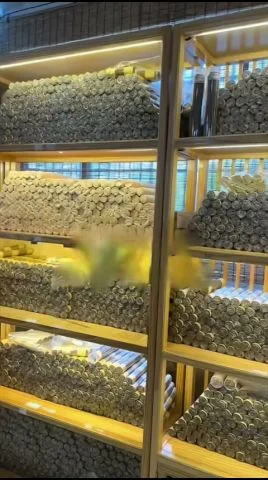
Inside the plant
Raw material, the forming equipment, racks of finished incense, and one lit at the end.
Context
Why there are no testimonials on this page
A testimonial is a quote that survived approval on both sides. Everything specific enough to be useful is exactly what gets removed during that approval, so what reaches the page is warm and empty. We would rather publish nothing than publish that, and we would rather you judged us on the specification pages, which are checkable.
There is a second reason, less flattering to us. A page of testimonials is easy to write and impossible to verify, which makes it the cheapest possible signal. Buyers in this category have seen enough of them to discount them entirely. Spending your attention on them would be a poor trade for both of us.
What we do instead is offer the introduction. Tell us the market and the format, and we will connect you with a buyer running something comparable who has agreed to take enquiries. If we do not have one in your segment we will say that plainly rather than substituting a general reference.
Practicalities
What to ask a reference buyer
Four questions are worth more than any written case study. What went wrong, and how was it handled. How close was the actual lead time to the quoted one. Did a batch ever drift, and what happened. And would you place the next order without a sample.
The fourth is the one that matters. A buyer who reorders without sampling is telling you the reproducibility holds. A buyer who samples every time is telling you something else, whatever they say about service.
If none of these match
Programmes we do not have a case for yet
These five cover perfumery, specialty distribution, contract incense manufacture, temple supply and a small online launch. Hospitality is missing, and so is anything at container scale into a single retail chain. We are not going to write those up from adjacent experience.
If your programme looks like one of the gaps, that is worth knowing before you spend time on us. Say what you are buying and where it is going, and we will tell you whether we have done the shape of it before, or whether you would be the first.
Want a reference for your market?
Tell us the region and the channel and we will connect you with a buyer who has agreed to take enquiries — assuming one exists, and we will say so if not.
The specifications behind every programme above are on the product pages, including the ones still outstanding, marked as outstanding. How a programme starts is set out under batch sampling, and who you would be dealing with is under about us.