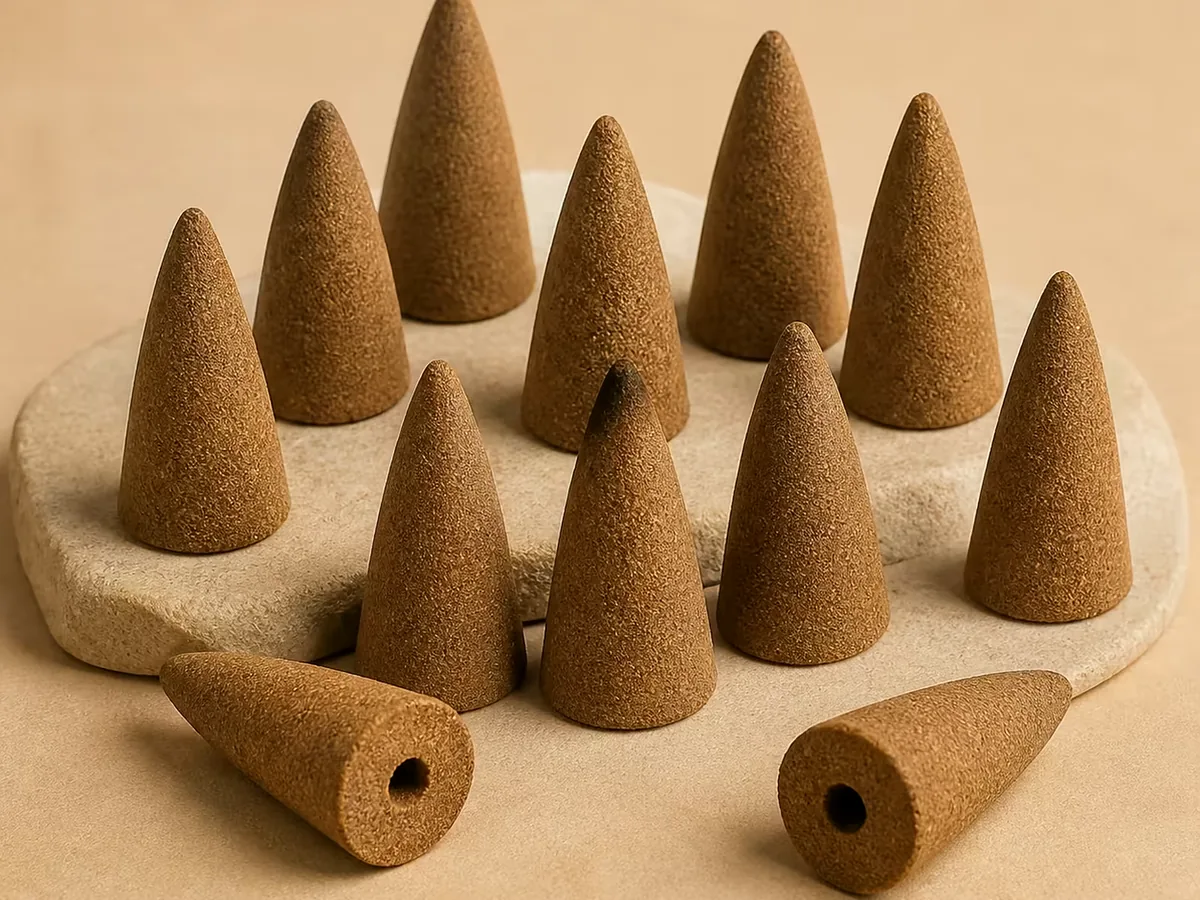
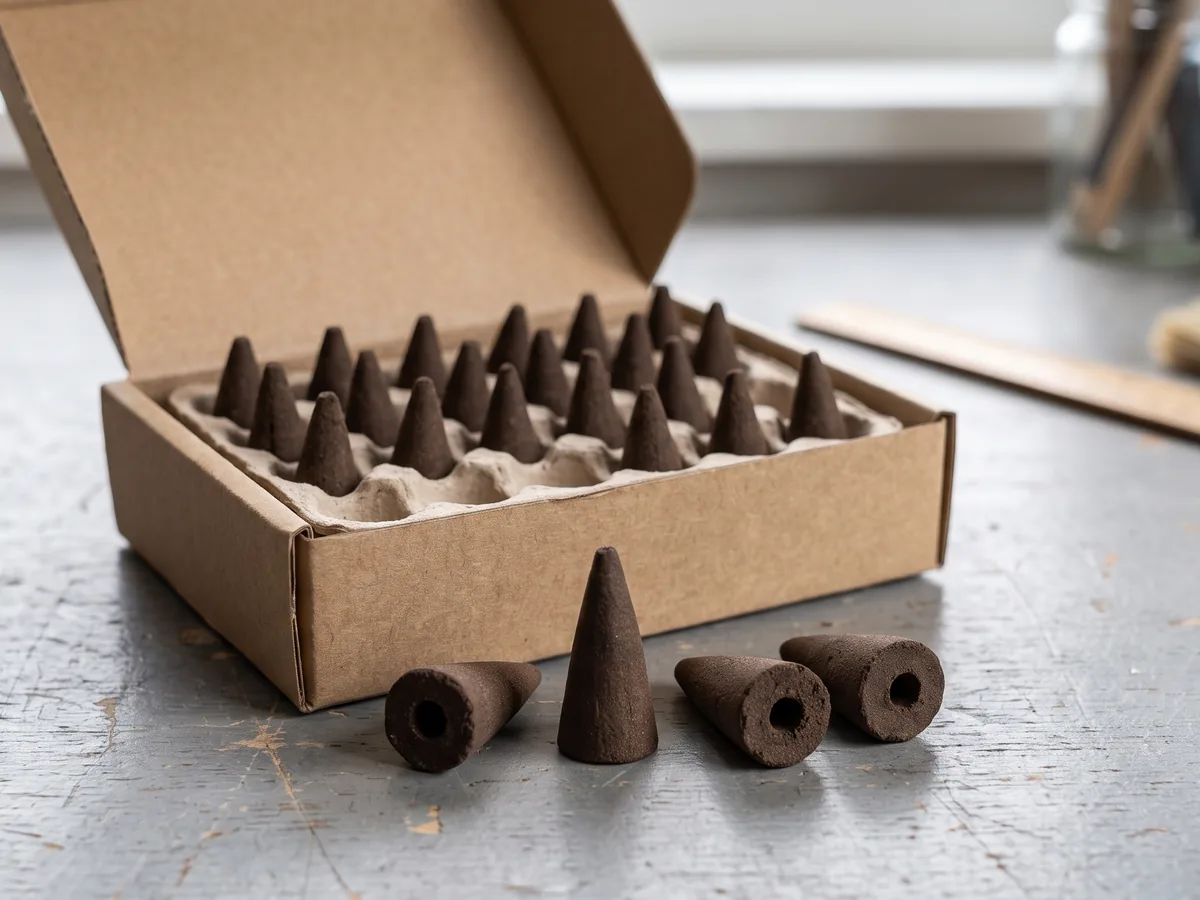
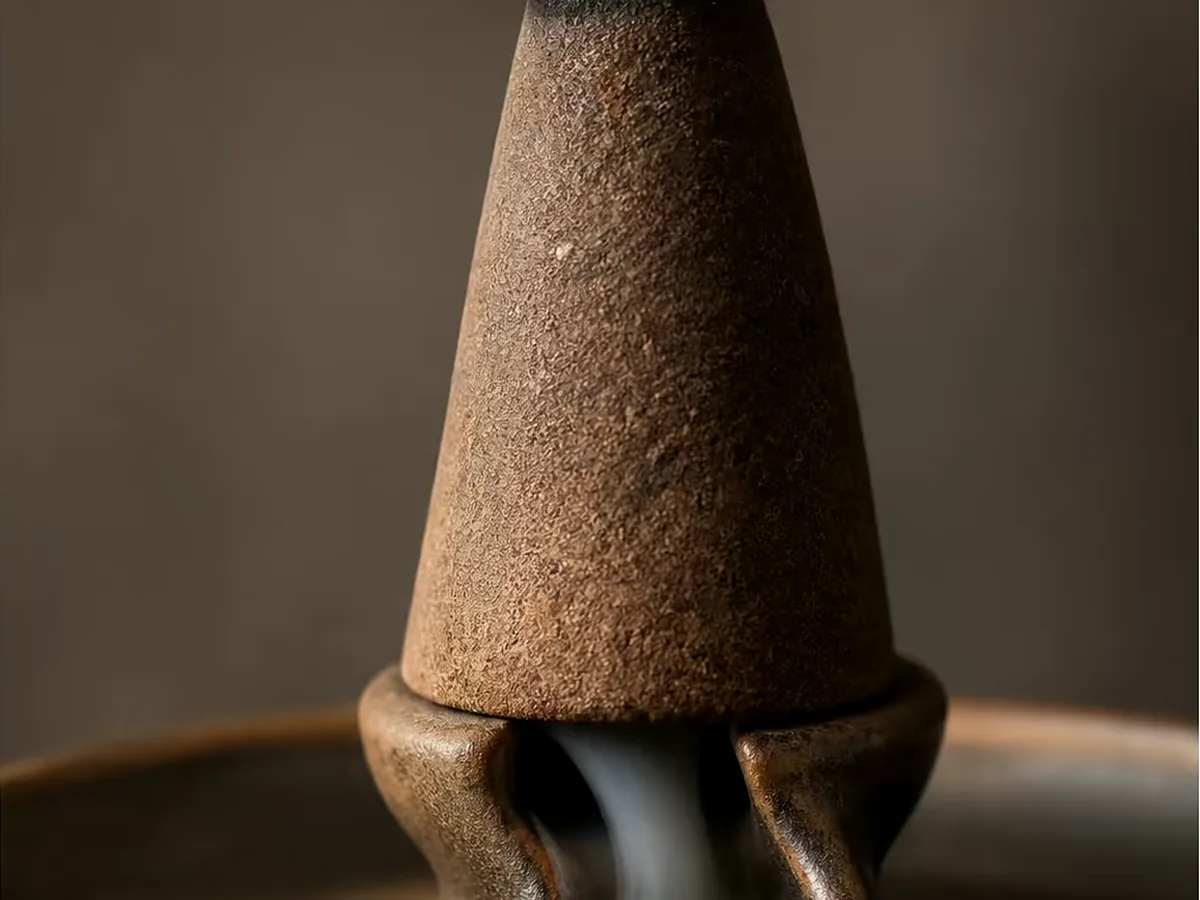
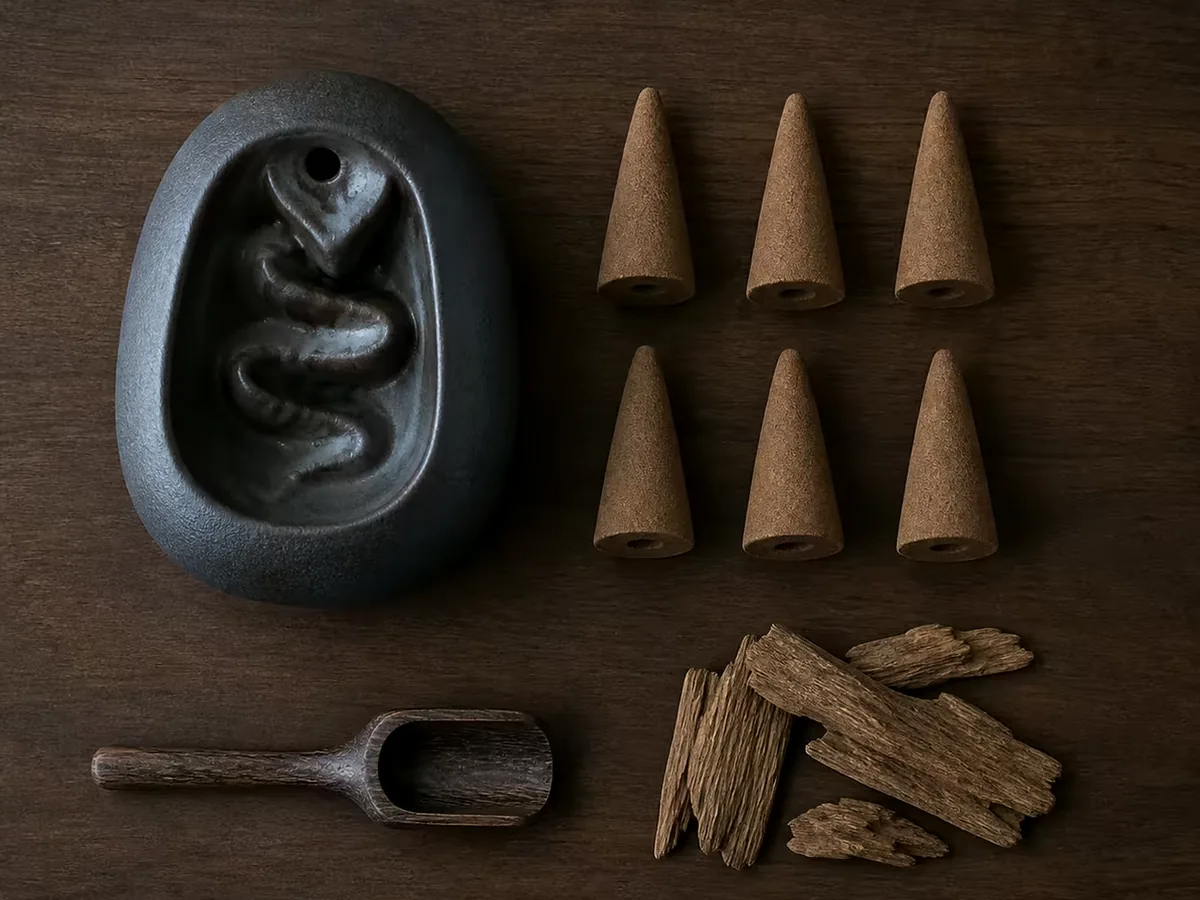
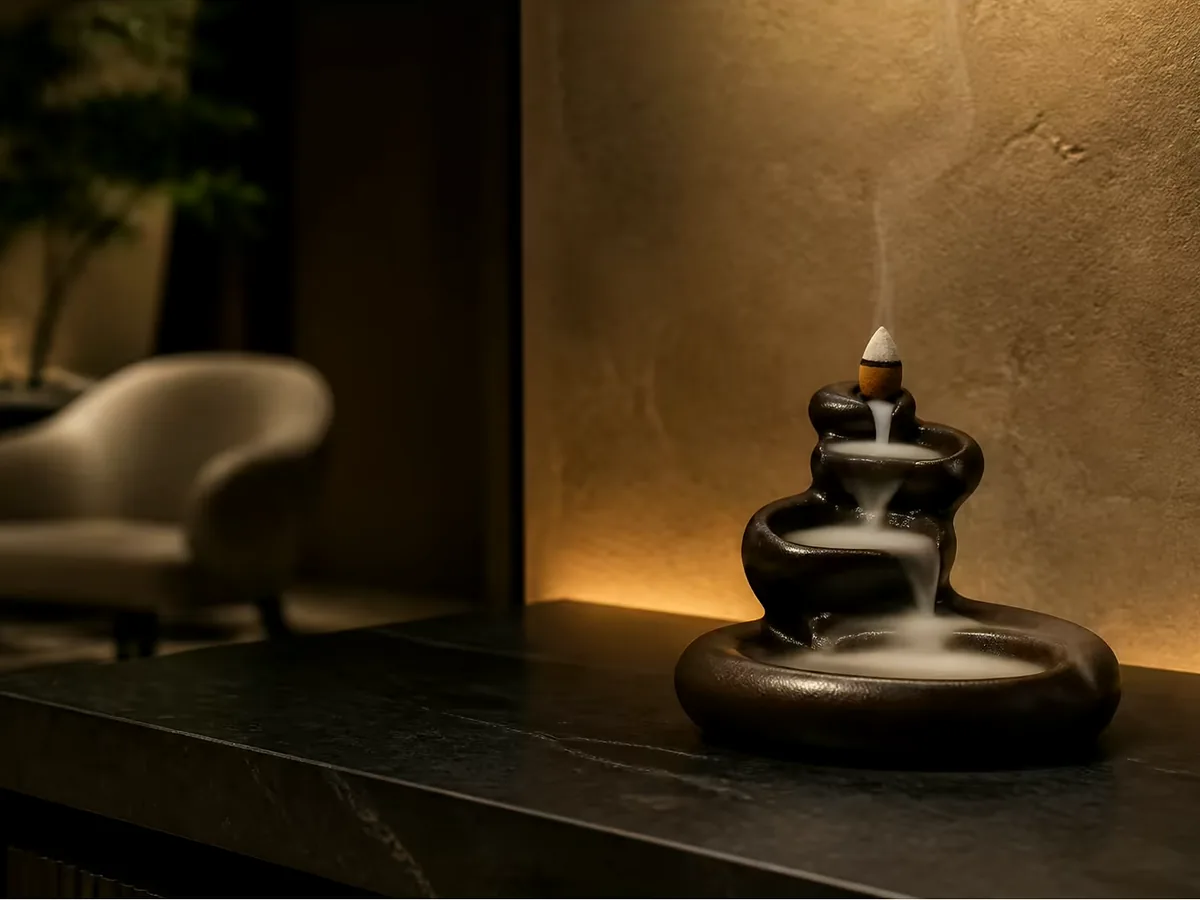
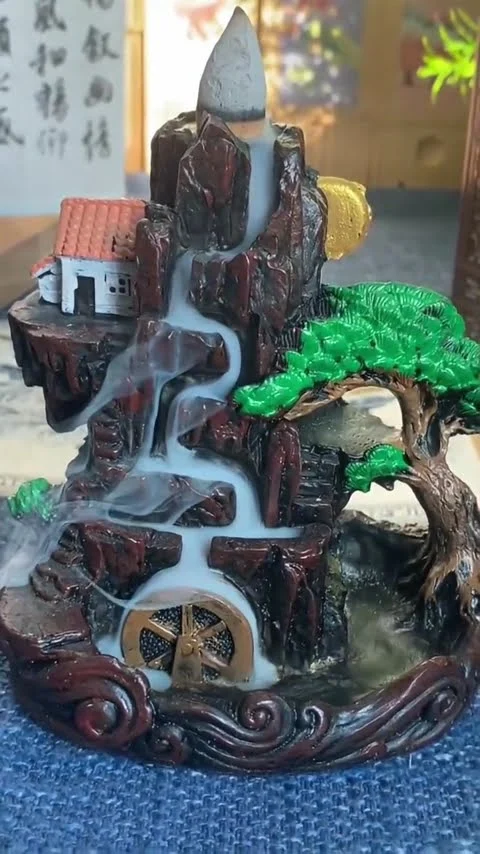
Backflow is the incense format most often bought badly, and the failure mode is almost always the same. The cone has a hollow channel running from a vent near the apex down to the open base. Smoke drawn down that channel cools as it descends; cooled smoke carrying solid particulate is denser than the surrounding air. So it falls rather than rises and pours over the burner. The effect is a physical consequence of temperature and density, not of the cone being special. What makes it work in practice is the fit between the channel bore and the chimney of the burner the cone sits on.
That fit is where the category goes wrong. Most suppliers cut one house bore and ship it to everyone. Most buyers source cones and burners separately, from different factories, and never compare the two dimensions. The result is a proportion of stock on which the smoke never enters the channel cleanly and simply rises like an ordinary cone. The end customer does not conclude that they have mismatched components — they conclude the product is defective and return it. We would rather cut the bore to your burner. Send us the burner itself, or its chimney bore in millimetres, before we quote.
The second failure has nothing to do with manufacture and everything to do with where the burner is standing. The descending smoke column is fragile. A backflow burner near an air conditioner, an open window or a doorway will not produce the waterfall no matter how well the cone is made, because moving air breaks the column before it forms. This is the single most common cause of "faulty product" complaints in the category and it is not a fault. Retailers who tell their customers this upfront see materially fewer returns. That is why we supply the placement note as printed insert copy you can put straight into the box rather than leaving you to write it.
On burn behaviour, a backflow cone is not simply a solid cone with a hole in it. Removing material from the centre changes the burning mass and the air path, so burn time and smoke volume both differ from a solid cone of the same external dimensions. If you are switching an existing solid-cone line over to backflow, do not assume the burn time on your packaging still holds — ask us to re-measure it on the actual bore you are ordering.
The material is identical to our stick and cone lines: powdered plantation Aquilaria bound with natural makko, no charcoal and no synthetic accelerant. Binder matters more here than in most formats, because a backflow cone sits inside a closed ceramic vessel and the smoke is the point of the product. A charcoal-bound cone puts noticeably more particulate into a small room. And it discolours the burner — which on a decorative ceramic piece your customer chose for its appearance is a complaint in itself.
The paperwork risk in this format is the same as every other: it is the declaration, not the product. Declare the natural makko binder explicitly on the commercial invoice — a generic "incense preparation" description is what gets a consignment reclassified as a chemical product and held at destination. We write it that way on every invoice we issue.
Everything in this category comes down to one dimension, and it is the one most catalogues omit. The cone has a channel bored through it; the burner has a chimney. If the channel is narrower than the chimney the smoke escapes upward around the cone and the waterfall never forms. If it is much wider the draw collapses. Our cones are bored at 5 mm and our burners are cut at 6 mm. That pairing is stated on both product pages rather than left for you to discover. If you are buying cones and burners from different suppliers, get both numbers in writing before you place either order.
The second variable is ambient air movement, and it explains most of the complaints that reach us about cones that do not seem to work. The effect depends on smoke being cooler and therefore denser than the surrounding air. An air-conditioning vent, an open window or a ceiling fan two metres away is enough to break it. This is worth printing on your retail packaging, because the customer who blames the product is usually standing under a vent. A single line of instruction converts that return into a satisfied user.
On merchandising the pair. Backflow sells on demonstration and almost not at all on description, because the effect has to be seen. Retailers who run a lit unit on the counter reorder at a rate that retailers relying on packaging photography do not come close to. If you are opening a new account, include a burner and a small quantity of cones as a demonstration set rather than a full display. The sell-through on the first reorder will tell you whether the location suits the format before either of us commits to volume.