Market guide
Agarwood and Mabkhara Wholesale for the Middle East & GCC
The largest and most format-specific market in the category. Get the format wrong and you read as an outsider.
Market detail
Selling mabkhara in Middle East & GCC
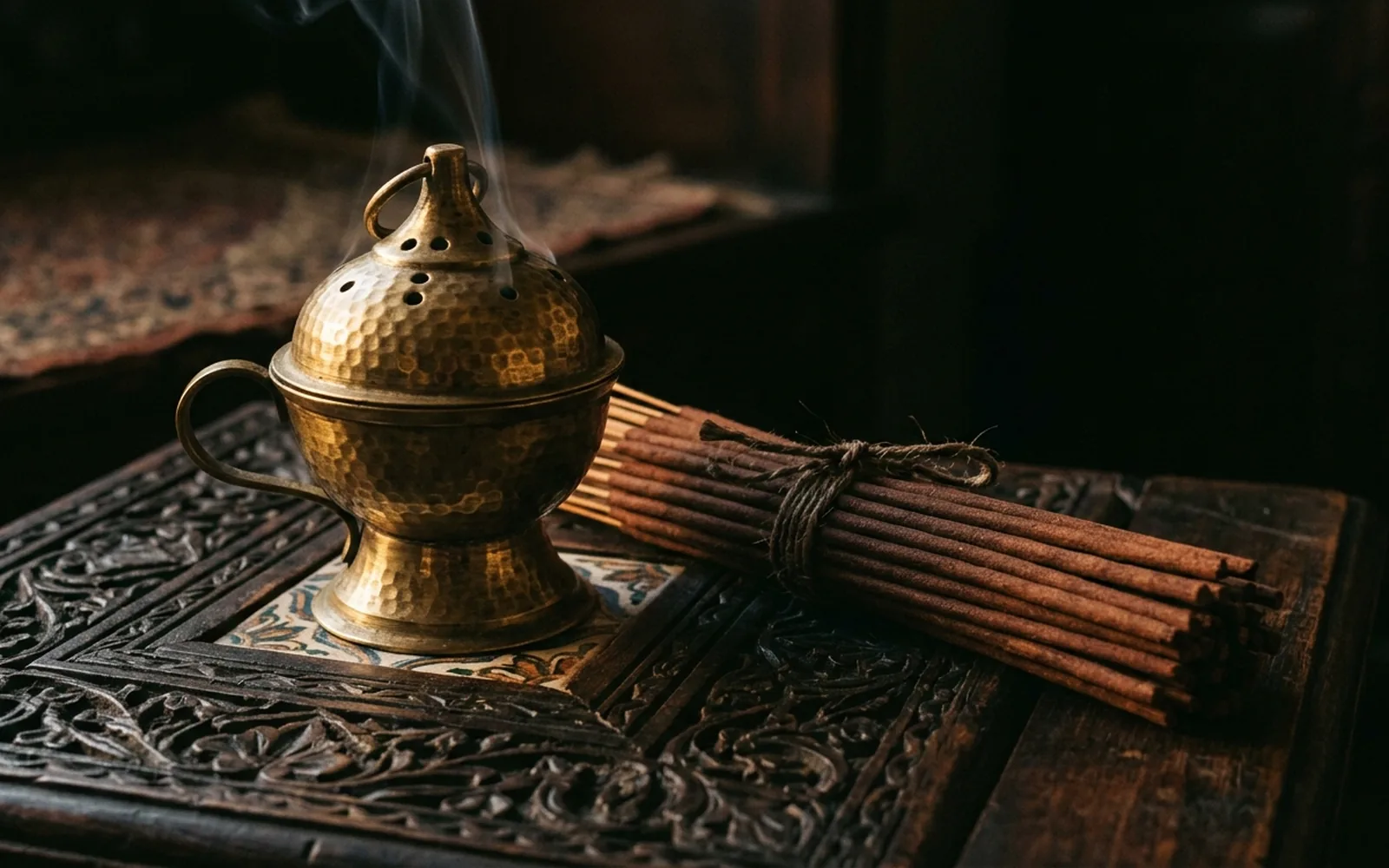
The Gulf is the largest single market for finished agarwood products and the most format-specific. The formats are not preferences, they are conventions with long histories, and a supplier who ignores them signals immediately that they are outside the trade — which costs credibility at the counter regardless of product quality.
Two conventions matter most. Oil is sold by the tola, twelve millilitres, with a dab-stick closure rather than a dropper. And incense sticks are long and thick because the rooms are large — a 13 cm stick calibrated for a Japanese domestic room simply disappears in a majlis. Getting either convention wrong signals immediately that you are outside the trade.
Electric burners have displaced charcoal in most GCC households over the last decade. They are the hardware that anchors a consumables business. A customer with a burner is committed to your powder and chip range for as long as it works. Carry the burners even at thinner margin than what they sell.
Seasonality dominates. Ramadan and Eid carry a disproportionate share of annual volume, and packaging for those periods needs a 90-day lead time to land on shelf in time. Plan backwards from the date. Buyers who order forwards from their current stock position reliably arrive late.
How the Gulf calendar drives the order book. Two windows carry most of the volume: Ramadan and the weeks before Eid, then the year-end gifting season. Both need a 90-day runway from order to shelf. Work backwards from the shelf date rather than forwards from the order date. A gift programme that arrives two weeks after Eid is not late, it is unsellable until next year.
Format expectations here are the opposite of Japan, and mixing them up is the most common entry mistake. Longer sticks, thicker diameters, a bolder and sweeter profile. The room being scented is often large, and the incense is expected to carry it. A 13.5 cm low-smoke stick that sells well in Berlin reads as underpowered in a majlis, and no amount of specification sheet will change that impression.
Oud oil sells by weight and by the tola, not by the millilitre. Specific gravity moves between batches, so a millilitre is not a stable unit of value. Quote by the gram. Present in a 12 ml tola flask with a dab stick rather than a dropper. Both conventions predate the modern trade, and using them correctly signals that you understand the category before anyone has smelled anything.
On hardware: the mabkhara is a genuine second product line rather than an accessory. Many customers replace the burner more often than they change the incense brand. Stocking burners alongside sticks lifts the average transaction and gives you a gift SKU that does not depend on the scent preference of the recipient.
A note on smoke tolerance, because it is the specification buyers get wrong in both directions. Gulf rooms are large and often well ventilated, so a low-smoke formulation reads as weak. But hotel and hospitality accounts in the same market frequently have the opposite requirement, driven by fire systems rather than by taste. Ask which of the two you are supplying before you pick the blend.
On documentation for this route: oil attracts more scrutiny than finished goods, because value density is high and the material cannot be identified by eye. Send the safety data sheet ahead of the goods, and order a certificate of analysis with the goods if this route is one you will repeat — it is chargeable, and it removes the most common reason a consignment gets opened.
A last note on seasonality and stock. The two peak windows are unforgiving in both directions. Under-order and you miss the sell-through; over-order and you carry gift packaging for eleven months. Build the second order into the plan from the start, with a cut-off date agreed in writing. So a reorder is a decision rather than a scramble.
What to stock
Formats, price band and channels
Formats that work
- Long-format sticks, 30 cm at 3.0 mm
- Temple long-burn sticks, 40–90 cm, for mosque and hall supply
- Temperature-controlled electric burners, 80–250 °C
- Tola flasks, 12 ml with dab stick
- Hydro-distilled dehn al oud
Price band
Entry to collector — the full range sells, with heavy gifting at the top
Channels
- Traditional oud and attar souq retail
- Modern perfumery chains
- Hospitality and majlis supply
- Gifting, heavily concentrated around Ramadan and Eid
Compliance
Regulatory notes for Middle East & GCC
- Confirm import permit requirements with your broker before booking
- Electric burners require the CE/RoHS pack for onward EU re-export
- Arabic-language ingredient panels expected at retail
- Halal certification requested by some retail chains — available on request
Avoidable mistakes
What goes wrong in Middle East & GCC
Specific and actionable rather than cultural generalities — these are the four we see most often.
- Mistake 1
Pairing a 30 cm stick with a plate holder
Ash falls roughly 30 mm out from the base on a stick that long. A 110 mm plate will not contain it. This is the single most common complaint on long-format incense in the Gulf and it is entirely a holder-sizing problem. Bundle a full-length boat holder or expect returns.
- Mistake 2
Quoting oil in millilitres
Specific gravity varies roughly 0.94 to 1.01 between batches, so a millilitre is not a stable unit of value. The whole Gulf trade prices by the gram. Quoting by volume signals immediately that you are outside the trade, and on a viscous batch it quietly disadvantages the buyer.
- Mistake 3
Ordering seasonal stock forwards instead of backwards
Ramadan and Eid carry a disproportionate share of annual volume and packaging needs 90 days from artwork approval. Buyers who order forwards from their current stock position reliably arrive after the window, then carry that stock for eleven months.
- Mistake 4
Assuming low-smoke sells here
It does not, and for a structural reason: smoke carries scent volumetrically. A majlis or hotel lobby needs volumetric output that a low-smoke formulation cannot produce. Low-smoke is the right answer in a Berlin apartment and the wrong one here.
Recommended lines
What we would stock for Middle East & GCC
Agarwood Incense Sticks
Stick formats from everyday low-smoke to Japanese koh grade, all plantation Aquilaria. Natural makko binder, no charcoal, no synthetic accelerants.
Censers & Electric Burners
Temperature-controlled electric burners, ceramic koro and brass censers, plus seal-incense press sets for the powder line.
Agarwood Essential Oil
Two extraction routes, one standard: every lot carries its own batch number and sealed retention sample, with a certificate of analysis and independent GC-MS available on request.
Oud Oil Bottles & Packaging
Bulk perfume bottles for oud and attar: dropper bottles, tola flasks, roll-ons and rigid gift boxes for brands filling and reselling oil.
Case studies
What we have actually shipped into Middle East & GCC
Two Oud Oils and a Filled Retail Vial, in One Season
Two oil grades and the filled retail vial from one supplier, so the fill schedule stayed inside one timetable.
Perfumery and private label · since 2022
Watch
A cone in a heat-resistant burner
Powder shaped into a cone, set into the burner and lit.
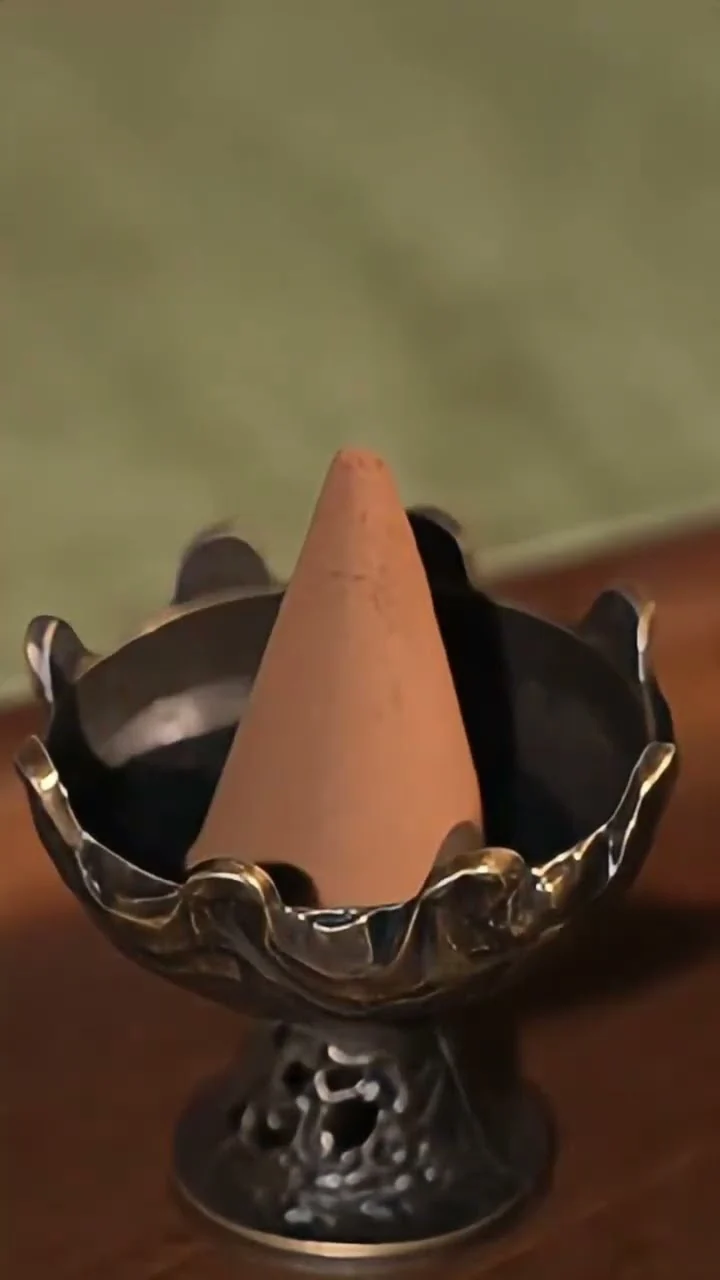
A cone in a heat-resistant burner
Powder shaped into a cone, set into the burner and lit.
Building a range for Middle East & GCC?
Send us the channel and the target price band and we will propose a range — formats, grades and quantities — rather than sending you a catalogue.