Market guide
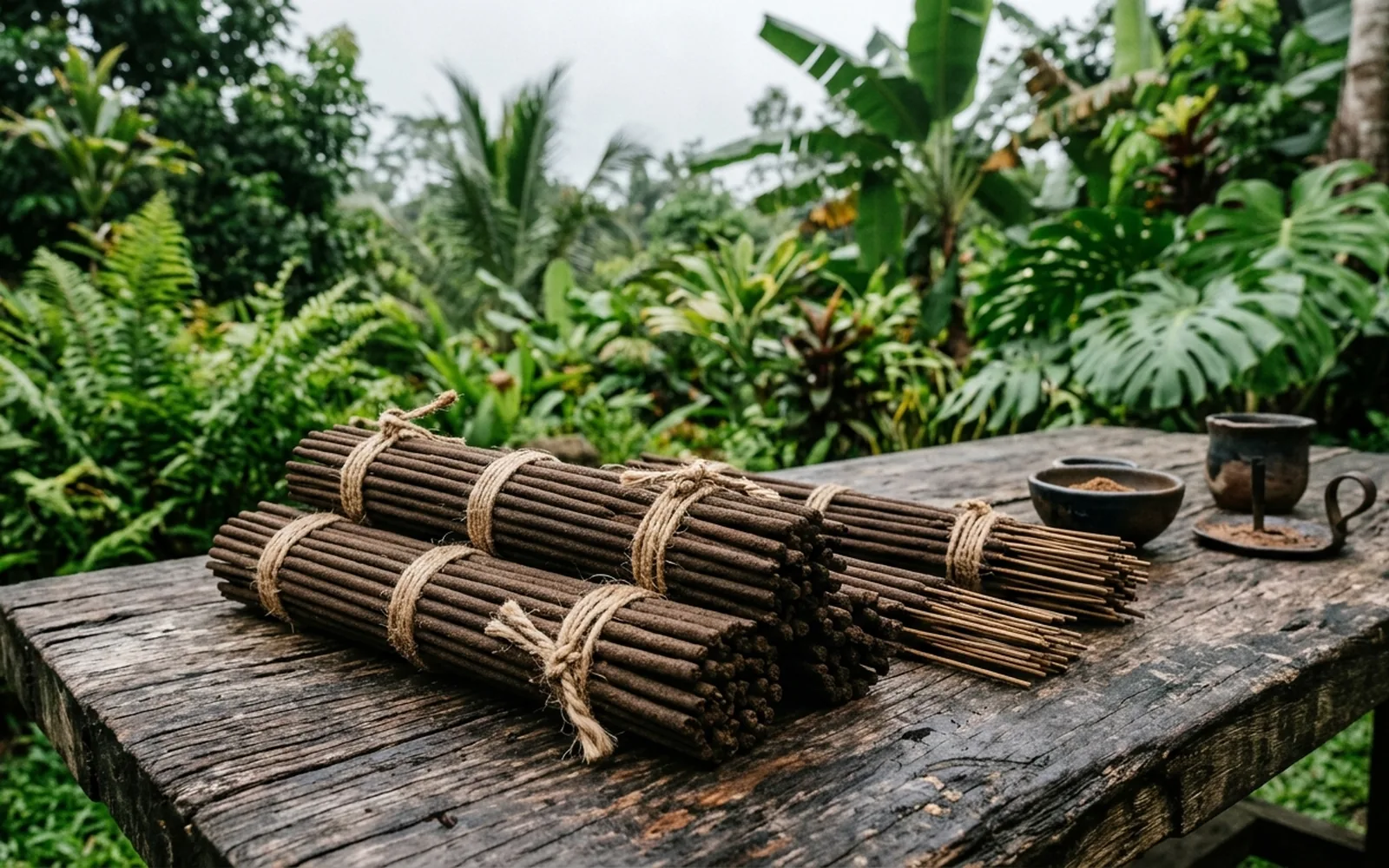
Joss Sticks Wholesale for Southeast Asia — Temple and Retail Supply
Deep-rooted religious and daily use, high humidity, and buyers who know the material well.
Market detail
Selling joss sticks in Southeast Asia
Southeast Asia is the market where agarwood is least exotic. It has continuous religious and daily use, deep regional trading traditions, and buyers who often know the material better than the supplier does. Positioning that works in Europe — introducing agarwood as an exotic discovery — reads as slightly absurd here.
Volume sits in temple and religious supply, which buys bulk powder and standard sticks on price and consistency rather than on presentation. Above that sits a sophisticated enthusiast and trading segment, particularly in Malaysia, Singapore and Indonesia, where regional origin distinctions are well understood and a vague provenance claim will be challenged.
The dominant technical problem is humidity. Ambient conditions across most of the region will take an opened box damp quickly, causing self-extinguishing that gets attributed to product quality. We pack with desiccant and specify foil barrier on bulk powder. We recommend advising retail customers explicitly about keeping boxes closed. This single piece of guidance prevents most complaints in the region.
Note also that several countries in the region are themselves agarwood producers. So you are frequently selling into a market with local supply. The argument that works is consistency, documentation and format range rather than novelty — and being straightforward about which of our origins a product comes from, since buyers here will ask.
Humidity is the variable that decides whether a shipment arrives usable. Joss sticks are hygroscopic and this region is the hardest test they get. We dry before packing and seal inside a foil barrier with desiccant, but the last mile is yours. Let a container equalise for 24 hours before breaking the shrink wrap, and store away from an air-conditioned wall where condensation forms.
Volume here sits at the temple and religious-use end, and price sensitivity is real. That is not a reason to send your cheapest blend. It is a reason to be precise about which grade goes where. A temple order and a retail gift order from the same buyer are two different specifications, and quoting one price for both usually loses you the better half of the business.
Format conventions are strong and regional. Stick length, colour and bundling all carry meaning that does not travel between countries in this region, let alone from outside it. Send us what the channel currently uses rather than a written description. We would rather match a physical sample than interpret a brief and be wrong twice.
On documentation: several states in this region are themselves agarwood producers. That means their authorities know the material and scrutinise origin claims closely. A vague provenance statement that passes elsewhere will be questioned here. Name the species and the source lot on the invoice from the first shipment, not after the first query.
A note on bundling. Holders and burners move well alongside sticks here, and often at better margin than the incense itself. The customer who buys a stand rarely buys a second one, but they come back for the consumable. Treat the hardware as the acquisition product and the incense as the annuity.
On lead times: this is the one region where sea freight is short enough that a reorder cycle can run monthly. Use that. Smaller, more frequent orders reduce your humidity exposure in storage and let you correct a specification faster than a single large shipment ever will.
A last note on packaging materials. Cartons soften in this climate faster than most buyers expect. A softened carton is how a stack of drop-tested product still arrives damaged. Ask for the board grade rather than assuming it, and store pallets off the floor. Both are cheap; the failure they prevent is not.
A note on payment and terms, which differ here from the Gulf and from Europe. Relationships in this region are often long and the order sizes modest, so terms tend to loosen with history rather than with volume. Do not read a small first order as a small account. Several of the steadiest programmes in this trade started at one carton.
And a note on festival timing, which is more fragmented here than in the Gulf. Lunar new year, Vesak, Qingming and local temple calendars all pull demand, and they do not align across the region. Ask the buyer for their own peak dates rather than assuming a regional season, and plan the production slot against that.
What to stock
Formats, price band and channels
Formats that work
- Standard and long-format sticks
- Bulk powder for temple and religious use
- Electric burners and traditional censers
- Regional oud oil formats
Price band
Entry to collector — very wide, with sophisticated demand at the top
Channels
- Temple and religious supply
- Traditional medicine and wellness retail
- Gift and duty-free
- Regional oud trading houses
Compliance
Regulatory notes for Southeast Asia
- Several regional states are producer countries — import rules vary widely, brief your broker
- Humidity-aware packing essential — desiccant and foil barrier as standard
- Halal certification requested by some Malaysian and Indonesian buyers
- Regional origin claims will be scrutinised — document them
Avoidable mistakes
What goes wrong in Southeast Asia
Specific and actionable rather than cultural generalities — these are the four we see most often.
- Mistake 1
Not warning retail customers about humidity
Ambient conditions across most of the region will take an opened box damp within days, causing self-extinguishing that gets attributed to product quality. We pack with desiccant, but the guidance to keep boxes closed between uses has to reach the end customer. This single instruction prevents most complaints here.
- Mistake 2
Positioning agarwood as an exotic discovery
This is the market where agarwood is least exotic. It has continuous religious and daily use and buyers frequently know the material better than the supplier does. The framing that works in Europe reads as slightly absurd here.
- Mistake 3
Making vague origin claims
Several countries in the region are themselves agarwood producers, so regional distinctions are well understood and a loose provenance statement will be challenged. Document the origin properly or do not claim it.
- Mistake 4
Selling temple channels on presentation
Religious and temple supply buys on consistency and price, reorders against a fixed calendar rather than a merchandising season, and generally prefers unbranded bulk packing. Pitching retail packaging into this channel wastes both parties' time.
Recommended lines
What we would stock for Southeast Asia
Agarwood Incense Sticks
Stick formats from everyday low-smoke to Japanese koh grade, all plantation Aquilaria. Natural makko binder, no charcoal, no synthetic accelerants.
Agarwood Incense Powder
Pure, unblended agarwood powder in controlled mesh sizes — the input format for makers, temples and electric-burner retail.
Censers & Electric Burners
Temperature-controlled electric burners, ceramic koro and brass censers, plus seal-incense press sets for the powder line.
Agarwood Essential Oil
Two extraction routes, one standard: every lot carries its own batch number and sealed retention sample, with a certificate of analysis and independent GC-MS available on request.
Watch
Pressing and straightening sticks
Material pressed and shaped into straight sticks, aligned and laid onto trays.
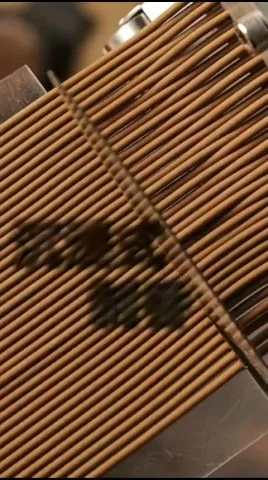
Pressing and straightening sticks
Material pressed and shaped into straight sticks, aligned and laid onto trays.
Building a range for Southeast Asia?
Send us the channel and the target price band and we will propose a range — formats, grades and quantities — rather than sending you a catalogue.