Market guide
Japanese Incense Wholesale — Kōdō Standards and Koh-Grade Supply
The strictest quality bar in the category, and it is about consistency more than about impressiveness.
Market detail
Selling japanese incense in Japan
Japan applies the strictest standards in this trade. The standards are not primarily about how impressive an individual sample smells. They are about consistency — smoke volume, ash behaviour, dimensional uniformity, and above all reproducibility from batch to batch. A retailer building a shelf position needs this year to smell like last year, and a supplier who cannot deliver that will lose the account no matter how good the first sample was.
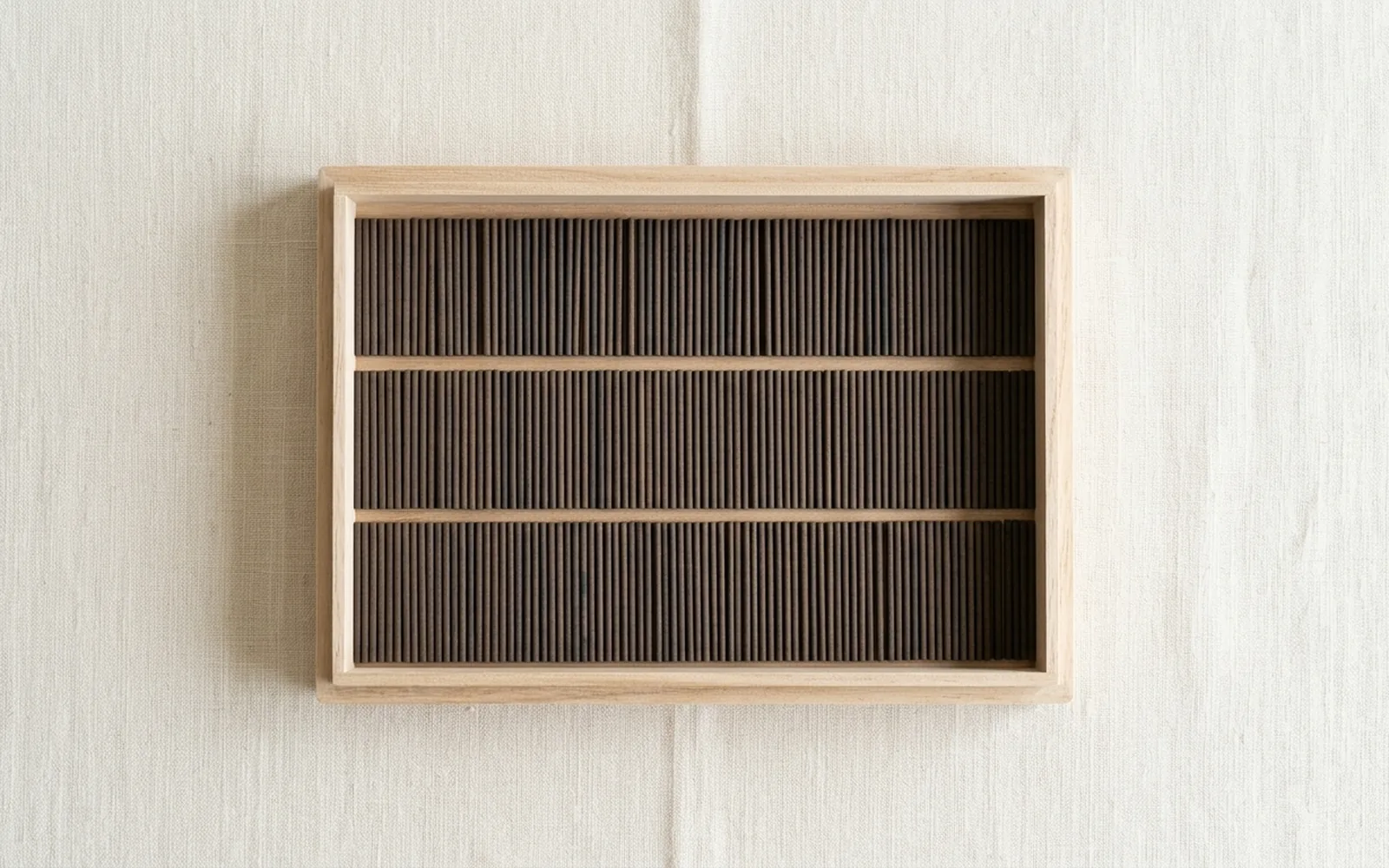
Format follows the same discipline. Short sticks, 10.5 or 13.5 cm, burning twenty to thirty minutes, coreless as a matter of course. A 21 cm cored stick reads as foreign product on a Japanese shelf regardless of what is in it.
Our koh-grade line is built against these expectations: high-resin fraction, coreless, 1.2 mm held to ±0.05 mm. Every production run assessed against a sealed retained reference by trained panel before release. A run that has drifted does not ship as koh grade. That is slower and more expensive to operate and it is the only way to hold a Japanese account.
Practical advice for entering this market: send us a physical sample of what the buyer currently stocks rather than a written brief. Matching against material is far more reliable than matching against description, and Japanese buyers respond well to being shown a sample set rather than a catalogue.
A note on how orders actually run once you are in. Japanese accounts reorder on a rhythm rather than on a forecast. Expect small, frequent orders rather than a large annual one. Plan your own stock around that. A supplier who quotes only at high MOQ will be squeezed out by one who can run 100 boxes reliably every six weeks.
Packaging carries more weight here than in any other market we supply. The box is not a container, it is part of the product. Paulownia, uncoated paper stock and restrained type all read as correct. Foil stamping, gradient print and English marketing copy read as imported filler. If you are private-labelling for this channel, budget for a designer who knows the conventions rather than adapting your existing artwork.
On language: the ingredient and usage panel must be in Japanese, and it must be accurate rather than translated loosely. Name the binder. State the burn time as a range, not a single figure. Give a plain safety line about placement and ventilation. We supply the technical values; the wording itself should be checked by someone who reads the market, because a panel that reads as machine-translated undermines everything the box was trying to say.
Where accounts are lost, in our experience, it is almost never on price. It is on a batch that drifted and was shipped anyway, or on a lead time that slipped without warning during a seasonal window. Tell the buyer early when something will be late. A Japanese buyer will usually accommodate a delay they were warned about, and will rarely accommodate one they discover.
One more thing worth budgeting for. Assume the first matched attempt will be rejected. Treat that as the process working rather than as a setback. The rejection usually arrives with information attached, and that information is more valuable than an approval would have been at that stage. Plan two sampling rounds and a twelve-week runway before any commercial conversation.
And protect the thing that got you the account. The most common way a supplier loses a Japanese buyer is not a bad batch. It is a good one that drifted upward, shipped unremarked, and reset the expectation the next batch could not meet.
Finally, a realistic timeline. From first contact to a repeating order is commonly nine to twelve months here. The middle of that period looks like nothing happening. It is not. It is the buyer establishing that you are still there, still consistent, and still answering the same way about the same questions.
A note on what a Japanese buyer will not ask you for, which is as informative as what they will. They rarely ask for the lowest price. They rarely ask for exclusivity early. And they almost never ask for a large first order. What they ask for is the same thing twice, and then a third time. The account is won or lost on whether you can supply it.
On sampling logistics specifically: send three samples rather than one. The match attempt, plus one deliberately a step lighter and one a step heavier. That turns a yes-or-no into a direction, and a direction is what makes the second round short. A single sample with a long letter about it is the slowest possible way to run this.
What to stock
Formats, price band and channels
Formats that work
- Short sticks, 10.5 cm and 13.5 cm, coreless
- High-resin koh-grade blends
- Fine powder for seal incense and kōdō
- Ceramic koro censers and mica plates
Price band
Mid to collector — very little demand at the entry end
Channels
- Specialist incense retail
- Temple and religious supply
- Tea ceremony and kōdō practice
- Department store gifting
Compliance
Regulatory notes for Japan
- Confirm import permit requirements with your broker before booking
- Japanese-language ingredient and usage panels expected
- Plantation source documentation viewed favourably
- Dimensional and batch consistency effectively part of the specification
Avoidable mistakes
What goes wrong in Japan
Specific and actionable rather than cultural generalities — these are the four we see most often.
- Mistake 1
Sending a catalogue instead of a sample set
This costs suppliers the first meeting more often than any product shortcoming. Ask what the buyer currently stocks, obtain a physical sample, and send a matched attempt alongside two considered alternatives. Matching against material beats matching against a written brief every time.
- Mistake 2
Offering a 21 cm cored stick
It reads as foreign product on a Japanese shelf regardless of what is inside it. The format is 10.5 or 13.5 cm, coreless, burning twenty to thirty minutes. Getting this right is the price of being taken seriously rather than a differentiator.
- Mistake 3
Leading with a spectacular one-off batch
Japanese buyers evaluate reproducibility, not peak quality. An impressive sample you cannot repeat next year loses the account faster than a merely good sample you can. Lead with your reference-matching process, not your best lot.
- Mistake 4
Treating the second order as routine
The first order is small and it is a test. The second order is where the buyer checks whether production matches the sample and whether documentation behaves. If batch two matches batch one, you are being evaluated as a continuing supplier; if it does not, the relationship generally ends without much discussion.
Recommended lines
What we would stock for Japan
Agarwood Incense Sticks
Stick formats from everyday low-smoke to Japanese koh grade, all plantation Aquilaria. Natural makko binder, no charcoal, no synthetic accelerants.
Agarwood Incense Powder
Pure, unblended agarwood powder in controlled mesh sizes — the input format for makers, temples and electric-burner retail.
Censers & Electric Burners
Temperature-controlled electric burners, ceramic koro and brass censers, plus seal-incense press sets for the powder line.
Incense Holders & Agarwood Stands
Holders, ash catchers and carved agarwood display pieces designed to be bundled with stick SKUs as gift sets.
Case studies
What we have actually shipped into Japan
Koh-Grade Material a Blender Does Not Have to Correct For
Single-block material and a GC-MS report tied to the lot, so the blender stopped correcting every batch.
Incense manufacture · since 2021
Full Ingredient Disclosure for a Temple Cooperative
A previous supplier had substituted filler without disclosure. The fix was printing the breakdown on the box.
Religious institution procurement · since 2024
Watch
Hand-forming sticks from loose powder
Powder mixed, kneaded, shaped and arranged by hand.
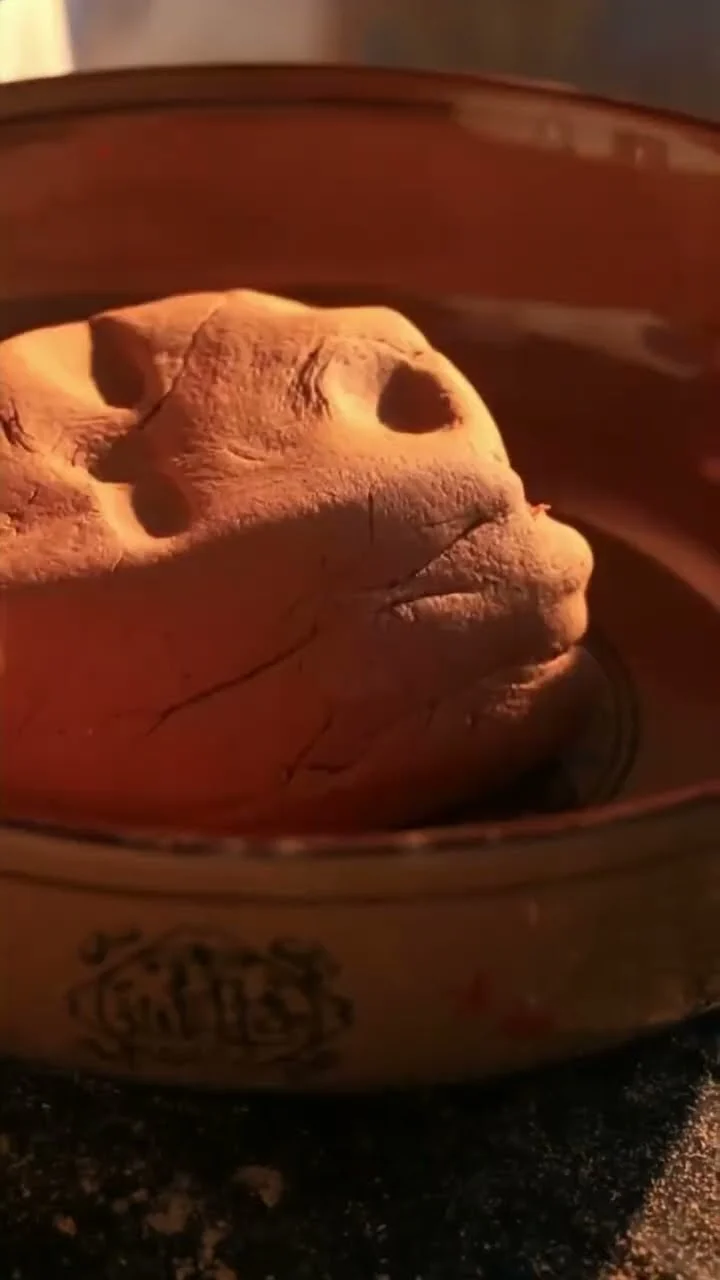
Hand-forming sticks from loose powder
Powder mixed, kneaded, shaped and arranged by hand.
Building a range for Japan?
Send us the channel and the target price band and we will propose a range — formats, grades and quantities — rather than sending you a catalogue.