AGARWOODWHOLESALE
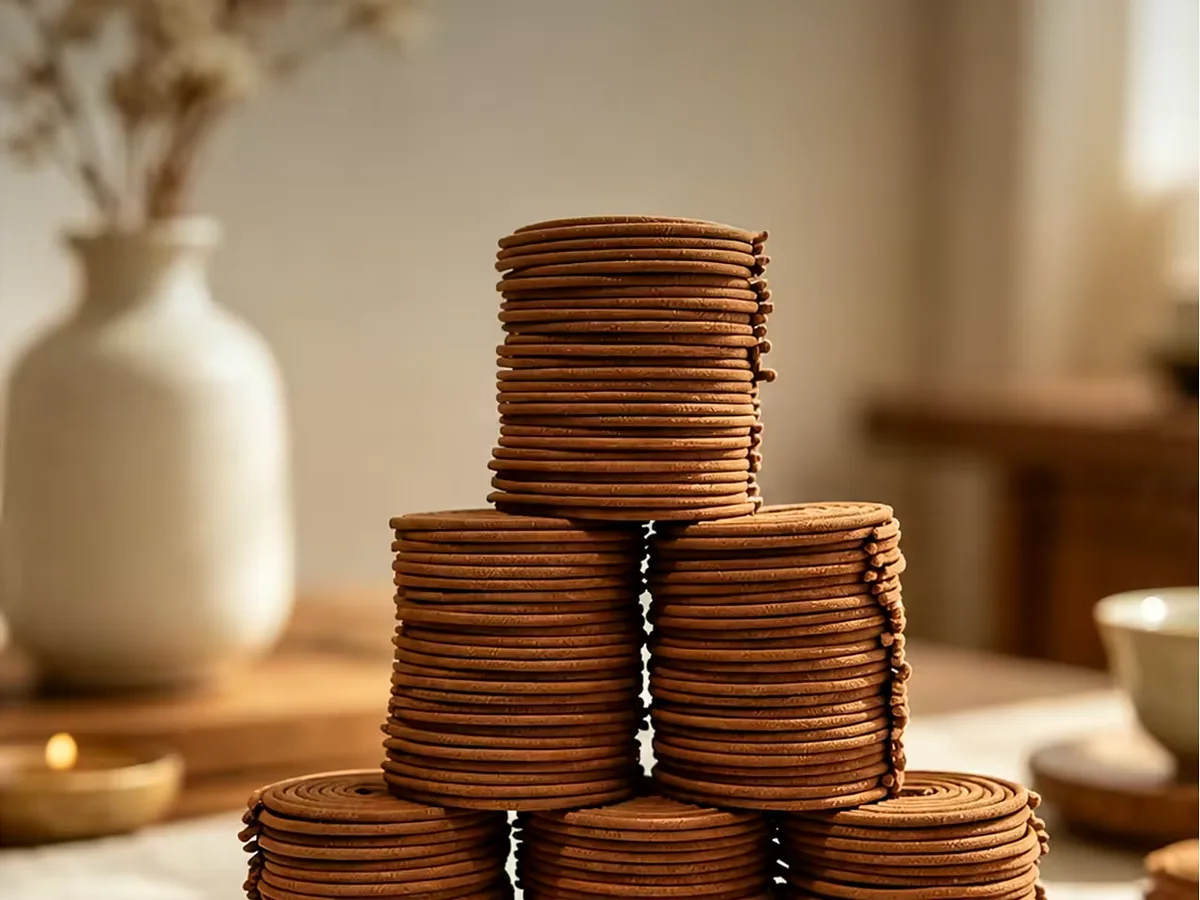
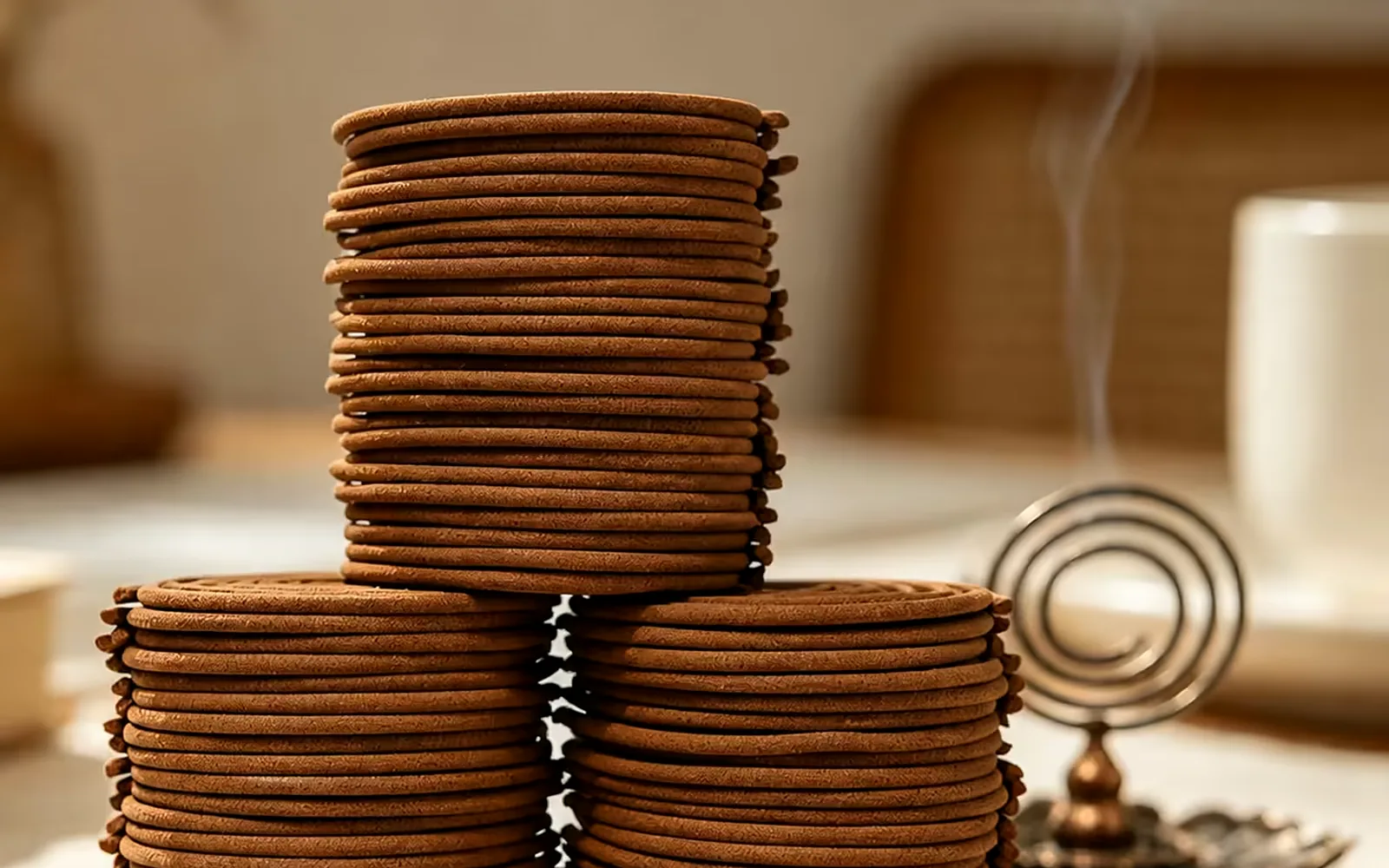
Stacked agarwood incense coils with one burning on a stand, wholesale

Core Line · Long-Burn

Agarwood Incense Coils — Hours on One Light

For the rooms where a stick runs out before the occasion does.

Key specifications

Agarwood Incense Coils key specifications
Base materialPowdered Aquilaria sinensis / Aquilaria crassna
BinderNatural makko (Machilus thunbergii) — no charcoal, no synthetics
FormatPressed spiral, hung or plate-seated
Coil diameter and turns50 mm outer diameter · 5 turns
Cross-section1.8 mm
Burn durationApprox. 2 h in still air, supplier stated
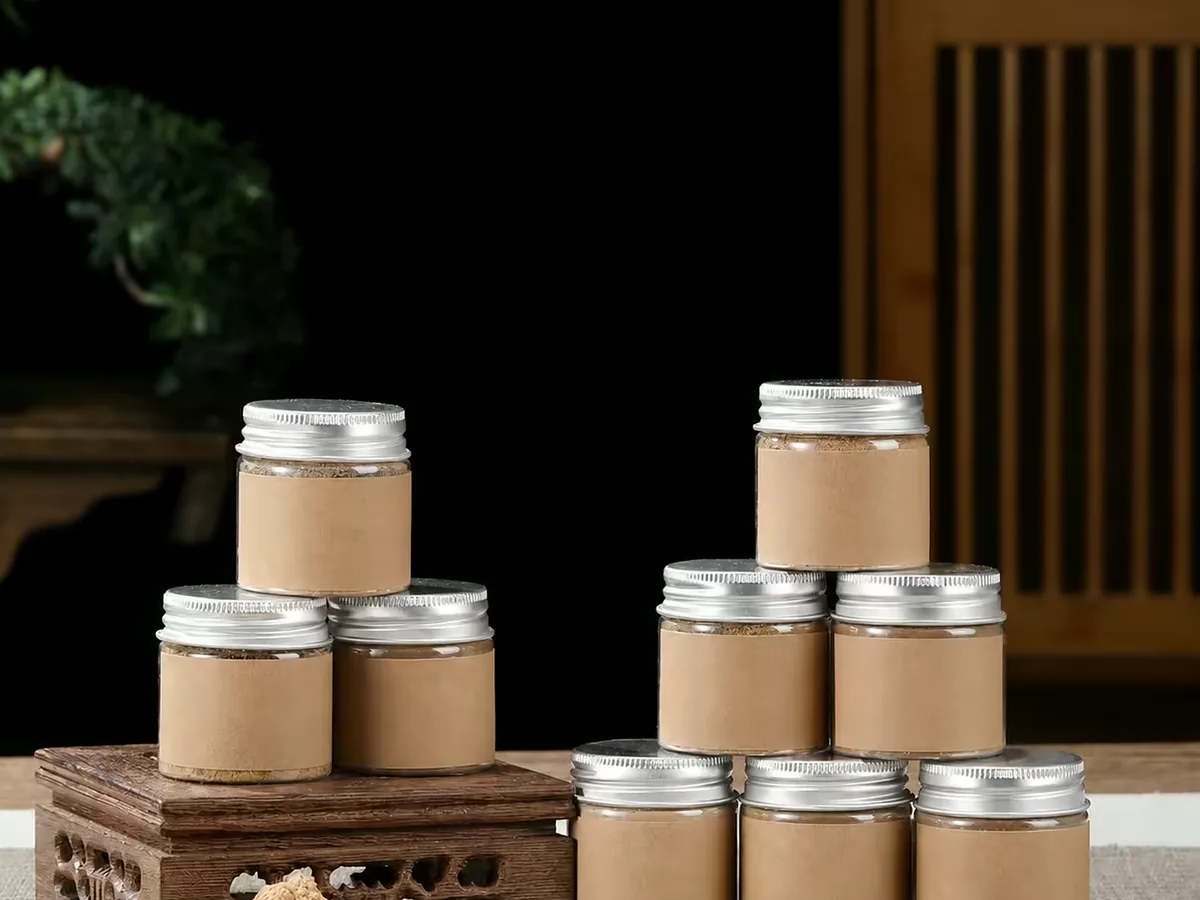
Count per box50 coils
MOQNone on stock packaging · private label from 500 boxes
Lead timeWithin 2 weeks on stock · 25–35 days on private label from approved artwork
  • Plantation Aquilaria, single origin
  • 12+ years exporting
  • Batch retention samples held
  • No minimum order quantity on stock lines

Long-Burn

One light, and it is still going hours later.

A stick gives you well under an hour. A coil holds the same aromatic body in a spiral — the longest line that fits in a censer — and runs for hours on a single light. That is why temple supply, ceremony and hotel reception buy coils rather than sticks: nobody wants to relight during a service or at a front desk. The trade is fragility. A coil is a thin spiral of pressed powder. And it breaks if it is packed badly or handled roughly. That makes freight cost per unit higher here than in any other format we make. Nesting, interleaving and carton fill matter more on this line than anywhere else in the range.

  • Hours on one light — the format for temple, ceremony and hospitality reception
  • Burn duration specified backwards from your requirement, not from a stock size
  • Same makko-bound Aquilaria body as our sticks — no charcoal, no synthetic accelerant
  • The most freight-sensitive format we make — ask for the drop-test on the intended packing

Product gallery

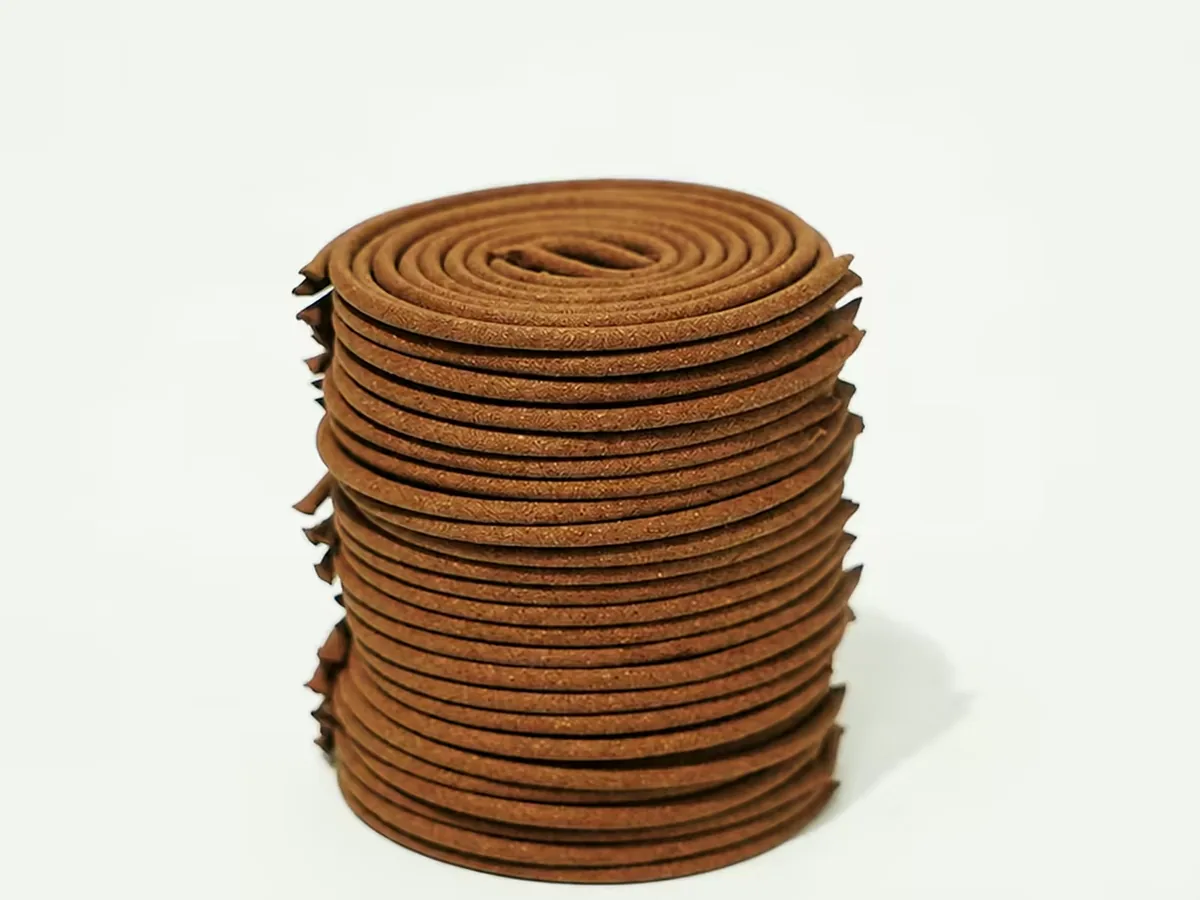
Agarwood incense coils — full product view, incense coils wholesale
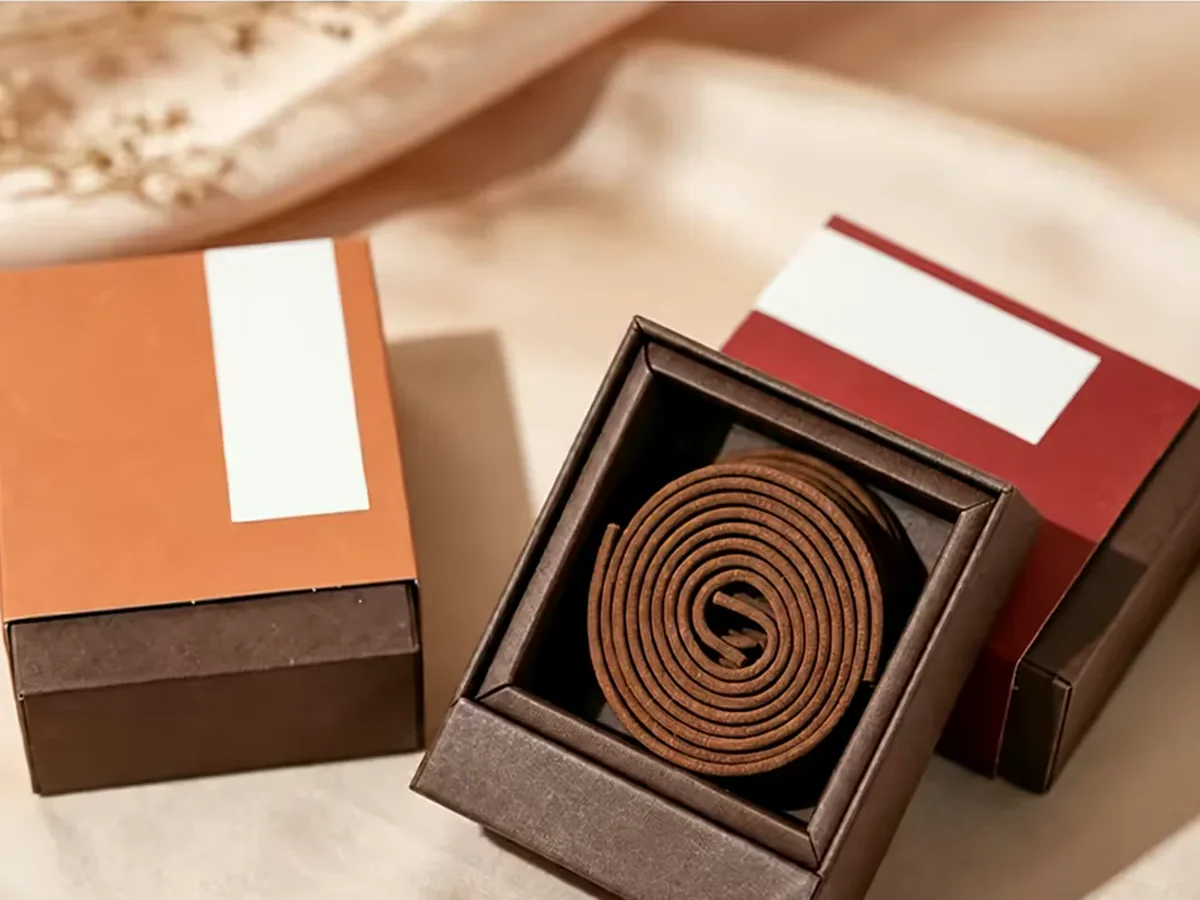
Agarwood incense coils — retail packaging and unboxing, incense coils wholesale
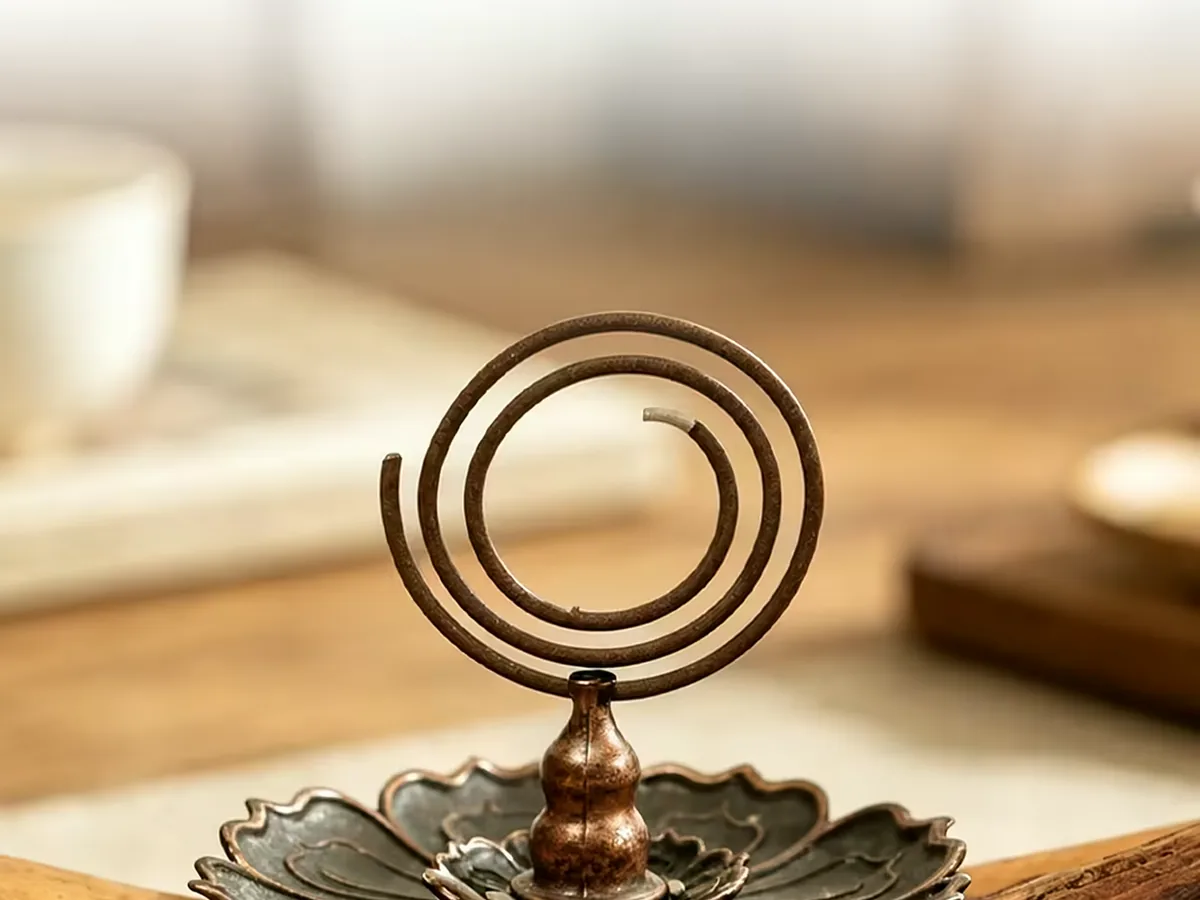
Agarwood incense coils — in use, incense coils wholesale
Agarwood incense coils — close-up detail, incense coils wholesale
Agarwood incense coils — size and specification comparison, incense coils wholesale
Agarwood incense coils — factory production and warehouse stock, incense coils wholesale

What this line comes in

The grades, and what separates them

These reflect real production differences, not packaging tricks. There is no minimum quantity on any of them — price depends on grade, quantity and destination, so it comes back with the quotation rather than being invented here.

Most specified

Standard Coils — plantation grade

Quote on request

The volume format for temple supply, ceremony and hospitality reception, where a stick runs out long before the occasion does.

Extended-Burn Coils

Quote on request

Heavier cross-section and higher turn count for all-day burn. Specified backwards from the duration you need rather than from a stock size.

Bulk / OEM Private Label

Quote on request

Custom diameter, turn count, cross-section, box structure and print. Dieline supplied, pre-production sample signed off before the run.

Need the full price list?

Tell us quantity, grade, packaging and destination. We reply within one business day with a formal quotation.

Request price list

About this category

Agarwood Incense Coils — Sourcing Guide

A coil is the long-burn answer to a problem sticks cannot solve. Where a stick gives you well under an hour, a coil holds the same aromatic body in a spiral that runs for hours on one light. That is why temple supply, ceremony and hospitality reception are the channels that buy them. The spiral is not decorative — it is simply the longest line of incense that fits inside a censer, and every design decision on this line follows from that.

Specify duration, not size. Burn time is a function of three things: coil diameter, cross-section thickness and turn count. A wider coil with a thin section can burn for less time than a smaller coil pressed heavier. So a diameter alone tells you almost nothing. Tell us the burn duration your channel actually needs. A two-hour service, an eight-hour retail day, a full night at a reception desk. We specify the geometry backwards from that rather than quoting a stock coil and hoping it fits.

Freight is the line item buyers underestimate here. A coil is a thin spiral of pressed powder with no core to hold it together. It breaks if it is packed loosely or handled roughly. Coil freight cost per unit is higher than anything else in our range for exactly that reason. The difference shows up in the landed cost rather than the unit price. Nesting, interleaving and carton fill do most of the work; ask for the drop-test result on the packing configuration we intend to use before you commit to a quantity, not after the first container arrives.

The material is identical to our stick line: powdered plantation Aquilaria bound with natural makko, no charcoal and no synthetic accelerant. This matters more in coil format than anywhere else. A coil burns in one continuous piece over a long period, often in an enclosed censer. A charcoal-bound coil running six hours in a closed vessel puts noticeably more particulate into the room than the same mass burned as sticks.

On paperwork, the declaration matters more than the format. Declare the natural makko binder explicitly on the commercial invoice. A generic "incense preparation" description is what gets a consignment reclassified as a chemical product and held at destination. We write it that way on every invoice we issue. Which permits and certificates your import route requires is a separate question for your broker, worth settling before you book.

The coil exists for one reason: burn duration without an attendant. A 50 mm five-turn coil runs several hours from a single lighting. That is why temples, shopfronts and hotel lobbies have used the format for centuries and why it still sells where a stick cannot. If your customer is asking for something they can light in the morning and forget, this is the answer, and no length of stick substitutes for it.

The specification that decides whether a coil works is cross-section, not diameter. Ours run at 1.8 mm, which sits at the lower edge of the range the group standard describes at 2.0 ± 0.2 mm. A thinner cross-section burns cleaner and produces less ash, and it is also more fragile in transit. Those are the same property described twice. If your route involves multiple transhipments or manual handling at the far end, say so when you order and we will pack to the risk rather than to the default.

Breakage is the number every coil buyer should ask about and almost none do. A coil is a spiral of unsupported material and it will not survive being dropped. So the packing does the work: each coil sits in its own moulded tray, trays stack with a spacer. And the master carton is drop-tested rather than assumed. Ask any supplier what their breakage rate is at destination and how it was measured. A supplier who has never measured it is telling you that the losses are currently yours.

On lighting and merchandising. A coil is lit at the outer end and rests on a stand that lifts it clear of the surface. That means the holder is not an accessory here. It is part of the product. Selling coils without a compatible stand generates exactly the same complaint every time: the customer lays it flat, it self-extinguishes where it touches, and the coil gets blamed. Bundle the stand, or at minimum merchandise the two adjacently and say plainly on the packaging that one requires the other.

A closing note on how to write the order. Name the outer diameter, the number of turns, the cross-section and the pack count, and state the destination climate if it is humid. Those five entries remove almost every ambiguity in this category. The last of them is the one people leave out. A coil specified without reference to where it is going is a coil packed to the default, and the default assumes a temperate warehouse.
Where this format sells

What buyers put agarwood incense coils on the shelf for

Each setting fixes the burn time, the smoke volume and whether an open flame is allowed — and those three between them decide the format.

An incense coil burning on a stand at the edge of a studio floor during a class

Yoga and indoor movement

A studio or a cleared room, forty-five to ninety minutes, nobody watching the incense.

What it constrains
Long and unattended. The burn has to hold for the whole session and finish safely on its own, which is a coil or a long stick rather than anything that needs re-lighting.
Formats that fit
Incense coils · long sticks with a stand that keeps the ash off the floor
For the buyer
Studios buy in bulk on plain packaging and reorder on a fixed cycle. Low unit price, high volume, and almost no interest in gift presentation.
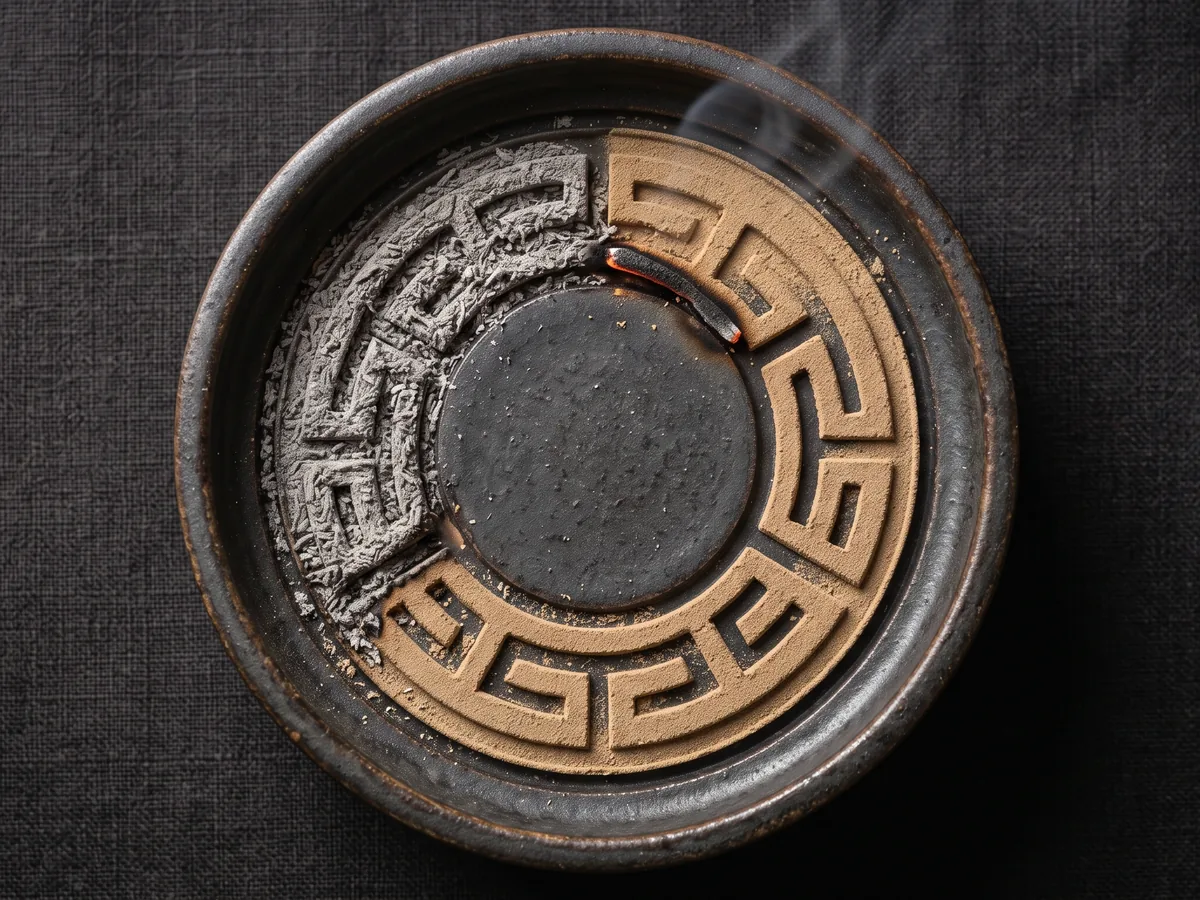
A seal incense pattern burning along its path in a censer during a sitting

Meditation and formal practice

One sitting, and the incense is what measures it.

What it constrains
Burn time has to be repeatable between batches, because here the stick is the timer. A lot that runs eight minutes short changes the length of the practice.
Formats that fit
Seal incense, where the pressed pattern is the duration · coils · temple long-burn sticks
For the buyer
These buyers specify burn time first and scent second, and they will test a new lot against the old one before committing. Batch consistency is the whole sale.
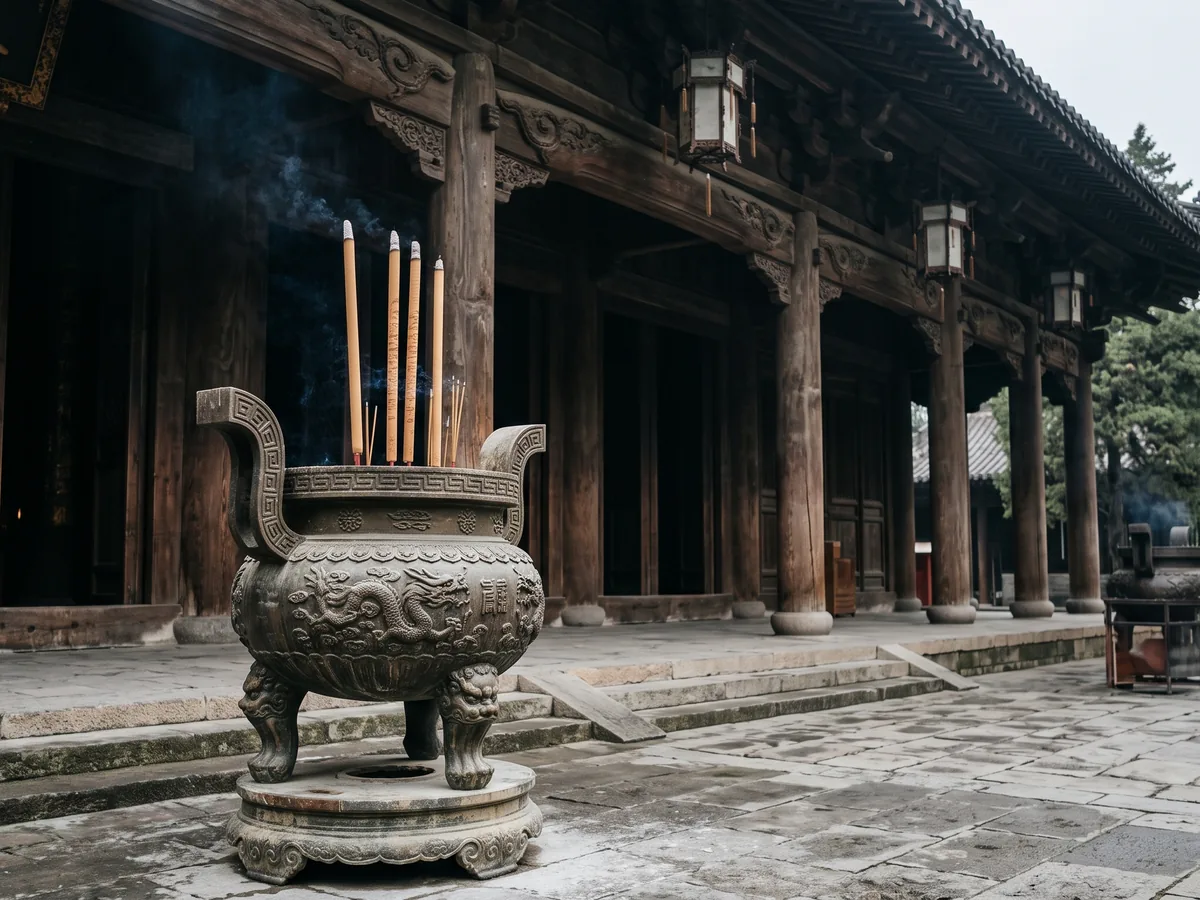
Long temple incense sticks burning in a large open censer outside a hall

Temples and institutional supply

A large hall, open air or high ceilings, two to four hours at a time.

What it constrains
Length and volume. A domestic stick is invisible in this space, and re-lighting through a service is not workable, so length does the work.
Formats that fit
Temple long-burn sticks at 40, 60 and 90 cm · large coils
For the buyer
Contract supply rather than retail: scheduled quantities, plain bulk packing, and a specification that has to hold across a year of deliveries rather than one box.

Why this one

What makes Agarwood Coil Incense different

Specified backwards from your duration

Tell us how long the burn has to last and we specify diameter, cross-section and turn count to hit it — rather than quoting a stock coil and hoping it fits your ceremony.

One light, hours of burn

A coil holds far more material in a single piece than a stick. Temple supply, ceremony and hotel reception buy this format because relighting mid-occasion is not acceptable.

Packing is the real specification

A coil is a thin spiral of pressed powder. Nesting, interleaving and carton fill decide whether it arrives intact. That is why we drop-test the configuration before a first order ships.

Specifications

Full technical specification

Product specification

Agarwood Coil Incense full specification
ConstructionPressed spiral, hung or plate-seated
Base materialPlantation Aquilaria sinensis powder
BinderNatural makko (Machilus thunbergii)
Binder ratioNominated per order — cone and coil forming uses a different ratio from sticks, stated on your specification sheet
Charcoal contentNone
Coil outer diameter50 mm
Turn count5 turns
Cross-section1.8 mm
Burn timeApprox. 2 h in still air
Count per box50 coils
Carton quantity200 boxes per master carton
MOQNone on stock packaging · private label from 500 boxes
Lead timeWithin 2 weeks on stock · 25–35 days on private label from approved artwork

There is no test-data table on this page, and that is deliberate. The figures that belong in one need instruments we do not currently own or a counted panel we have not run, so we do not publish them. Everything above is a production fact rather than a measurement. Where a value needs independent confirmation — GC-MS on oil, flash point for the safety data sheet, material identity against LY/T 2904 — it is commissioned from an accredited laboratory and you receive their report rather than ours.

About this product

Agarwood Coil Incense — detail

The coil exists for one reason: duration. A stick gives you well under an hour. And there are whole categories of use — temple ritual, long ceremony, hotel reception, overnight ambient — where running out partway is not an acceptable outcome. A spiral is simply the longest continuous line of incense that fits inside a censer. That geometry is why the format has survived essentially unchanged for centuries.

Because duration is the point, we specify a coil backwards from the burn time you need rather than quoting a stock item. Outer diameter, cross-section and turn count all trade against each other: a thicker cross-section burns longer but produces more smoke per minute, more turns at the same diameter means a tighter spiral and a slower burn but a more fragile piece. Tell us the hours you need and the smoke level the room can take, and those three numbers follow.

Fragility is the honest downside and it shows up in freight rather than in production. A coil is a thin unsupported spiral of pressed powder. It breaks if it is packed loose or handled roughly. Per unit shipped, coils cost more to freight than anything else we make, because the packing has to do real structural work — nesting, interleaving and carton fill rather than simply filling a box. On a first coil order we run a drop test on the intended configuration and send you the result before the main quantity ships.

The material is the same makko-bound plantation Aquilaria as the rest of the line, with no charcoal. That matters for the long-burn use case specifically: a coil running for hours in an enclosed reception space accumulates its output in a way a forty-minute stick never does, so a charcoal-heavy coil that is merely unpleasant at thirty minutes becomes a genuine complaint at three hours.

Packaging & OEM

Packaging and private-label options

  • Nested and interleaved — coils break if packed loose, and this is where the freight cost sits
  • Private label from 500 boxes
  • Hanging hardware or seating plate can be bundled from the holders line
  • Drop-test result on the intended packing configuration supplied before a first order

Export compliance

Agarwood Coil Incense export compliance
HS Code (indicative)3307.41 — “agarbatti” and other odoriferous preparations which operate by burning
Safety standardGB 26386 — the mandatory PRC safety standard for burning incense, covering formaldehyde, benzene homologues, TVOC and migratable heavy metals
Product standardSpecified against T/HAIUA 001-2024 (Hainan Agarwood Industry Association): moisture ≤12.0%, ethanol-soluble extract ≥10.0%, straightness ≤3.0%
Agarwood content measureEthanol-soluble extract — the quantitative test that separates resin-bearing agarwood incense from scented wood flour
Material identityLY/T 2904-2017 and DB46/T 421-2017 — four chromone marker peaks by HPLC, plus colour reaction and TLC against the reference sample
Batch traceabilityBatch number on the carton, matched to our batch record and to the certificate of analysis when one is issued
Declaration noteNatural makko binder declared explicitly to avoid chemical reclassification

Tradition & meaning

Why the spiral exists

The coil exists because temple ritual needed a burn that outlasted the ceremony. A spiral is the longest line that fits in a censer. It was a geometry problem solved centuries before anyone thought of it as a product category. The shape has not changed because the constraint has not changed: a room still has a finite censer. An occasion still has a length. What is burning inside the spiral is the same plantation Aquilaria we press into sticks.

Related sourcing information

Origins, grades and related lines

Material and origin

Every line on this page is made from the same material: Plantation Aquilaria from Guangdong & Hainan, China. One grade, one origin, across every line we make. That is the point rather than a limitation: it is what makes a batch reproducible against a retained reference sample months later. What happens to it between the block and the box is set out on the factory tour, stage by stage.

Markets we supply this line to

Related product lines

Watch

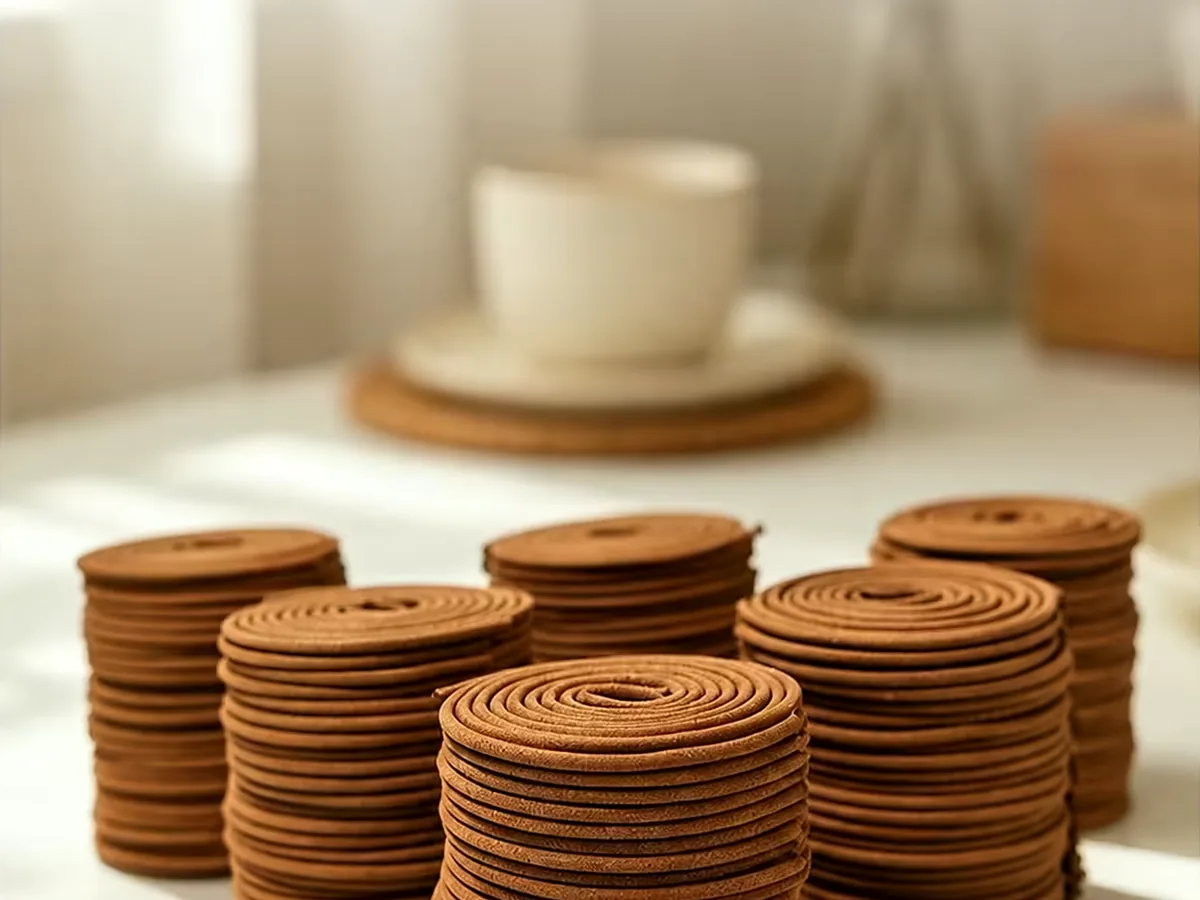
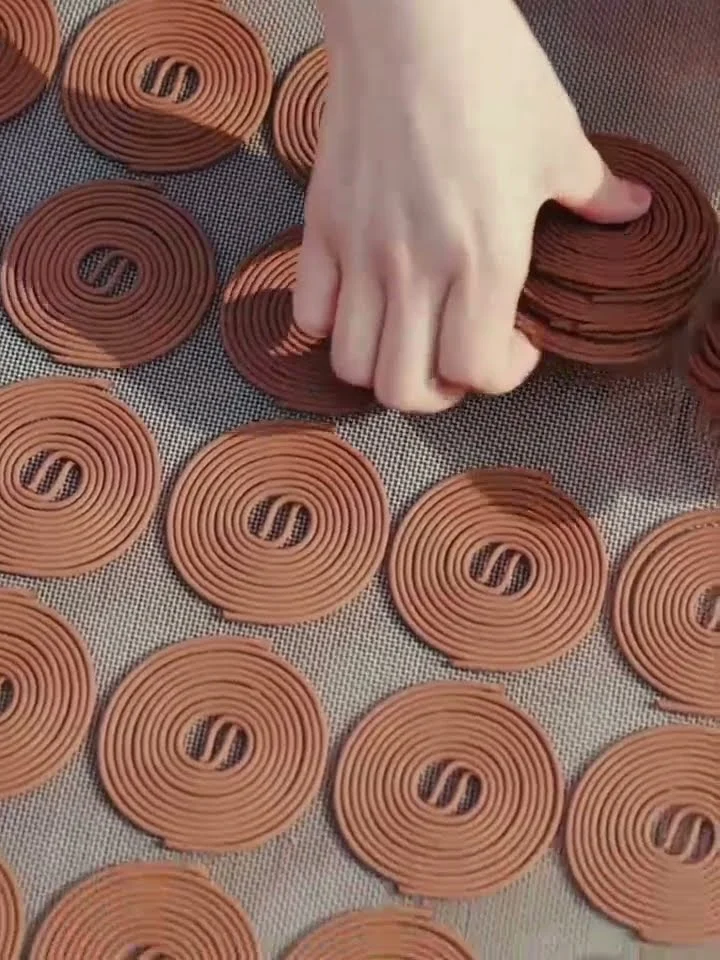
Coils after forming: sorting, stacking, packing

Formed coils in close-up, then sorted by hand, stacked and made ready for packing.

Incense coils sorted and stacked after forming, ready for packing

Coils after forming: sorting, stacking, packing

Formed coils in close-up, then sorted by hand, stacked and made ready for packing.

Buyer Questions

Incense coils — frequently asked questions

How long does a coil burn compared with a stick?

A coil holds far more material in one piece than a stick and runs for hours rather than minutes. That is why temple, ceremony and hotel reception channels buy them. Exact burn time depends on coil diameter, cross-section and turn count — tell us the burn duration you need and we will specify backwards from it rather than quoting a stock coil and hoping it fits.

Are coils more fragile in shipping than sticks?

Considerably, and it is the single thing to plan for on this line. A coil is a thin spiral of pressed powder with nothing running through it. So it breaks if it is packed loosely or handled roughly. Coil freight cost per unit is higher than anything else in our range for that reason. Nesting, interleaving and carton fill do most of the work. If you are ordering coils for the first time, ask us for the drop-test result on the packing configuration we intend to use before you commit to the quantity.

Do coils need a special burner?

They need either a hanging hook or a plate with a raised centre. So that air reaches the underside of the spiral. A coil laid flat on a solid surface will smother and self-extinguish partway through, which the end customer will read as a product defect rather than a burner mismatch. If you are selling coils into a channel that does not already own the hardware, pair them with a coil burner from our censers line rather than assuming.

Can you match a coil to a specific burn duration?

That is how we would rather quote it. Give us the duration and the vessel, and we specify diameter, cross-section and turn count backwards from those two constraints. Quoting from a stock size is how a buyer ends up with a coil that runs ninety minutes when the service is two hours — technically within spec, commercially useless.

What gets a coil shipment held at customs?

The agarwood is rarely the problem. What holds consignments is a commercial invoice that describes the goods generically — 'incense preparation' or similar — because that wording invites customs to reclassify them as a chemical product, at which point the entry stops until someone proves otherwise. We declare the natural makko binder explicitly on every invoice we issue, which removes that failure mode at source. Your broker is the right person to confirm what else your specific import route requires.

Do coils hang or sit flat?

Both, and it changes the burn slightly. A hung coil burns evenly because air reaches it from all sides. A plate-seated coil has one face against the plate and can burn marginally slower there. For temple and reception use hanging is the norm. We can bundle hanging hardware or a seating plate from the holders line so the coil arrives with something to burn on.

Why are coils more expensive to ship than sticks?

Because the packing has to do structural work. A coil is a thin unsupported spiral and it breaks if it moves in the box. So it has to be nested, interleaved and the carton filled properly rather than simply boxed. That raises both material cost and cubic volume per unit. It is a real cost, we do not hide it in the unit price. And it is worth factoring into your landed cost before you compare a coil quote against a stick quote.

Ordering, lead time, payment, shipping and claims are answered in full on the buyer FAQ.

Ready to order agarwood incense coils?

Send quantity, grade, packaging and destination. We reply within one business day with a formal price list — and we will tell you if a different line in our range fits your market better.

Request a quoteWhatsApp