
Quality control
Natural Incense Quality Control — What We Control, and What We Do Not Measure
Quality control in this category is mostly a matter of being specific where other suppliers stay vague. Here is what we control on every batch, what you get on paper — and, in its own section further down, the figures we do not publish and the reason for each.
Philosophy
Why we would rather say nothing than say a number
Adjectives are not specifications. "Premium", "high quality" and "natural" cannot be tested against, and a supplier who describes their product exclusively in those terms cannot be held to anything when a shipment disappoints.
So the tables below are shorter than they could be. Every line in them is either something we do on every batch or something we can put in front of you. Where a figure would require an instrument we do not own or a counted panel we have not run, there is no line — not a vague one, and not an optimistic one. The section headed “What we do not measure” lists those by name and says why.
The corollary matters as much: if we state a number and miss it, you have a clear basis for a claim. That is the point. A specification that only works in the supplier's favour is a marketing document.
What we control
What happens to every batch, by line
Incense sticks
| Binder ratio | 18–22% natural makko, stated per batch |
|---|---|
| Charcoal content | None across every stick line |
| Diameter | Nominal die size, stated per line — no tolerance published |
| Drying | Dried before packing, desiccant in every master carton |
| Batch reference | Every run burned against the sample you approved, before packing |
| Retention sample | Sealed at packing, held 3 months from dispatch |
Incense powder
| Mesh | 40 · 80 · 120 · 200 — screened and labelled by grade |
|---|---|
| Foreign matter | Magnetic and screen separation before packing |
| Drying | Dried before packing, foil barrier with desiccant |
| Blend uniformity | Three-point sampling from each blend |
| Retention sample | Sealed at packing, held 3 months from dispatch |
Essential oil
| GC-MS | On request, tied to the batch number — laboratory cost at cost |
|---|---|
| Adulteration screen | Part of that GC-MS when commissioned — ratio analysis against an Aquilaria reference |
| Soak and distillation dates | Both recorded against the batch, and carried onto the certificate when one is issued |
| Yield | Recorded per batch |
| Flash point | On the batch safety data sheet, against the 60 °C dangerous-goods threshold |
| Retention sample | Sealed vial, held 3 months from dispatch against the batch record |
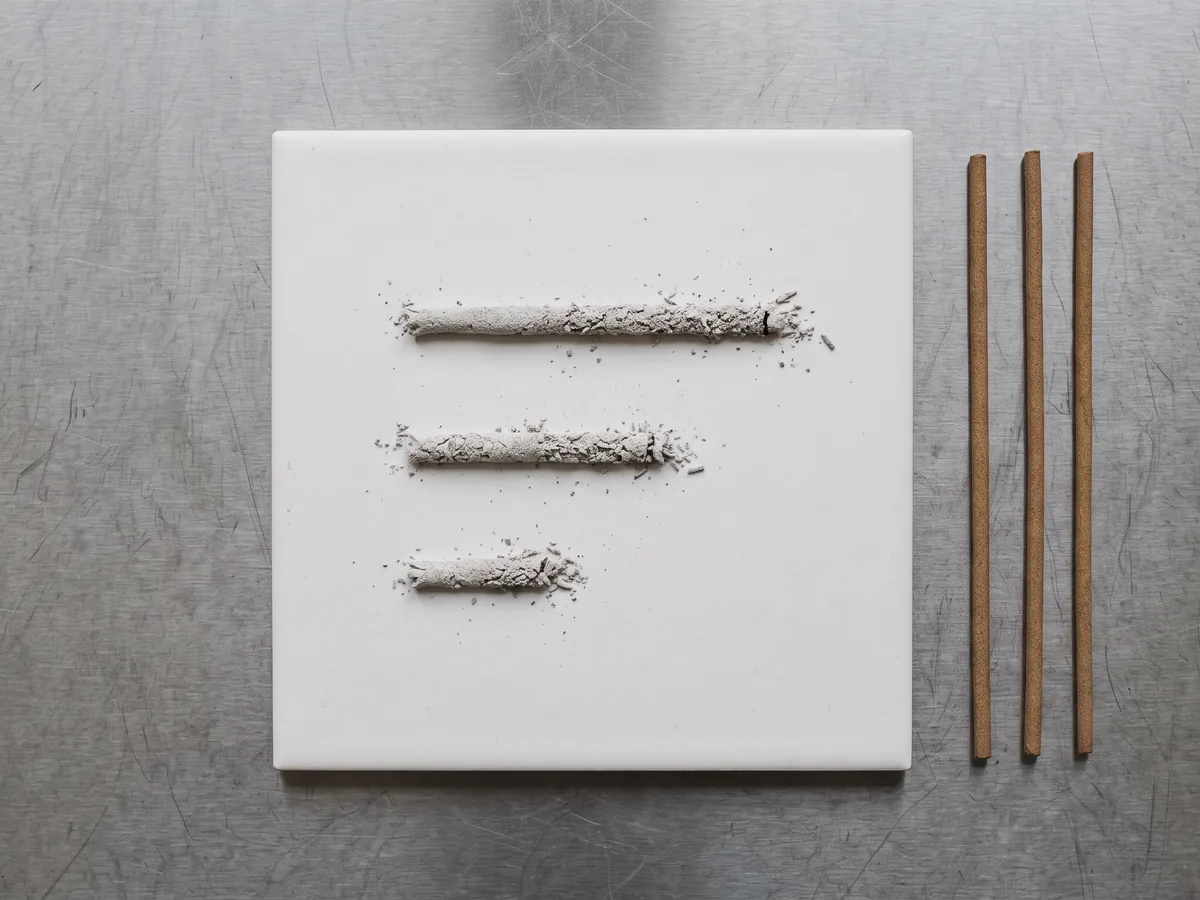
Retention
The sealed sample behind every shipment
Before any batch leaves, a physical sample of it is sealed and stored for three months from dispatch. It is the mechanism that converts every claim on this page from an assertion into something verifiable.
It protects you, because a disputed shipment can be checked against the material we said we sent rather than against memory. It protects us for exactly the same reason. And it is the practice we would look for first when assessing any supplier in this trade, including ourselves.
Retention policy
| All grades | Sealed, held 3 months from dispatch |
|---|---|
| Oils | Sealed vial, held against the batch record |
| Access | Available for independent testing on request |
| Chain of custody | Recorded from plantation stand and induction date on every lot |
Process
What happens to a batch, in order
Specification agreed
Measurable figures go on the order rather than adjectives. This is the step that makes every later one enforceable.
In-process checks
Blend ratio and forming checked during the run rather than only at the end, because a lot that has drifted is cheaper to catch early.
Batch check against reference
Burn behaviour, propagation and scent compared against the sample you approved, before anything is packed.
Documentation issued
Whatever you ordered for that lot — a certificate of analysis, a third-party report, or neither. Batch records are kept either way.
Retention sealed
A physical sample sealed and stored against future questions, held three months from dispatch.
Scope
What we do not measure, and why
Everything above describes what we specify against and what we check. It does not describe a third-party certification, and we are careful not to let the two blur. Where a value is specified against a published standard, the page says specified rather than certified, because we hold to the technical requirement without holding the certificate.
Here is the list, plainly. We have no oven, so we do not publish a moisture percentage. No calipers, so we publish a nominal diameter and no tolerance. No standard test sieves, so we publish a mesh grade and no conformity percentage. We do not test every bottle for leaks, so we describe how they are packed instead of quoting a rate. And we have never submitted a carton for ISTA-3A transit testing, so we describe the packing rather than name the standard.
The same applies to anything that needs a counted panel: self-extinguish rate, ash column length, smoke density against a reference, propagation failure on a press. Running those honestly means hundreds of units and a written record. We have not done it, so those figures are not on this site — they were removed in September 2026 along with two claims on the home page that depended on them.
None of this is permanent. Each one is a purchase and a procedure away, and the original values are archived so they can go back the moment there is a record behind them. But the order matters and it is not negotiable here: the measurement first, then the number on the page.
In practice
What a rejected batch looks like
A rejection is not dramatic. Someone burns a stick beside the retained reference for that grade. It is off. The lot is set aside and the next one runs. Nobody is blamed and nothing is announced.
What matters is the next step. The set-aside lot does not ship under that grade. It may ship as a lower tier. It may be reworked. It is never quietly pushed into the same carton as a passing lot.
Buyers rarely ask about this. They should. A supplier who cannot describe what happens to a failing lot probably does not have a failing lot. That means the check is not real.
Ask us at any point which lots were set aside last month and why. The answer is a number and a reason. If it is ever zero, ask harder.
Watch
Material, machines, finished stock — and a burn at the end
A short pass through the plant: raw material, the forming equipment, racks of finished incense, and one lit at the end.
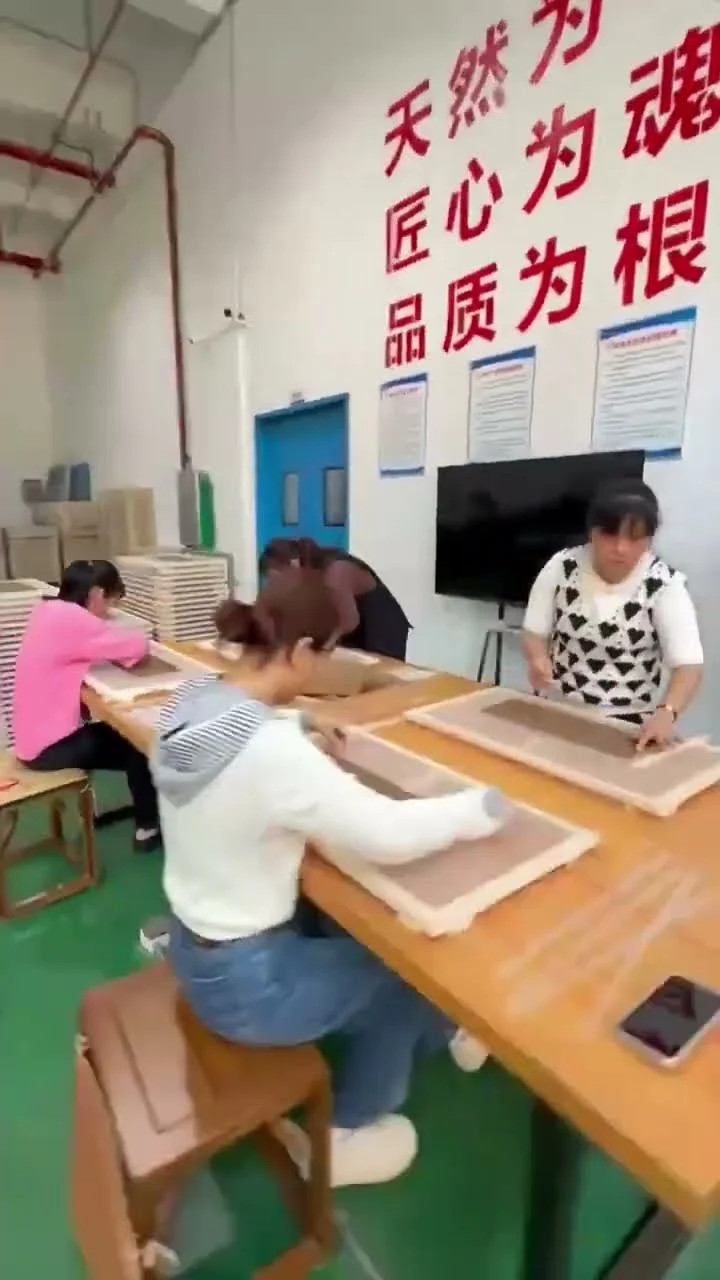
Material, machines, finished stock — and a burn at the end
A short pass through the plant: raw material, the forming equipment, racks of finished incense, and one lit at the end.
On paper
What the testing turns into
Everything on this page eventually becomes a document. The batch checks become a certificate of analysis, the identity work becomes a GC-MS report, and the hazard data becomes a safety data sheet — which for agarwood oil records the batch flash point against the 60 °C dangerous-goods threshold, and the transport classification that follows from it. The documentation section explains each one: what it contains, who issues it, how long it takes and the specific ways it goes wrong.
Buyer Questions
Quality control questions
What exactly is a retention sample?
A sealed physical sample of the specific batch you received, stored by us for three months from dispatch. That window is set to outlast the fourteen-day claims period by a wide margin rather than to sound impressive. If a question arises inside it, it is resolved against material rather than against two parties' recollections. It is the single practice we would check first when assessing any supplier in this trade.
How do you guarantee a reorder matches my previous order?
We hold a retained reference sample of the approved profile for each grade and assess every subsequent production run against it by trained panel before release. A run that has drifted does not ship under that grade. This is only possible because the whole range is plantation material from managed induction — a supplier working from wild-collected lots is matching one-off material and cannot honestly promise it.
What happens if a shipment is out of specification?
We assess against the sealed retention sample for that batch, and against the certificate of analysis where one was issued, and then replace or credit. Having measurable specifications and a physical retention sample means that conversation is short and factual rather than adversarial. That is most of why we operate this way.
Can I have material independently tested?
Yes, and we would encourage it on any first significant order. We will supply a sample from the same batch for your own laboratory. A supplier who is uncomfortable with independent testing is telling you something worth hearing.
Ordering, lead time, payment, shipping and claims are answered in full on the buyer FAQ.
Want the specification sheet for a specific line?
Tell us which product and we will tell you what we can document for it, what that costs and how long it takes — before you order, not after.