Grade · Mid to upper (reference only)
Wild-Band Agarwood — Why Agarwood Is Expensive, and Why We Do Not Sell It
A real grade, and not one we produce. Everything we ship is plantation Aquilaria.
Grade characteristics
| Do we supply this grade | No — plantation Aquilaria only |
|---|---|
| Origin of resin | Natural infection, wild or minimally managed stands |
| Resin band | Medium-high to high |
| Reproducibility | Low — every lot differs, cannot be matched and resupplied |
| Typical supply model | Allocated by lot, never pooled |
| Permit to ask for | One that references the specific lot, not a generic company document |
| What we supply instead | Plantation Aquilaria, batch-matched, with retention samples |
Grade detail
Understanding Wild-Band Agarwood
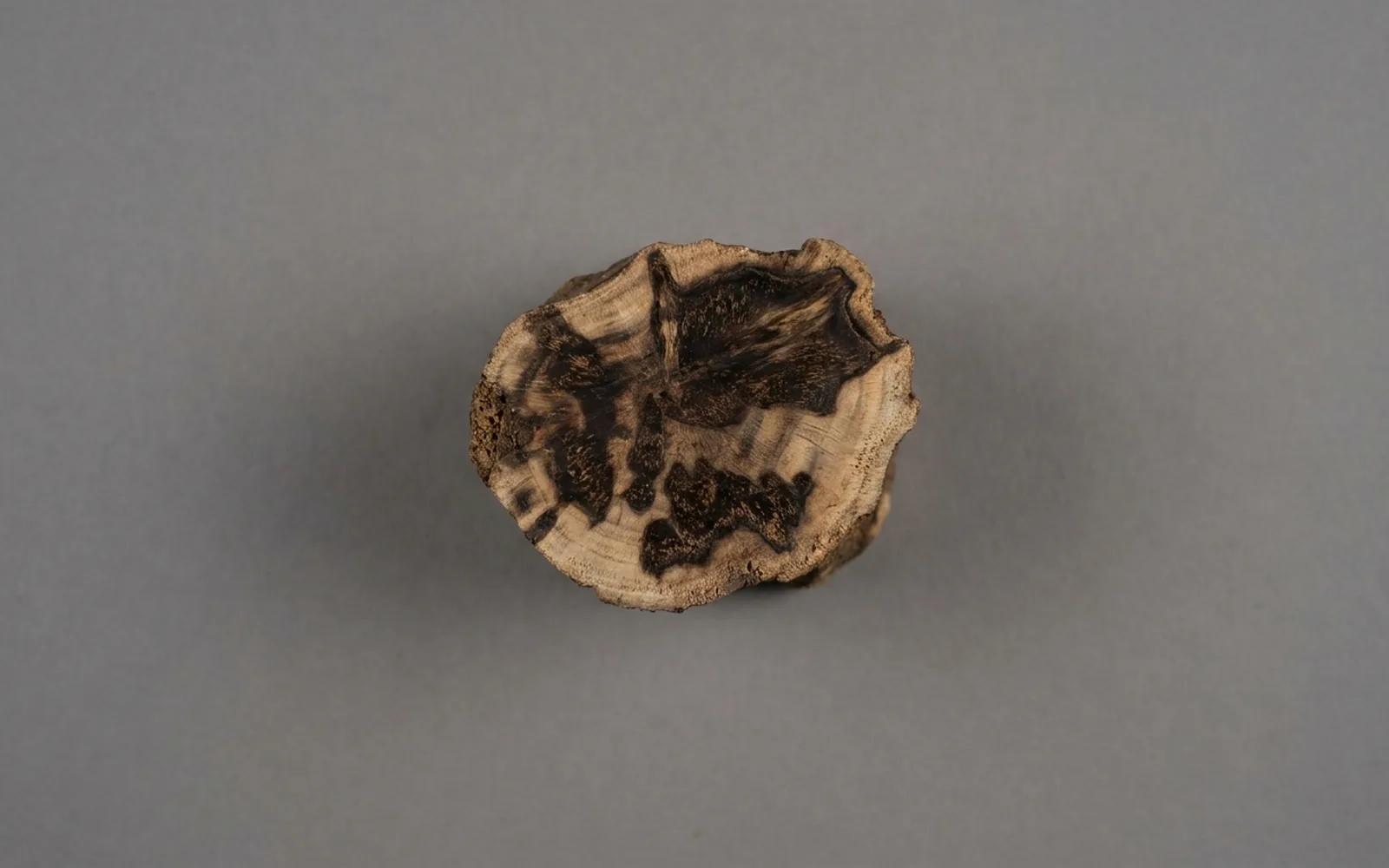
Wild-band agarwood sits between plantation material and kynam. Resin concentration is materially higher than cultivated stock, the profile has more depth and complexity. Every lot is different because the next lot is a different piece of forest.
We do not supply it. Everything that leaves our factory is plantation Aquilaria from our own stands in Guangdong and Hainan. And we would rather say so on the page a buyer reads before enquiring than after. If wild-band material is what your range needs, we are the wrong supplier for that tier. Buy it from someone who actually holds it.
That is not modesty about quality — it is about what we can stand behind. Our whole method is measured values, a sealed retention sample per batch. The ability to make the next lot match the one you approved. Wild material cannot be matched to a reference and resupplied, so none of that machinery applies to it. A supplier who offers wild-band stock alongside a promise of consistent resupply is promising two things that cannot both be true.
What we can do is help you buy it well elsewhere. Ask whether the export permit references the specific lot rather than being a generic company document. Ask whether the quantity is one lot or several pooled together, because pooling averages away exactly the character being paid for. And ask for GC-MS on the specific lot rather than a house profile. A supplier who cannot produce those three things for wild material is either not holding wild material or not documenting it.
A note on sustainability, stated plainly: wild Aquilaria populations are under real pressure. That pressure is why the genus is internationally protected at all. Plantation cultivation exists precisely to take load off those populations. That is the side of the trade we are on. It is the reason our range stops where it does.
Why we keep this page at all, given that we do not sell the grade. Buyers ask about it constantly, usually because someone else has offered it to them. A straight answer plus the questions worth asking is more useful than silence. It also makes our own position legible: everything on this site is plantation. You should be able to check that we hold to it.
What the grade actually means. Wild-band material formed without human intervention, over an unpredictable period, in a tree nobody planted. The resin distribution is uneven and the character varies piece to piece. That variability is the appeal at the collector end and the disqualifier at the retail end. It cannot be specified, only described after the fact.
The commercial consequence is simple and it is the reason we stay out. Every lot is a one-off. You can build a collector SKU on one. You cannot build a shelf position that has to smell the same when the customer returns in six months. Our whole method depends on reproducing a lot you approved, and this grade removes that possibility by definition.
If your range genuinely needs a wild-band tier, buy it from someone who actually holds it, and ask four things. Does the export permit reference this specific lot or is it a generic company document. Is the quantity one lot or several pooled together, because pooling averages away the character being paid for. Is there independent GC-MS on this lot. And can you buy a small paid sample of the exact piece before committing.
One more reason we publish this page rather than staying quiet. Buyers who have been sold a misdescribed wild lot tend to stop buying the category rather than change supplier. That is bad for everyone still in it, including us. A buyer who knows what the questions are is a better customer than one who has been burned and left.
If you do buy at this tier, treat it as a single object rather than as stock. Photograph it against the certificate on arrival with the lot number visible. Store the retention portion separately. Neither step is an accusation; both are the ordinary care you would apply to anything else at that price.
A closing note on what we will still do here. We do not sell this tier and we will not broker it. We will read a claim with you before you commit elsewhere, at no charge, because a buyer who knows the questions is better for this trade than one who has been burned and left it.
A note on why the price gap is so wide and so unstable. Wild material is priced per piece against a judgement about character. The judgement is made by a small number of people. That produces a market where two apparently similar lots can differ several-fold, and where a price today tells you very little about a price next quarter. Retail ranges do not survive that kind of input volatility.
And a note on what happens downstream if you do buy it. Every subsequent decision becomes bespoke: the packaging, the price point, the sales training, the story on the shelf. That is fine for one anchor object and impossible to scale. Decide upfront whether you are buying a piece or opening a tier, because the two require completely different amounts of your attention.
Watch
What we actually mill
Plantation chips going through the mill — the only material we process.
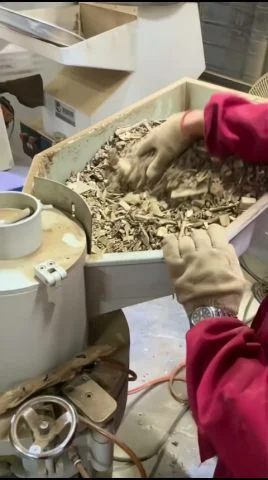
What we actually mill
Plantation chips going through the mill — the only material we process.
Buyer Questions
Why agarwood is expensive — frequently asked questions
Do you sell wild-band agarwood?
No. Everything we produce is plantation Aquilaria from our own stands in Guangdong and Hainan. We keep this page because buyers ask about the grade and deserve a straight answer. Not because we are quietly offering it.
Why not carry it as an upper tier?
Because our method depends on being able to reproduce a lot you approved, and wild material cannot be reproduced — the next lot is a different piece of forest. We would have to either stop making that promise or make it dishonestly. A supplier offering wild-band stock alongside guaranteed consistent resupply is promising two things that cannot both be true.
What should I ask a supplier who does offer it?
Three things. Does the export permit reference this specific lot, or is it a generic company document? Is the quantity offered one lot or several pooled — because pooling averages away the character you are paying for? And is the GC-MS from this lot or a house profile? A supplier who cannot produce all three is either not holding wild material or not documenting it.
Ordering, lead time, payment, shipping and claims are answered in full on the buyer FAQ.
Enquire about Wild-Band Agarwood
Every grade we sell ships with a sealed retention sample and stated specifications. Ask for the documentation before you order rather than after.