Tool
Incense Finder — Which Types of Incense Fit Your Market?
Six questions. Nothing is submitted anywhere and no email is required — the answer appears on this page. Format follows destination, grade follows price band, and the attach line follows whichever core line you land on.
How it works
The reasoning behind the recommendation
The logic is not complicated and it is worth stating openly, because it is the same reasoning we apply to an emailed enquiry.
Destination decides format. Japan takes short coreless sticks; the Gulf takes long thick ones; Europe and North America are smoke-sensitive and take low-smoke. Getting this wrong costs more than any unit-price saving.
Price band decides grade. Everyday low-smoke anchors volume and koh grade gives customers a reason to trade up — a spread of more than ten to one, all of it plantation Aquilaria. A visible top makes the whole shelf legible.
Core line decides the attach. Sticks need holders, powder needs a burner, oil needs the right bottle. Selling a core line without its attach line leaves the reorder annuity on the table.
The three rules
Why these three variables decide which types of incense fit
There are perhaps a dozen variables that could go into a product recommendation — species, origin, binder ratio, diameter, count per box, packaging format, certification. Most of them matter to the finished product and almost none of them should drive the initial choice, because they are downstream of three decisions that come first.
Destination decides format, and it is genuinely non-negotiable. Room size, how the incense is used, and long-standing regional conventions determine stick length and diameter far more than any preference you or we might have. A supplier who lets a buyer choose format freely is failing to advise them.
Price band decides grade. This sounds obvious and is regularly got wrong in the other direction — buyers who ask for the best grade for a mass-retail SKU, or who try to anchor a specialist range on plantation material because it is cheaper. Grade should follow the shelf position, not the other way round.
Core line decides the attach. Sticks need holders, powder needs a burner, oil needs the right bottle. This is the variable most often skipped entirely, and it is where basket size and reorder rate actually come from. A customer who owns an electric burner is committed to your powder range for as long as the unit works. A customer who bought sticks with nothing to burn them on improvises with a saucer and forgets your brand.
Everything else — species, exact diameter, binder ratio, packaging structure — is a specification conversation that happens after these three are settled. It is a conversation better had over a sample than over a form.
Before you decide
Why these three questions
Why these three inputs and not a longer questionnaire. Market tells us the format conventions you have to meet, because those are fixed by the destination rather than negotiable with us. Channel tells us the packaging and the MOQ that make sense. A distributor and a single boutique need different answers to the same product question. Price band tells us which grade to select within, which is the variable we actually control.
Everything else a longer form would ask can be settled after we know those three. Burn time follows from format and diameter. Documentation follows from destination. Lead time follows from whether you are on stock packaging or private label. Asking about them upfront would make the form feel thorough and would not change the recommendation.
What the tool will not do is tell you a price. Grade, quantity and destination move it too much for a number generated from three answers to be honest, and a wrong number here is worse than no number: it anchors the conversation somewhere neither of us can hold. Take the recommendation, then send it to us with a quantity and we will quote against it.
In more detail
What to do with the recommendation
Treat the output as a starting specification rather than an answer. It narrows format, grade band and quantity, which is most of the work. It does not know your shelf price, your competitors on that shelf, or what your existing customers already buy from you. Those three usually adjust the recommendation by one tier in either direction.
The most useful next step is to send the recommendation back to us with a quantity and a destination attached. That is enough for a real quotation, including the document pack. That is part of the cost and varies by route. A recommendation without a destination cannot be priced honestly.
If you already sell in this category, add one more thing: a physical sample of your current product. Matching against material beats matching against description every time. It lets us tell you whether the recommended tier is actually a step up from what you have or merely a step sideways at a different price.
And if the recommendation looks wrong, say so with a reason. The tool works from three variables, and a fourth one specific to your channel may override all of them. A rejection with a reason attached gets you a better answer in one email. A rejection without one gets you another guess.
Scope
Where the tool is likely to be wrong
It will be wrong when your channel has a convention the three questions do not capture. Temple supply, hospitality contracts and duty-free all have format expectations that override the general answer for their region. If you are in one of those, tell us and ignore the recommendation.
It will also be wrong if you are replacing an existing product rather than adding one. In that case the incumbent product is the specification, and matching it beats optimising from first principles. Send us the sample instead of the answers.
In practice
What happens to your answers
Nothing. The tool runs in your browser. No email is requested, nothing is stored, and we do not see what you selected unless you send it to us yourself.
That is deliberate. A tool that harvests an address before it gives an answer is a lead form wearing a costume, and buyers recognise it immediately.
If the recommendation is useful, copy it into an enquiry with a quantity and a destination. That is enough for a real quotation.
If it is not useful, the three questions at least tell you which variables we think matter. That is worth something even if you go elsewhere.
Reference
The variables the tool does not ask about
Burn time. It follows from format and diameter, so it is settled once the format is. Tell us the duration your channel needs and we specify the geometry backwards from it.
Scent profile. It is the hardest thing to specify in writing and the easiest to settle with a physical sample. Send what your channel already sells.
Packaging. It follows from the channel and the quantity rather than from the product. So it is a second conversation rather than a first one.
Documentation. It follows from the destination. Once we know where the goods are going, the pack is determined and we prepare it without being asked.
Reference
What each answer narrows
Market narrows format. Length, diameter and count are conventions set by the destination rather than by preference, and they are the hardest constraint in the whole exercise.
Channel narrows packaging and quantity. A distributor, a single boutique and a hotel group buy the same product in three different configurations.
Price band narrows grade. Within plantation material the spread is more than an order of magnitude on resin fraction, so this is the lever that actually sets cost.
What none of them narrows is scent. That is settled with a physical sample, which is why the last step is always to send one rather than to describe one.
Watch
The formats side by side
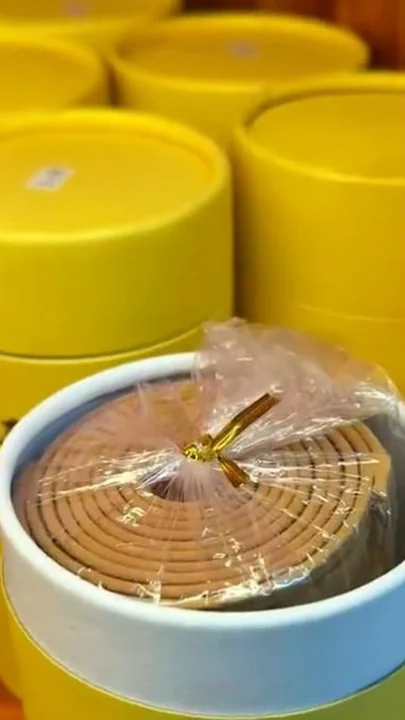
Finished incense in several formats going into retail packaging.
The formats side by side
Finished incense in several formats going into retail packaging.
Got your answer? Now get it quoted
Send the recommendation back to us with your quantity and destination and we will turn it into a formal quotation within one business day.