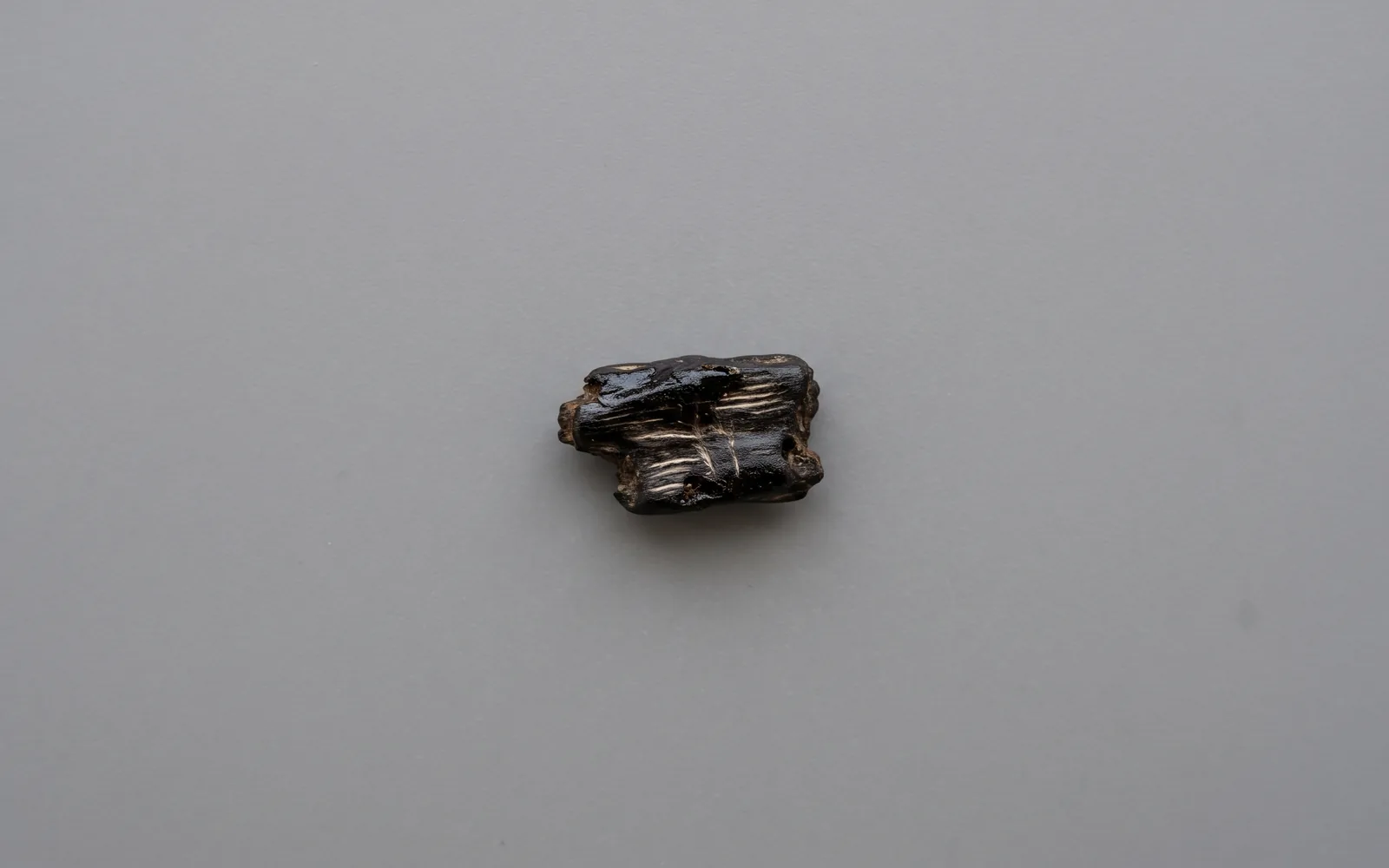
Grade · Collector (reference only)
Kyara, Kynam and Kinam Oud — What It Is, and Why Nobody Can Farm It
A different sensory class, genuinely scarce — and not something a plantation can grow.
Grade characteristics
| Do we supply this grade | No — cannot be plantation-produced |
|---|---|
| Classification | Top grade in the Japanese kōdō system |
| Resin band | Exceptional |
| Signature | Cool, bittersweet, near-floral |
| Why not farmed | Cannot be reliably induced by current plantation technique |
| Misrepresentation risk | High — the price band attracts it |
| Our highest tier instead | Japanese koh grade, plantation Aquilaria |
Grade detail
Understanding Kyara / Kynam
Kyara — kynam in Chinese usage — is the top classification in the Japanese kōdō grading system, and the most important thing to understand is that it is not simply agarwood with more resin. It is a distinct sensory class. It reads cool on the palate in a way other grades do not, it is bittersweet rather than sweet. And it carries a near-floral high note that does not appear in lower grades at any concentration or any price.
It occurs rarely in nature and cannot be reliably induced by current plantation technique. We grow plantation Aquilaria, so we do not have it and do not sell it. We would rather state that on the page a buyer reads before enquiring than have the conversation after a sample request.
This matters more than a normal out-of-range item. The price band attracts misrepresentation on a scale nothing else in agarwood does. Material sold as kynam is frequently high-grade wild agarwood, sometimes ordinary agarwood soaked in oil, and occasionally not agarwood at all. The people most exposed are new buyers. They have read that kyara is the top grade and have no reference sample to compare against.
So here is what to do with a supplier who says they have it. Ask whether the price comes from a fixed list at open-ended quantity — if it does, that is not kynam, because genuine supply is constrained and pricing has to track actual holdings. Ask for independent GC-MS on the specific lot, not a house profile. At these values the analysis costs a rounding error against the goods. Ask for a grading certificate tied to a batch number and a sealed retention sample you can have re-tested later. And buy the smallest paid sample of the exact lot. One gram, or a single box. Burn it before committing to anything.
If you already carry a range and want a credible top end, our Japanese koh grade is the highest tier we produce and can stand behind. It is plantation material selected for resin fraction. It carries the same measured values and the same sealed retention sample as everything else we ship. It is not kyara and we will not describe it as though it were.
Where kyara sits in the classification, for buyers meeting the term for the first time. Japanese kōdō practice sorts agarwood into six named categories by scent character rather than by resin percentage. Kyara is one of them, not the top of a numerical scale. That distinction matters commercially, because a supplier describing kyara as their highest grade of ordinary agarwood is describing something else.
Why it cannot be farmed. Plantation cultivation induces resin formation reliably. The specific conditions that produce the kyara character are not understood well enough to reproduce on demand. This is despite decades of substantial commercial motivation to work it out. The scarcity is a biological constraint. It is not a distribution decision that a large enough order could change.
How the trade actually prices it. Not from a list. A piece is assessed, a price is formed around that piece, and when it is gone there is no replacement at the same price or character. Any fixed price list at open-ended quantity is therefore evidence against the claim rather than for it. So is a stated lead time.
If you are buying for the first time, budget for an object rather than a programme. Decide in advance what happens when it sells, because you will not be able to replace it. Insist on receiving the piece before final payment clears, or use escrow. And photograph what arrives next to the grading certificate on the day it arrives, with the lot number visible. None of that is an accusation. It is the ordinary care you would apply to any single object at the same price.
A note on how the term travels. Kyara, kynam and kinam all refer to the same classification, arriving through Japanese, Chinese and Vietnamese usage respectively. The words are not grades of each other. A supplier using them as a ladder — kinam above kyara, or similar — is inventing structure that the trade does not have.
And a note on what we can still do for you here. We do not sell this tier, but we will read a claim with you before you buy it elsewhere. Send the paperwork and the photographs. Where the claim does not hold, it usually fails on the first two questions rather than on anything subtle.
A closing note on merchandising, if you do carry a piece. Do not display it in the same cabinet as the range it is meant to anchor. A collector object beside stock lines reads as the expensive end of a shelf rather than as a different category. That is exactly the impression the price cannot survive. Give it its own light and its own certificate on display.
Watch
A powder session, end to end
Preparing the powder, placing it in the burner, and the smoke coming up.
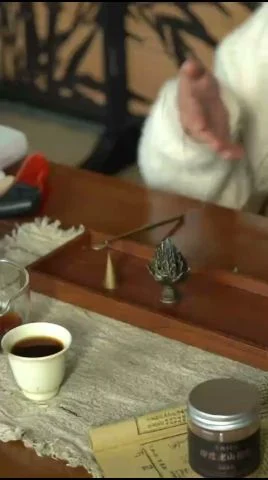
A powder session, end to end
Preparing the powder, placing it in the burner, and the smoke coming up.
Buyer Questions
Kinam oud — frequently asked questions
Do you sell kyara or kynam?
No. It cannot be reliably induced by plantation technique and we grow plantation Aquilaria, so we do not hold it. Our highest tier is Japanese koh grade — plantation material selected for resin fraction, with the same measured values and sealed retention sample as the rest of the range. It is not kyara and we will not describe it as though it were.
What actually distinguishes kyara from high-grade agarwood?
A distinct sensory signature rather than a higher position on a scale — cool on the palate, bittersweet rather than sweet, with a near-floral high note that does not appear in lower grades at any concentration. Practitioners who know the material identify it immediately, which is exactly why documentation matters so much at this level.
How do I test a supplier who says they have it?
Four questions. Is the price from a fixed list at open-ended quantity — if so it is not kynam, because real supply is constrained. Is the GC-MS from this specific lot or a house profile? Is there a grading certificate tied to a batch number and a sealed retention sample you can have re-tested? And will they sell you one gram of the exact lot to burn before you commit? A no on any of those is an answer.
Ordering, lead time, payment, shipping and claims are answered in full on the buyer FAQ.
Enquire about Kyara / Kynam
Every grade we sell ships with a sealed retention sample and stated specifications. Ask for the documentation before you order rather than after.