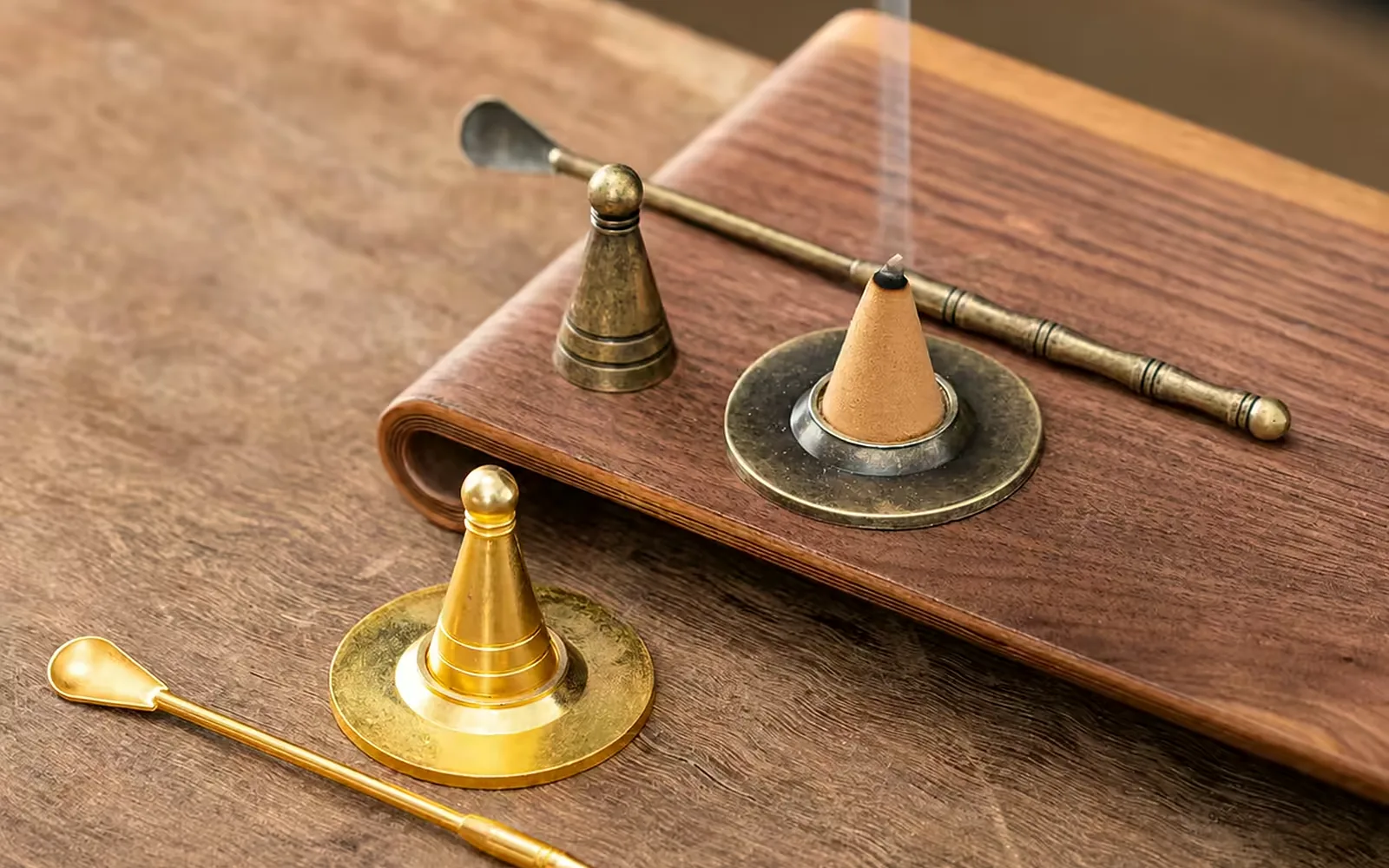
Core Line · Contained Ash
Agarwood Incense Cones — Ash Stays in the Vessel
The format a stick cannot cover: every particle of ash stays inside the vessel.
Key specifications
| Base material | Powdered Aquilaria sinensis / Aquilaria crassna |
|---|---|
| Binder | Natural makko (Machilus thunbergii) — no charcoal, no synthetics |
| Format | Solid cone |
| Cone dimensions | 24 mm high × 24 mm base |
| Burn time | 15 – 20 minutes, indicative for this format |
| Count per box | 50 cones |
| MOQ | None on stock packaging · private label from 500 boxes |
| Lead time | Within 2 weeks on stock · 25–35 days on private label from approved artwork |
- Plantation Aquilaria, single origin
- 12+ years exporting
- Batch retention samples held
- No minimum order quantity on stock lines
Contained Ash
Same agarwood, one thing a stick cannot do.
A stick drops ash. A cone keeps every particle of it inside the vessel. That is the whole reason hotels and carpeted retail spaces buy cones instead of sticks. A stick dropping ash across a surface is a complaint waiting to happen. No amount of scent quality compensates for a scorch mark on a table. The material underneath is identical to our sticks; what changes is what the format lets your customer do with it. If you need hours on one light, that is the coil line. If you are after the downward-flow effect, that is a different geometry again and it has its own line.
- Cones contain their own ash — no fall, no scorch marks, no ash catcher required
- Scent output rises through the burn as the burning face widens downward
- Same makko-bound Aquilaria body as our sticks — no charcoal, no synthetic accelerant
- Need hours rather than minutes? See the coil line. Downward flow? See the backflow line
Product gallery
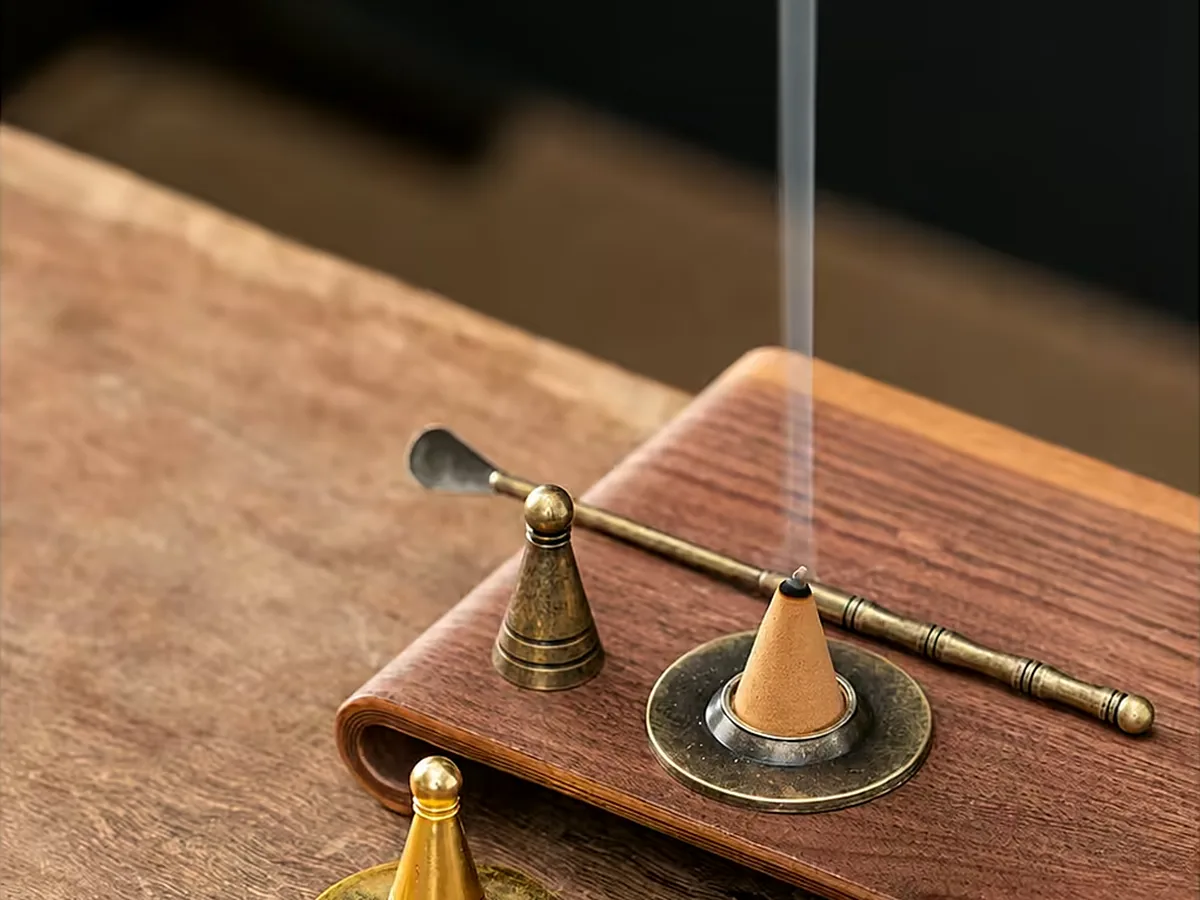
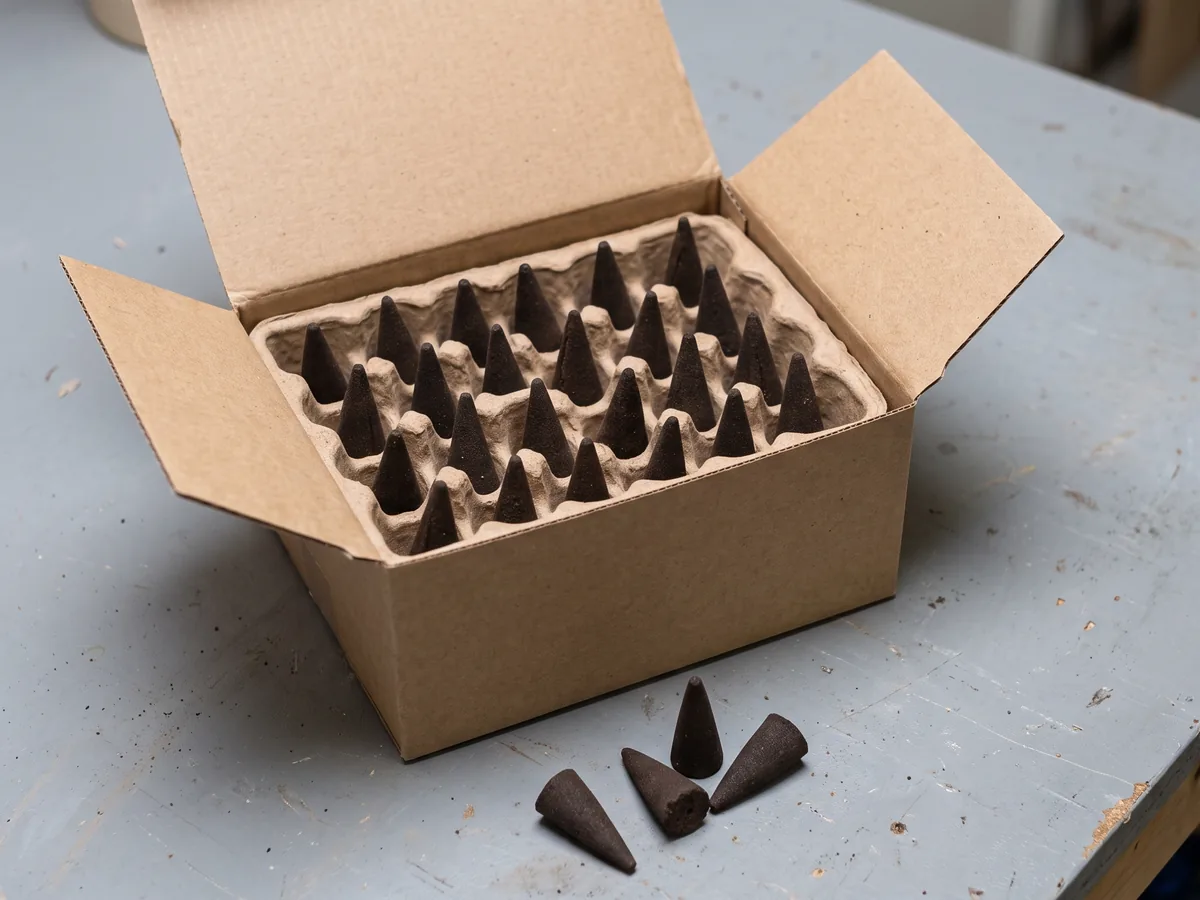
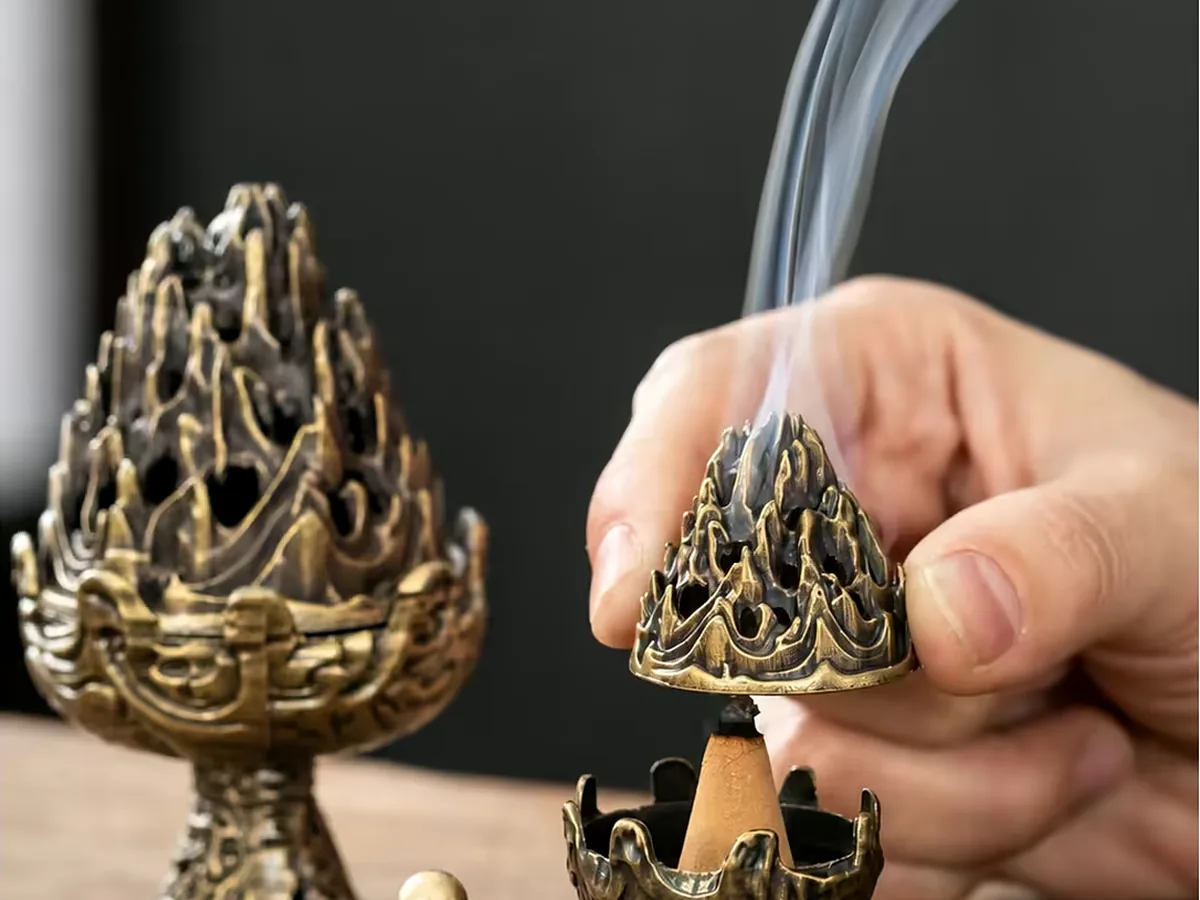
Agarwood Incense Cones — photo gallery
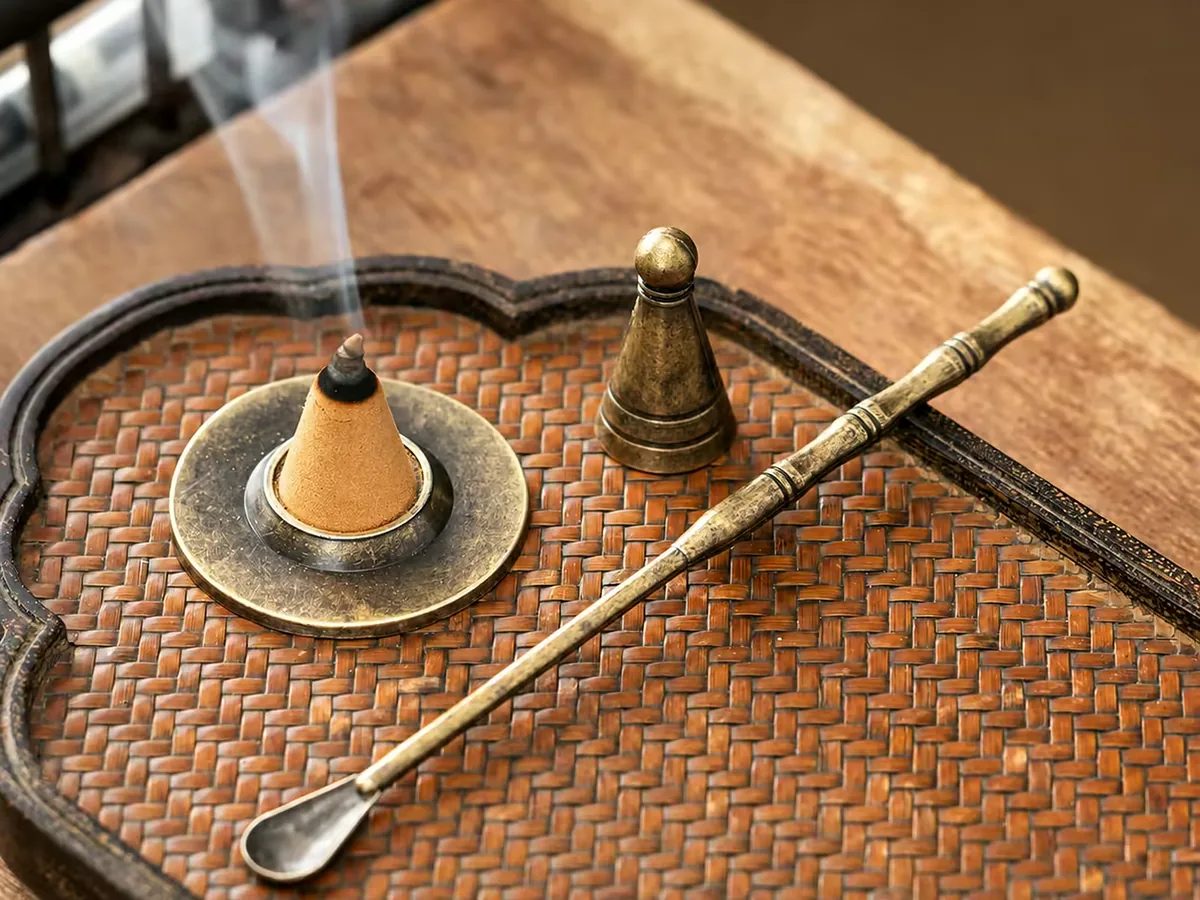
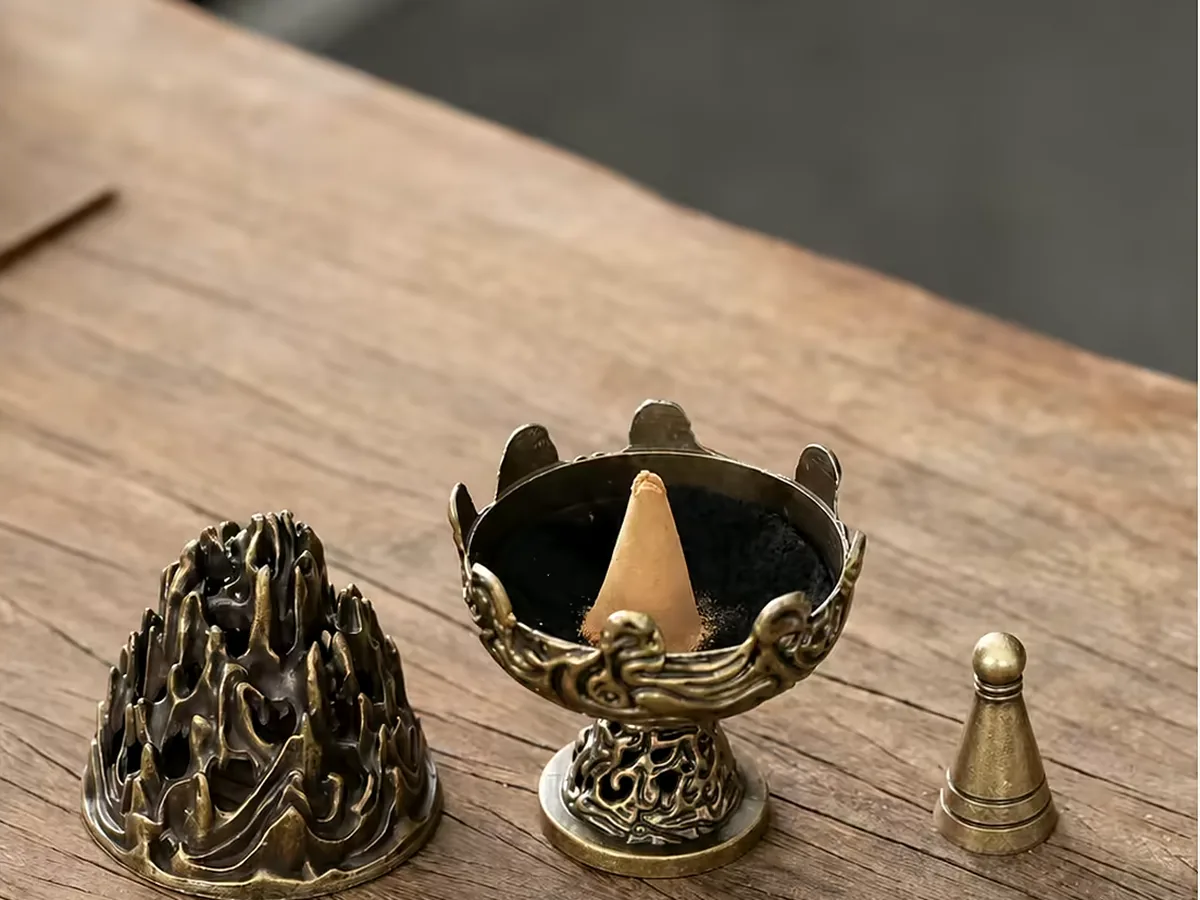
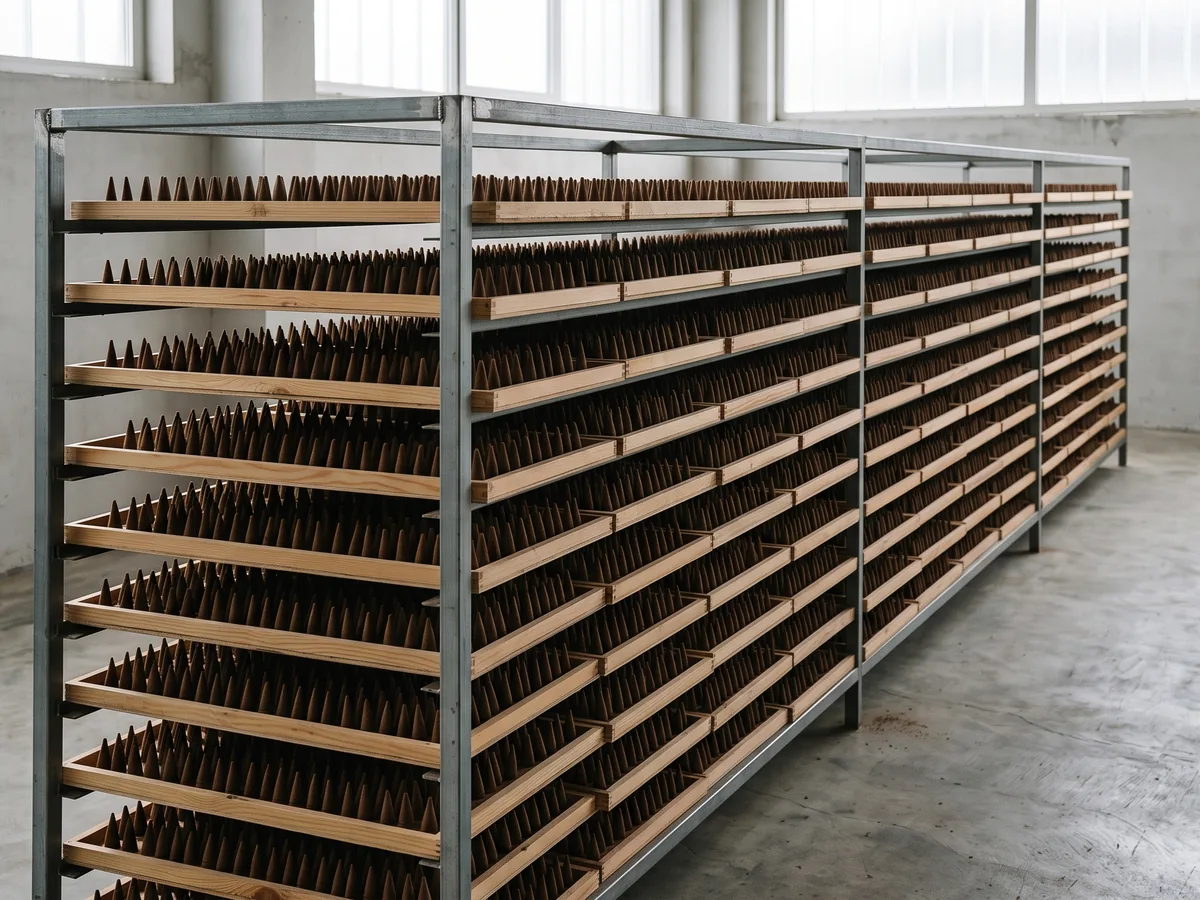
What this line comes in
The grades, and what separates them
These reflect real production differences, not packaging tricks. There is no minimum quantity on any of them — price depends on grade, quantity and destination, so it comes back with the quotation rather than being invented here.
Most specified
Solid Cones — plantation grade
Quote on request
The volume format. All ash stays inside the burner, which is why gift retail and hospitality prefer cones over sticks in carpeted rooms.
High-Resin Cones — koh blend
Quote on request
The same makko-bound body at a higher resin fraction, for retail that sells cones on scent rather than on the format. Shorter, denser burn than the volume tier.
Bulk / OEM Private Label
Quote on request
Custom cone height, base diameter, blend ratio, box structure and print. Dieline supplied, pre-production sample signed off before the run.
Need the full price list?
Tell us quantity, grade, packaging and destination. We reply within one business day with a formal quotation.
Request price listAbout this category
Agarwood Incense Cones — Sourcing Guide
A cone is not a variation on a stick — it is a different burn geometry. It solves a problem the stick format cannot. A cone burns from the apex downward, so the burning face grows as it descends and the scent output rises through the burn rather than staying flat. All ash stays inside the vessel. That single property is why cones dominate hotel amenity, carpeted retail and gift channels, where a stick dropping ash across a surface is a complaint waiting to happen.
Cone height is worth specifying rather than accepting. A taller cone does not simply burn longer — it burns hotter at the base as the burning face widens. That is what scorches a thin ceramic plate and what makes a cone unsuitable for the small lidded burners sold as desk accessories. Tell us the vessel your customer will actually use and we will specify height and base diameter backwards from it, rather than shipping a stock cone and letting the retailer discover the mismatch.
The material is identical to our stick line: powdered plantation Aquilaria bound with natural makko, no charcoal and no synthetic accelerant. That matters more in cone format than in sticks. A cone concentrates a larger burning mass in a small vessel. A charcoal-bound cone in a closed ceramic burner produces noticeably more particulate than the same mass as sticks. If you are selling into wellness, apartment or Japanese retail, the binder question is not academic in this format.
On paperwork, the risk that actually bites in this format is the declaration, not the product. Declare the natural makko binder explicitly on the commercial invoice. A generic "incense preparation" description is what gets a consignment reclassified as a chemical product and held at destination. We write it that way on every invoice we issue. Which permits and certificates your import route requires is a separate question. One to put to your broker before you book rather than after.
Cones divide into two mechanically different products that share a name, and confusing them is the most common ordering mistake in this category. A solid cone burns from the tip downward and the smoke rises. A backflow cone has a channel bored through its axis so that cooled smoke sinks and runs down over the burner. They are not interchangeable. A solid cone placed in a backflow burner simply smokes upward and disappoints. A backflow cone burned on a flat plate wastes the entire effect it was made for. Our backflow cones are a separate line with their own bore specification, and this page covers the solid format.
Format and count. The standard solid cone is 24 mm at the base and 24 mm tall. That is the dimension most decorative burners and most retail boxes on the market are built around. That is a deliberate choice rather than an arbitrary one: a self-designed 27 by 22 mm cone would need new tooling at our end and would then not fit the burner your customer already owns. Boxes run 50 or 60 pieces depending on the tier, 200 boxes to a master carton, with a minimum of 300 boxes on stock packaging and 500 on private label.
Where cones win commercially is ash containment, and it is worth understanding why before you decide how much shelf space to give them. A stick sheds ash along its whole length. That is why hotels, carpeted showrooms and anywhere with soft furnishings quietly stop reordering them. A cone drops everything it produces into the vessel underneath. If your channel includes hospitality, spa or interiors retail, the cone is not a secondary format to the stick. It is the one that will actually be reordered, and it should be quoted and merchandised accordingly.
One honest limitation. A cone concentrates its scent output into a shorter window than a stick of comparable material, so the room reaches full intensity faster and then fades faster. For a twenty-minute ritual that is exactly right. For a retail floor that wants a low, continuous background scent through a trading day, a stick or a coil does the job better and costs less to run. Tell your customers which of the two they are buying for. The returns in this category come almost entirely from people who bought the wrong format rather than a bad one.
A last word on lead time, because cones behave differently from sticks here. Stock packaging ships in 10 to 15 days; private label runs 25 to 35 days from approved artwork. The artwork stage is where the time actually goes. Send us the dieline requirement early even if the print design is not finished, because the box structure has to be settled before anything can be quoted properly. Buyers who treat packaging as the last step routinely lose three weeks they had already promised to a retailer.
Why this one
What makes Oud Incense Cones different
The ash does not go anywhere
A cone burns downward into its own ash pile and leaves it in the vessel. That is why hotel amenity, carpeted retail and gift channels buy cones — a stick dropping ash on a surface is a complaint waiting to happen.
Scent builds instead of flattening
The burning face widens as the cone descends, so output rises through the burn rather than staying level. In a small room that reads as the scent arriving rather than sitting there.
No charcoal, which matters more here
A cone concentrates more burning mass in a closed vessel than a stick does. Charcoal-bound cones put noticeably more particulate into a small room. Ours are makko-bound with none.
Specifications
Full technical specification
Product specification
| Construction | Solid pressed cone — no channel |
|---|---|
| Base material | Plantation Aquilaria sinensis powder |
| Binder | Natural makko (Machilus thunbergii) |
| Binder ratio | Nominated per order — cone and coil forming uses a different ratio from sticks, stated on your specification sheet |
| Charcoal content | None |
| Cone height | 24 mm |
| Base diameter | 24 mm |
| Burn time | 15 – 20 minutes, indicative for this format |
| Count per box | 50 cones |
| Box dimensions | 92 × 92 × 55 mm retail box |
| Carton quantity | 200 boxes per master carton |
| MOQ | None on stock packaging · private label from 500 boxes |
| Lead time | Within 2 weeks on stock · 25–35 days on private label from approved artwork |
There is no test-data table on this page, and that is deliberate. The figures that belong in one need instruments we do not currently own or a counted panel we have not run, so we do not publish them. Everything above is a production fact rather than a measurement. Where a value needs independent confirmation — GC-MS on oil, flash point for the safety data sheet, material identity against LY/T 2904 — it is commissioned from an accredited laboratory and you receive their report rather than ours.
About this product
Oud Incense Cones — detail
A cone is not a compressed stick. It burns from the apex downward, and because the cross-section grows as the burn descends, the burning face gets larger over time. Output therefore rises through the burn instead of staying flat. That is the opposite of a stick and is the main reason people who prefer cones prefer them. It also means a cone finishes faster than the same mass of stick material.
The commercial argument for cones is simpler than the sensory one: all the ash stays inside the vessel. There is no ash catcher to specify, no scorch risk on a wooden surface, and nothing to sweep. For hotel amenity programmes, for carpeted retail floors, and for gift sets where the buyer has no idea what an ash catcher is, that single property decides the format. It is worth more in this channel than any scent difference.
Our cones use the same body as our stick line — powdered plantation Aquilaria bound with natural makko, no charcoal and no synthetic accelerant. The binder question matters more in cone format than it does in sticks, because a cone burns a larger mass inside a small enclosed burner. A charcoal-bound cone in a closed ceramic vessel puts noticeably more particulate into the room than the same material as sticks would. If your channel is wellness, apartment or Japanese retail, this is the specification to check first.
The freight caution with cones is apex damage. Cones chip at the tip when boxes are handled roughly. A chipped cone still burns fine but looks like a defect on a shelf. We pack in partitioned trays rather than loose. If this is your first cone order, ask for the drop-test result on the packing configuration before you commit to quantity. It is cheaper than finding out at destination.
Packaging & OEM
Packaging and private-label options
- Stock: partitioned tray so cones do not knock apexes in transit
- Private label from 500 boxes
- Cone count per box is a specification, not a default — tell us the retail price point you need to hit
- Bundling with a holder or plate is assembled here rather than at your warehouse
Export compliance
| HS Code (indicative) | 3307.41 — “agarbatti” and other odoriferous preparations which operate by burning |
|---|---|
| Safety standard | GB 26386 — the mandatory PRC safety standard for burning incense, covering formaldehyde, benzene homologues, TVOC and migratable heavy metals |
| Product standard | Specified against T/HAIUA 001-2024 (Hainan Agarwood Industry Association): moisture ≤12.0%, ethanol-soluble extract ≥10.0%, straightness ≤3.0% |
| Agarwood content measure | Ethanol-soluble extract — the quantitative test that separates resin-bearing agarwood incense from scented wood flour |
| Material identity | LY/T 2904-2017 and DB46/T 421-2017 — four chromone marker peaks by HPLC, plus colour reaction and TLC against the reference sample |
| Batch traceability | Batch number on the carton, matched to our batch record and to the certificate of analysis when one is issued |
| Declaration note | Natural makko binder declared explicitly to avoid chemical reclassification |
Tradition & meaning
Why the shape was never arbitrary
The cone exists because a burning cone leaves its ash where it fell, which mattered enormously in rooms floored with tatami and screened with paper. It was never designed to be looked at. It was designed to solve a problem with the room it was burning in. The format changed to fit the room. What is burning inside it has not.
Related sourcing information
Origins, grades and related lines
Material and origin
Every line on this page is made from the same material: Plantation Aquilaria from Guangdong & Hainan, China. One grade, one origin, across every line we make. That is the point rather than a limitation: it is what makes a batch reproducible against a retained reference sample months later. What happens to it between the block and the box is set out on the factory tour, stage by stage.
Markets we supply this line to
Watch
From the jar to the burner
A cone taken from the jar, set in a heat-resistant burner and lit — the product as a buyer’s customer actually meets it.
From the jar to the burner
A cone taken from the jar, set in a heat-resistant burner and lit — the product as a buyer’s customer actually meets it.
Buyer Questions
Incense cones — frequently asked questions
What is the difference between a normal incense cone and a backflow cone?
A solid cone burns from the apex down and its smoke rises normally. A backflow cone has a hollow channel through it, and on the right burner the smoke cools inside that channel and pours downward instead. The two are not interchangeable in either direction. And the backflow version has to be matched to the burner it will sit on — which is why we keep it as a separate line rather than a variant on this page.
What cone size should I order?
Specify the vessel rather than the cone. A taller cone burns hotter at the base as the burning face widens. That is what scorches a thin ceramic plate and what makes the larger sizes unsuitable for the small lidded burners sold as desk accessories. Tell us what your customer will actually burn it in and we will specify height and base diameter backwards from that.
Are cones more fragile in shipping than sticks?
Cones chip at the apex, which is the failure mode to design the packing around — a chipped apex will not light cleanly and a retailer counts it as a defect. Moulded trays and carton fill do most of the work here. If you are ordering cones for the first time, ask us for the drop-test result on the packing configuration we intend to use before you commit to the quantity.
What gets an incense shipment held at customs?
The agarwood is rarely the problem. What holds consignments is a commercial invoice that describes the goods generically — 'incense preparation' or similar — because that wording invites customs to reclassify them as a chemical product, at which point the entry stops until someone proves otherwise. We declare the natural makko binder explicitly on every invoice we issue, which removes that failure mode at source. Your broker is the right person to confirm what else your specific import route requires.
How is a cone different from a stick if the material is the same?
Geometry, and it changes three things. The burning face widens as the cone descends, so scent output rises through the burn rather than staying flat. The burn finishes faster than the equivalent mass of stick. And all the ash stays in the vessel instead of falling. The material is identical to our stick line; what you are buying is the burn behaviour.
Do cones need a special burner?
A solid cone needs nothing more than a non-combustible dish — a ceramic plate or a bowl with a little sand. It does not need the chimney that a backflow cone requires. If you want the cone to sit inside an enclosed censer, check that the vessel has enough airflow, because a tightly closed lid will smother a cone in a way it will not smother a stick.
Can I get these unscented or blank for my own blending?
Tell us the application. Blank and unscented cone bodies are a real request in this category, usually from buyers who blend their own aromatic profile. What we will not do is supply a cone body and let it be marketed as agarwood if the agarwood fraction has been diluted below what the label claims — the specification has to match what goes on the box.
Ordering, lead time, payment, shipping and claims are answered in full on the buyer FAQ.
Ready to order agarwood incense cones?
Send quantity, grade, packaging and destination. We reply within one business day with a formal price list — and we will tell you if a different line in our range fits your market better.