Case study
Koh-Grade Material a Blender Does Not Have to Correct For
Their master blender was correcting for incoming material on every batch. Lot-to-lot drift meant the recipe was being rebalanced by nose each time. That makes a house profile depend on one person’s judgment rather than on a written specification, which is a succession problem as much as a quality one.
- Buyer
- Traditional koh manufacturer
- Country
- Japan
- Channel
- Brands & private label
- Supplying since
- 2021
The constraint
What ruled out the obvious answer
They could not change the recipe. A traditional koh profile is the product, not an implementation detail. So the variation had to come out of the material upstream rather than be absorbed downstream.
What changed
The specification, not the relationship
Material for their programme is pre-selected from a single plantation block rather than pooled across blocks. GC-MS runs as standard on koh grade, and the report is tied to the lot number on the carton rather than to a product-line specimen re-issued each shipment. Retention samples are held sealed for three months from dispatch across every grade, so a question raised inside that window is settled against the material rather than against a description.
Results
What moved, and how it was counted
Supply agreement
Renewed annually since 2021
How it was counted. Our own contract record: four consecutive renewals, each covering the following year. Renewal is the only reorder signal on an annual agreement, which is why it is the one quoted here.
Report tied to the lot
Every consignment
How it was counted. The lot number on the GC-MS report is the number on the carton. It is not a product-line specimen reissued per shipment, which is the common practice this replaced.
Retention held
Three months from dispatch
How it was counted. One sealed retention sample per batch in the retention cabinet, held three months from dispatch on every grade including koh. This is a policy we set rather than something we measured, so if your own claims window runs longer than three months, raise it at order stage and we will tell you what we can hold.
What was hard
The part that did not go smoothly
Our standard moisture at packing was still a point or two wetter than their blender wanted. We added a final desiccation pass for their orders. It cost about a week per batch through the first year, before it was scheduled properly instead of being run as an exception. Koh and seal grades now carry the tighter moisture line published on the product pages.
Lines supplied
What actually shipped
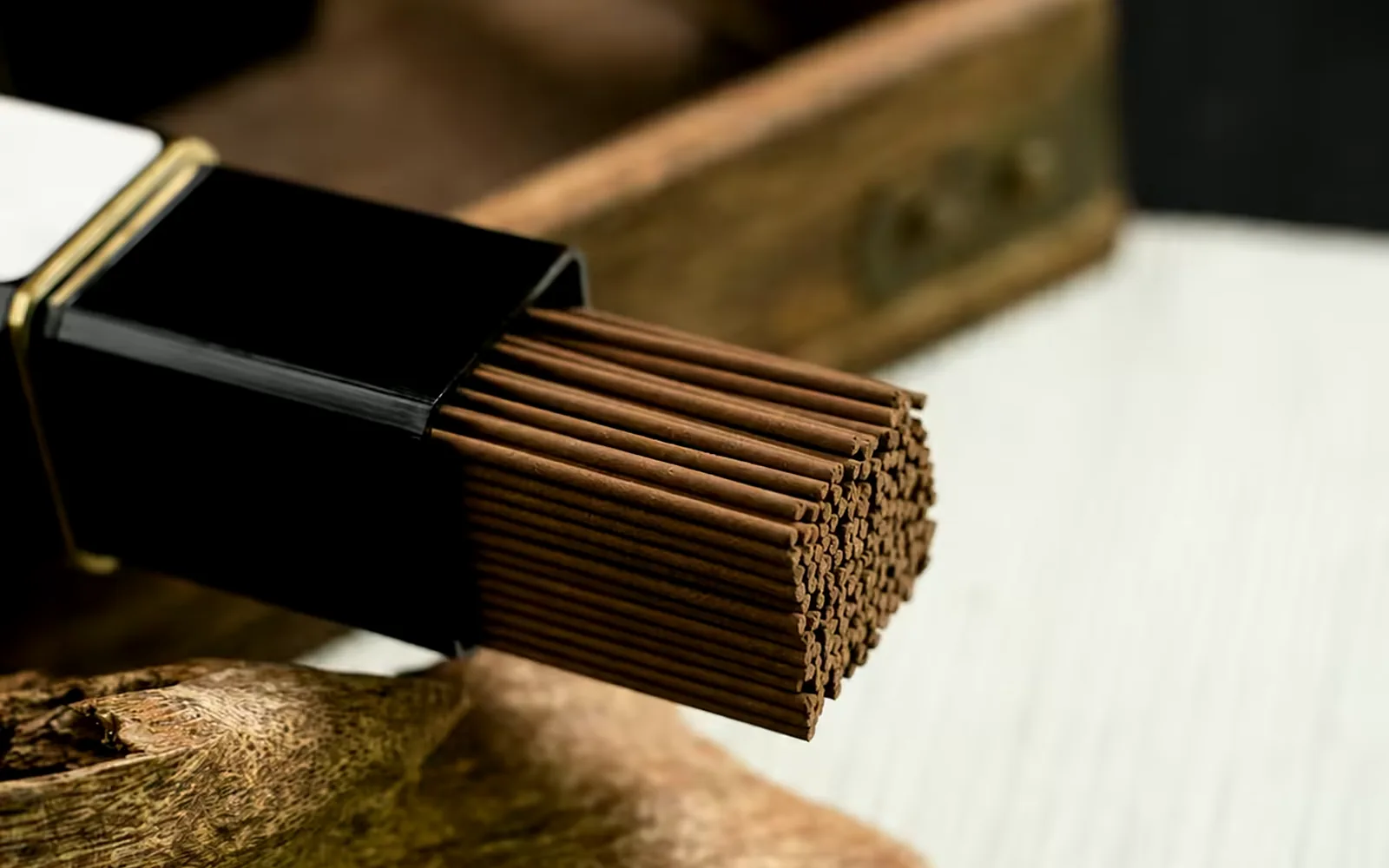
- Japanese Koh-Grade Incense SticksFinished koh lineAgarwood Incense Sticks · minimum order and lead time are on the product page
- Pure Agarwood Incense PowderBlending stock, single blockAgarwood Incense Powder · minimum order and lead time are on the product page
Unit prices are not published here or anywhere on this site, and neither are this buyer’s order volumes. Both belong to their commercial position rather than ours to disclose. Quotations are issued per lot against a stated quantity — ask for one.
Route
Shipping into Japan
The strictest quality bar in the category, and it is about consistency more than about impressiveness.
Other programmes
Cases in other channels
Two Oud Oils and a Filled Retail Vial, in One Season
Two oil grades and the filled retail vial from one supplier, so the fill schedule stayed inside one timetable.
Perfumery and private label · Saudi Arabia
A Document Pack That Arrives Before the Container
Three border holds in six months under the previous supplier, fixed by moving when the documents are produced.
Wholesale distribution into specialty retail · Germany
Full Ingredient Disclosure for a Temple Cooperative
A previous supplier had substituted filler without disclosure. The fix was printing the breakdown on the box.
Religious institution procurement · Japan
Is your programme shaped like this one?
Tell us the channel, the destination and the format. If we have run something comparable we will say which one; if we have not, we will say that instead.