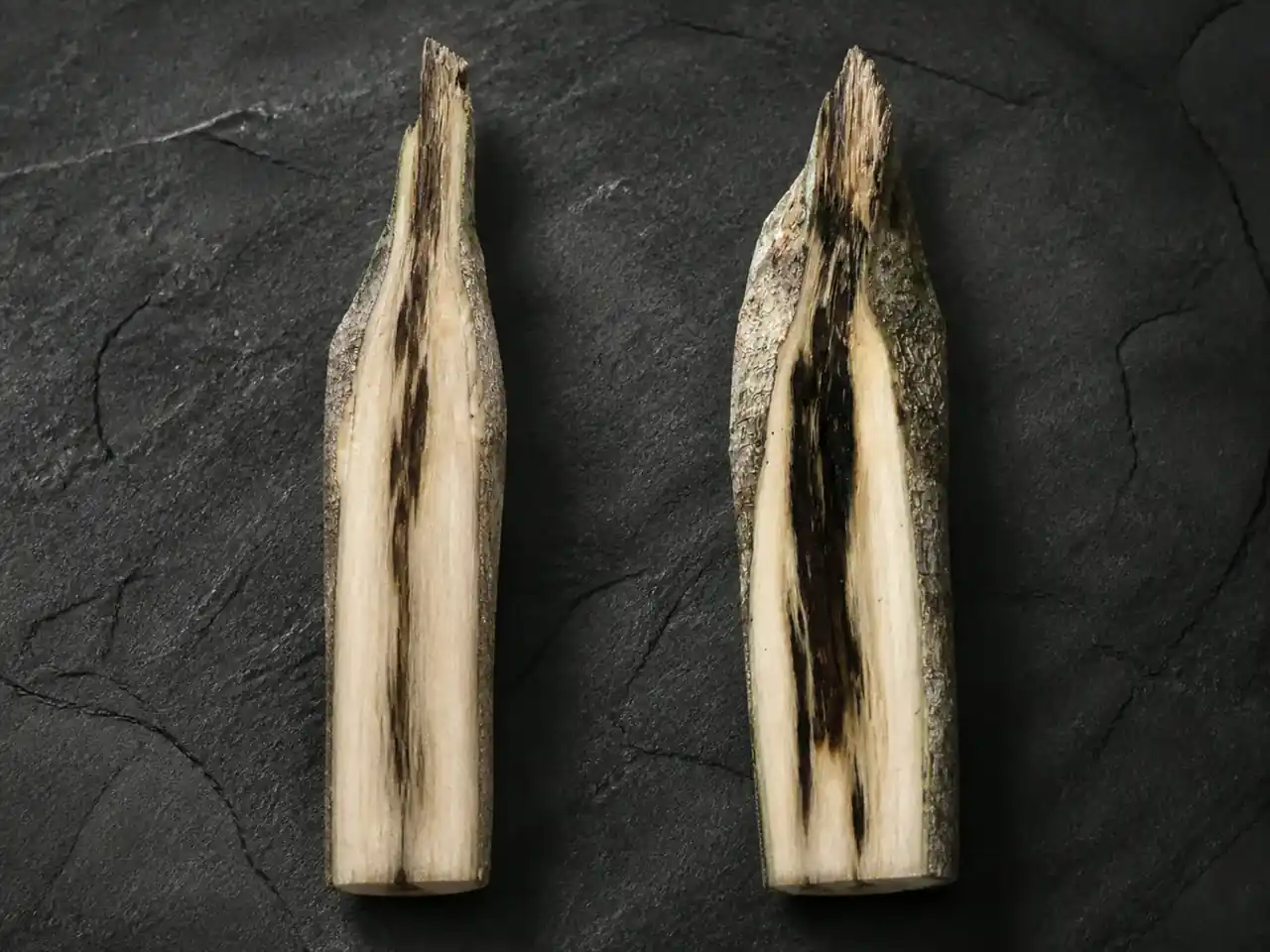
Sourcing
Agarwood Grades — What the Words Actually Mean
Grade terminology in this trade is used loosely enough to be nearly meaningless. These three pages explain what we mean by each grade, what it costs, what it can and cannot do, and how we document it.
Three grades
The three grades we supply
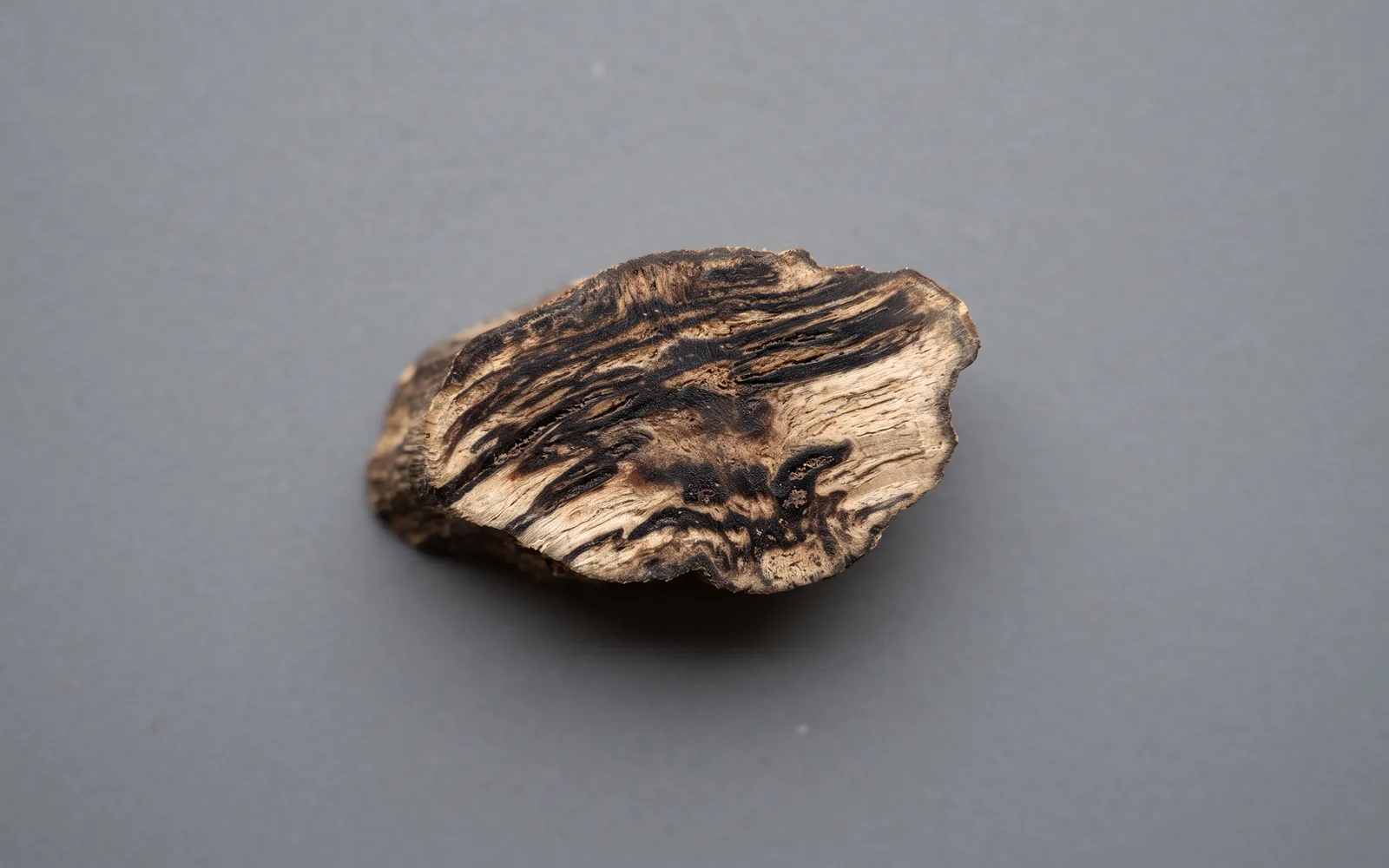
Plantation Aquilaria
The grade you build a shelf position on. Consistent, documented, and available next year.
Low to medium-high resin · Entry to mid
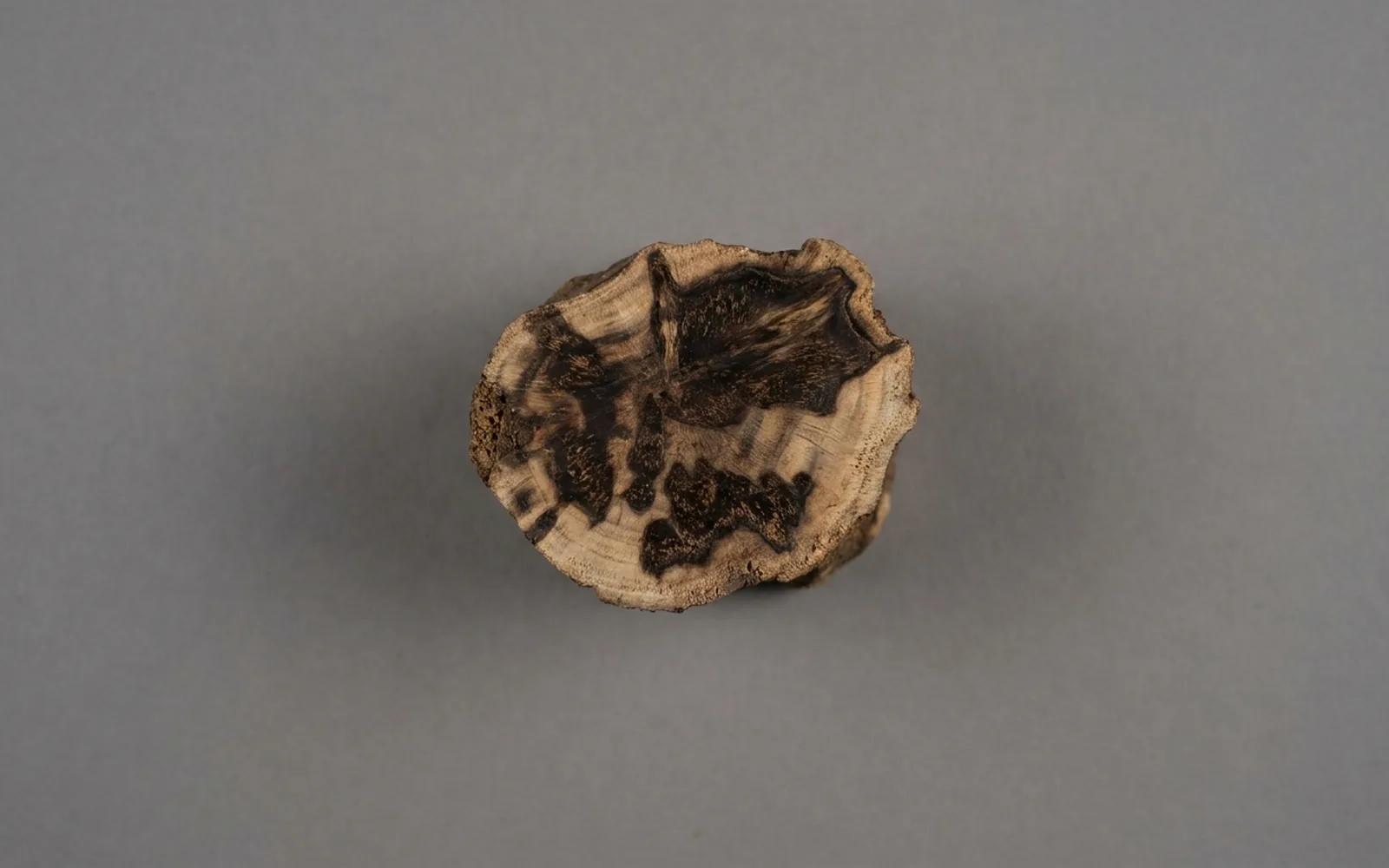
Wild-Band Agarwood
A real grade, and not one we produce. Everything we ship is plantation Aquilaria.
Medium-high to high (reference only — not a grade we supply) resin · Mid to upper (reference only)
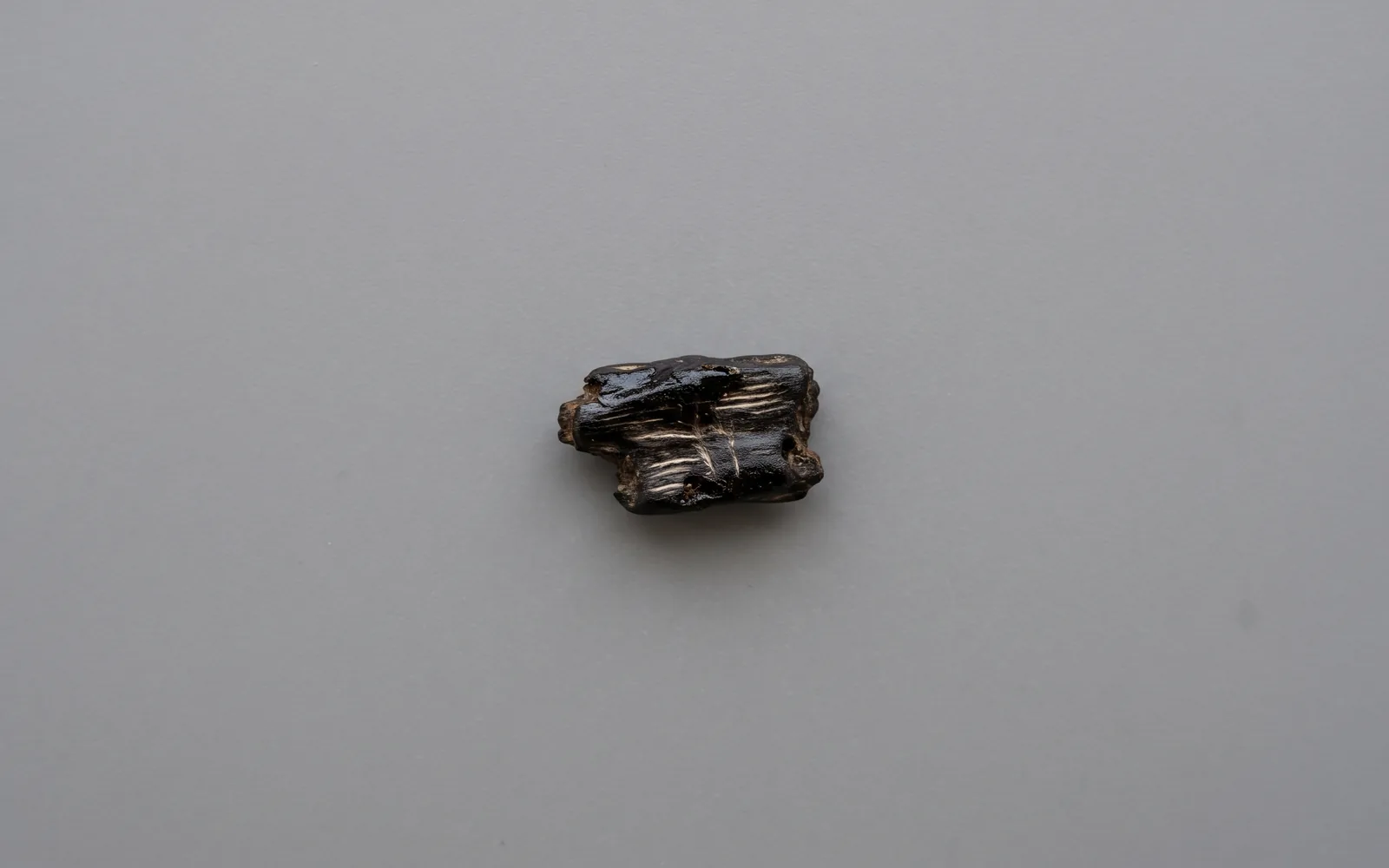
Kyara / Kynam
A different sensory class, genuinely scarce — and not something a plantation can grow.
Exceptional (reference only — not a grade we supply) resin · Collector (reference only)
At a glance
Grade comparison
| Grade | Resin | Reproducible? | Price band |
|---|---|---|---|
| Plantation Aquilaria | Low to medium-high | High — matched against retained reference samples | Entry to mid |
| Wild-Band Agarwood | Medium-high to high (reference only — not a grade we supply) | Low — every lot differs, cannot be matched and resupplied | Mid to upper (reference only) |
| Kyara / Kynam | Exceptional (reference only — not a grade we supply) | — | Collector (reference only) |
Context
What a grade cannot tell you
Grade is silent on three things that decide whether a product works, and buyers routinely expect it to answer all three. It does not tell you smoke volume, because that is set by binder and diameter rather than by resin fraction. It does not tell you burn time, which follows from geometry. And it does not tell you consistency, which is a property of the supplier rather than of the material.
That last one is worth dwelling on. A high grade from a supplier with no retained reference sample is less useful to a retail buyer than a middle grade from one who holds a reference and rejects runs that drift. The first gives you a good box once. The second gives you a shelf position. Ask about the reference sample before you ask about the grade.
Grade is also silent on legality, which surprises people. A grade name is a commercial description; it carries no information about how the material was obtained. The documents that speak to that are the source lot record and whatever permits your route requires. A supplier who answers a provenance question with a grade name has changed the subject.
So the useful sequence when comparing two offers is: species first, then source and documentation, then grade, then application. Most buyers run it in the opposite order and end up comparing two numbers that were never measuring the same thing.
Practicalities
Comparing two quotes on grade
Normalise before you compare. Two quotes at the same grade name can differ by a third on material simply because of stick diameter, and neither quote is wrong. Ask for length, diameter, weight per stick and count per box, then compute cost per gram of incense material. That is the only number that is comparable across suppliers.
Then ask both suppliers the same reproducibility question: do you hold a retained reference sample of this profile, and what happens to a run that no longer matches it. The answers will separate the two quotes faster than any grade name.
In practice
A short glossary
Resin fraction: the proportion of the material that is defensive resin rather than white wood. It is the variable behind most of the price spread within a grade.
Induction: deliberately wounding or inoculating a tree so it forms resin. The method and the time between induction and harvest move the profile more than origin does.
Reference sample: a sealed portion of an approved batch, kept so a later batch can be assessed against it rather than against memory.
Koh grade: our highest tier. Plantation material selected for resin fraction and cut to Japanese format conventions. It is a selection within a grade, not a grade above it.
Reference
The three grades in one table of words
Plantation Aquilaria. Cultivated, induced, harvested on a managed rotation. Reproducible against a retained reference. This is everything we sell.
Wild-band. Formed without intervention over an unpredictable period. Character varies piece to piece. One-off by nature. We do not supply it and we explain why on its page.
Kyara and kynam. A distinct sensory classification in Japanese kodo practice, not the top of a numerical scale. Cannot be farmed. We do not supply it either.
The practical division is simple. One of these can be reordered. Two cannot. If your range needs a repeatable shelf position, only the first is relevant, and the other two pages exist so you can read a claim before someone makes one at you.
Watch
Chips milled into graded powder
Chips into the mill and out as graded powder — the step where grade becomes visible.
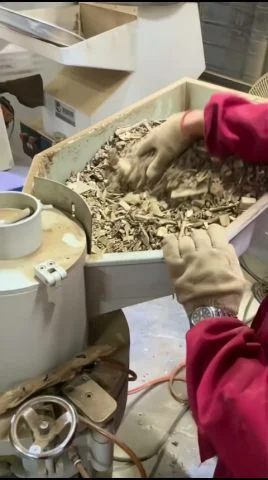
Chips milled into graded powder
Chips into the mill and out as graded powder — the step where grade becomes visible.
Using this in practice
How to put grade on a purchase order
Grade is the single most abused word in this trade. Suppliers use letter scales that mean nothing outside their own warehouse. "Premium" appears on material spanning a twenty-fold price range. The three pages below define what we mean. So that a grade on our quotation is something you can hold us to rather than a marketing adjective.
The practical rule for a purchase order is to specify grade alongside two other things. Those are the origin and the intended application. Grade on its own is ambiguous. Plantation Aquilaria destined for a low-smoke wellness SKU and plantation Aquilaria for koh-grade blending are the same grade and different selections. Telling us the application lets us select within the grade rather than shipping the middle of it.
The second practical rule is to ask what happens on reorder. Plantation grades can be matched against a retained reference sample and resupplied. Wild-band and kynam lots are genuinely one-off and cannot. Be careful when a supplier promises open-ended resupply of a wild-band grade. Either they are pooling lots, which averages away the character you paid for. Or they are not selling what they say they are. We sidestep that problem by not offering those grades at all. Every SKU on this site is plantation Aquilaria. The two pages below exist so you can hold other suppliers to the same distinction.
Most ranges should carry more than one grade. Within plantation material there is more range than buyers expect. An everyday low-smoke stick and a koh-grade stick differ by more than an order of magnitude on resin fraction and on price. That spread is enough to build a legible shelf. Without a visible top, customers read every product as possibly the cheap one and trade down. If your range also needs a wild-band or kyara anchor above that, it has to come from a specialist. We would rather say so than improvise a lot.
Which grade should your range carry?
Usually more than one. Everyday low-smoke anchors the volume and koh grade gives customers a reason to trade up — a spread of more than ten to one, all of it plantation Aquilaria and all of it reproducible next year.