FAQ
Frequently Asked Questions — From How to Burn Incense to Freight
Ordering, quality and compliance. Product-specific questions live on each product page — this covers everything that applies across the range.
Ordering
Ordering
What is your minimum order quantity?
There is none on stock lines, on any format. Tell us the quantity you want and we will quote it — 100 g of powder, one carton of sticks, 5 g of oil. That is possible because stock orders go out by air with the freight on your account rather than waiting to fill a container. Private label is the exception at 500 boxes, because a print run has a minimum whatever we would prefer.
Do you sell samples before a wholesale order?
Yes, paid samples from the exact batch you would be buying, with the cost credited against your first wholesale order. On approval we reserve the balance of that batch under your name for 30 days at no charge.
What payment terms do you offer?
Payable in full in advance by telegraphic transfer, before production starts or before dispatch from stock, as stated on the proforma invoice. Larger orders can work against an irrevocable letter of credit at sight, payable against shipping documents — L/C terms have to be agreed at quotation stage rather than after an order is confirmed, because the document list has to match what we can actually issue. Quotations hold for 30 days; after that we requote rather than honour a stale number.
How long does production take?
7–12 days on stock incense, 5–10 days on powder and oils subject to batch availability, 10–15 days on hardware and glass. OEM runs 25–35 days from approved artwork, and rigid gift boxes 30–45 days. Add 90 days for seasonal programmes.
Product, quality and how to burn incense
Product, quality and how to burn incense
How should a room be ventilated when incense is burning?
Air exchange, not extraction. One open window pulls very little through a room; two openings on different walls set up a cross-draught that actually moves the air, and that is the whole technique. Place the burner out of the direct path between them, otherwise the draught drives the smoke stream at whoever is sitting downwind of it and also makes the stick burn faster and hotter than it should. In a room with only one opening, a door left ajar to a second space does the same job more slowly. Worth saying plainly, because it is the part most advice leaves out: how much smoke there is to move is mostly a property of the stick, not of the room. A bamboo-cored stick is burning a splint of bamboo alongside the aromatic body, and that splint is where a large part of the coarse grey smoke comes from. Ventilation manages smoke. Choosing a coreless stick means there is less of it to manage.
How do you light an incense stick properly?
Hold a flame to the coated tip until it catches, let it burn for a few seconds, then fan or blow the flame out and check that an ember is glowing under a film of ash. That ember is the product working; an open flame is not. Two failure modes cover almost every complaint we see. Blowing the flame out too early leaves no ember and the stick dies within a minute — relight it and give it longer. Leaving the flame burning consumes the stick far faster than it should and scorches the aroma. If a stick lights correctly and then keeps going out part way down, that is not a lighting technique problem: it is usually moisture picked up after packing, or a binder ratio that is too high. We wrote up the diagnosis and the fixes separately.
What should we tell customers about burning incense indoors?
The instructions worth printing on a box are short. Use a non-combustible holder on a stable, heat-tolerant surface, with an ash catcher long enough for the whole stick — a stick that outruns its holder drops ash on furniture, and that is the single most common cause of a customer complaint that has nothing to do with the incense. Keep it clear of curtains, paper and anything soft, out of reach of children and animals, and away from a draught strong enough to carry embers. Do not leave it unattended, and let the ember die out fully rather than only appearing to. On smoke alarms: incense can trigger an optical detector, which is behaviour of the detector rather than a fault in the product, and we cover the practical handling of that in a separate article.
Does a smaller room need a different product?
Usually a thinner stick or a shorter one rather than a different material — you are changing how much is burning at once, not what is burning. Our low-smoke line exists for exactly this, and the coreless construction matters more here than anywhere else, because in a small room the bamboo splint is a much larger share of what you end up smelling. What we will not do is hand you a smoke-density number to choose by. We do not own the equipment to measure smoke density, and a figure we did not measure would be worth less to you than the thing we can actually do: send you the candidates in a paid sample from the batch you would be buying, and let you burn them side by side in the room they are going to be used in. That takes an afternoon and settles it properly.
Is your agarwood plantation-grown or wild?
Plantation, without exception. Every SKU on this site is plantation Aquilaria with managed induction, because it is reproducible and cleanly documented. We hold no wild-collected material at any grade and we do not broker it — which also means we will never be tempted to label plantation material as wild, the most common misrepresentation in this trade.
Do you provide GC-MS testing?
As standard on koh grade and on request across the oil range, tied to the batch number on your bottle rather than to a generic product-line specimen. We also hold a sealed retention sample of every batch for three months from dispatch.
Can you match a product I currently buy elsewhere?
Often, yes. Send a physical sample. We will assess it and tell you honestly whether we can match it, how closely, and at what price band — including when the answer is that we cannot at your target cost.
Shipping & Compliance
Shipping & Compliance
What paperwork ships with an order?
A safety data sheet on oils, assembled before dispatch and sent to your broker ahead of arrival rather than in response to a query. A certificate of analysis for the specific batch and independent GC-MS are both available on request and charged to you, quoted before we commission anything — ask at order stage and they travel with the consignment instead of chasing it. Permit and certificate requirements vary by import route — confirm yours with your broker before booking.
Which countries do you ship to?
Our five established routes are the Middle East, Japan, Europe, North America and Southeast Asia, and each has its own page setting out the document pack and the format preferences that route actually buys. We ship elsewhere on the same terms. What decides whether a destination works is not our side but yours: permits and government certificates are set by the import route rather than by us, so tell us the destination country on the enquiry and we will confirm the exact document set before you place the order — including when the honest answer is that a route needs paperwork we cannot issue.
Can I return goods that do not sell?
No. Once a consignment has been dispatched it is not returnable and not refundable for change of mind — on any line, at any quantity, including stock lines and sample-sized first orders. This is a business-to-business sale and no consumer right of withdrawal applies. That is precisely why the decision points sit before dispatch: a paid sample from the exact batch you would be buying, thirty days of batch reservation once you approve it, written approval of a pre-production sample on any private-label run, and a pre-shipment inspection of your own if you want one. A claim is a different thing from a return, and this does not touch it. Material outside the published tolerance is replaced or credited, transit breakage above 1% on ceramic is replaced, and everything else carries a fourteen-day claims window from delivery.
What happens if goods are damaged in transit?
Fragile lines ship individually foam-boxed inside double-wall master cartons, and we replace transit breakage above 1% on ceramic. Photograph the carton and contents before unpacking fully and send them to us — claims are straightforward when the evidence exists.
Keep reading
Where each answer is covered in full
In more detail
Questions we get by email that are not on this page
Can you match a sample I already have? Usually yes, and it is the most reliable way to brief us. Send the physical product rather than a description. We will tell you honestly how close we can get, at what price band, and when the answer is that we cannot at your target cost.
Do you sell to individuals or small shops? Yes. There is no minimum account size and no minimum order quantity on stock lines — tell us what you want and we will quote it, whether that is one carton or a pallet. The only minimums left are on private label, where a print run has one by physics.
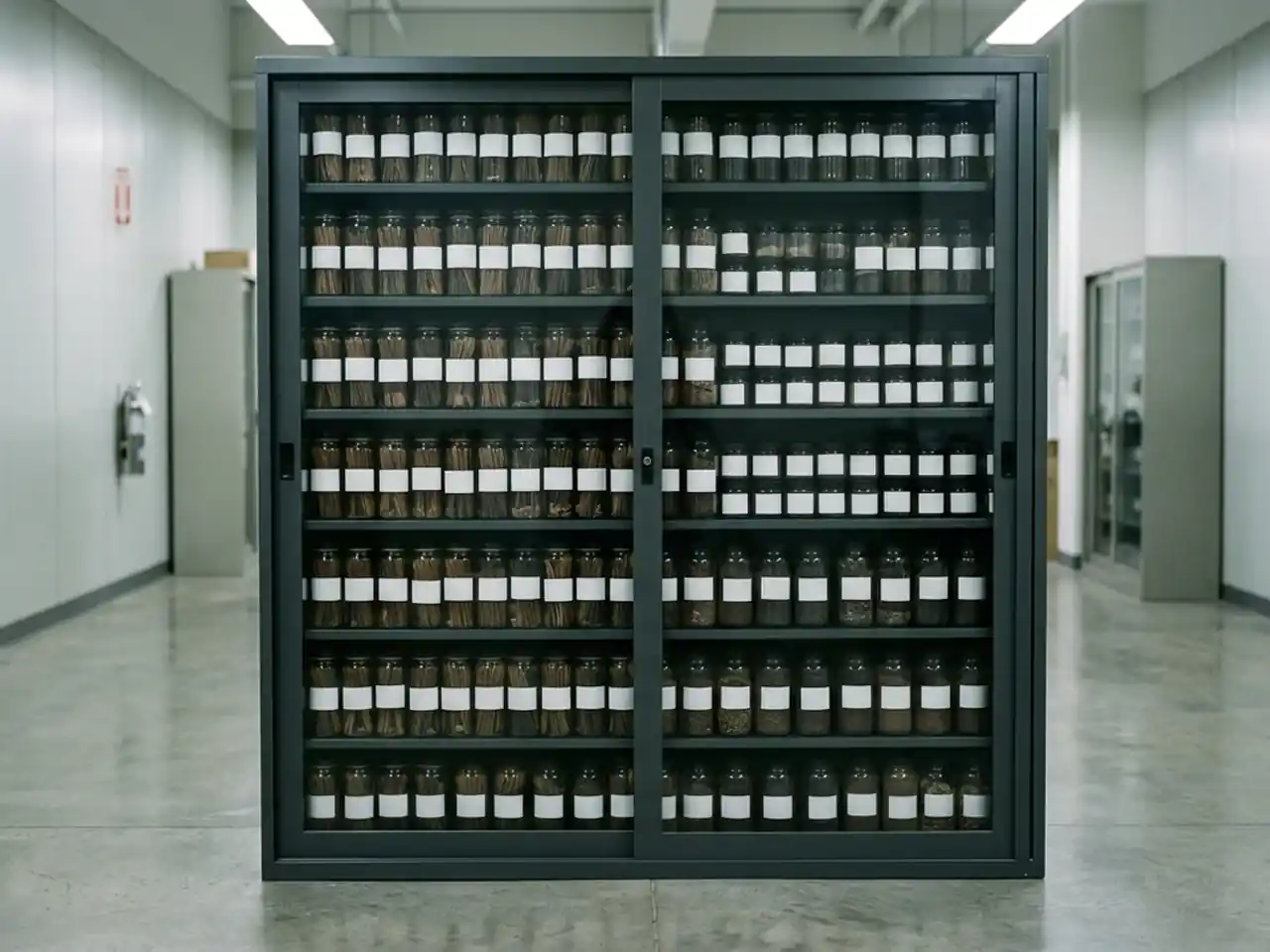
Can I visit? Yes, and we would rather you did. If you cannot travel, we will run a live walkthrough on video during a working morning here so the line is actually running. Ask to see the retention sample cupboard; it tells you more than the production line does.
What happens if a shipment arrives damaged or off-specification? Photograph it on arrival, against the batch number, before anything is unpacked further. Send that with the carton and batch details. Where the fault is ours we replace or credit. Where it is transit damage we help you document the claim. That is usually the part that decides whether it succeeds.
Context
How to get a faster and more useful answer
Almost every slow reply on our side traces back to a missing destination country. It sets the document pack, occasionally the legality, and sometimes the format. Without it we either guess or ask, and asking costs a day. Put it in the first message even if nothing else is settled yet.
The second most useful line is whether this is a trial or a continuing programme. The answer changes the recommendation rather than just the quantity. A trial should almost always run on stock packaging; a programme may justify private label and different economics entirely. Telling us which one avoids a whole round of the wrong proposal.
The third is any date you are working backwards from. Seasonal programmes need a 90-day runway from order to shelf, and the difference between telling us the shelf date and telling us the order date is the difference between arriving inside the window and after it.
Scope
Questions we will not answer
We will not tell you what agarwood does for your health. The literature reports risks associated with sustained exposure to any burning incense, and the market pages state that plainly. We are not in a position to make a benefit claim responsibly, so we do not make one.
We will not quote a price without a destination, because the document pack is part of the cost and it varies by route. And we will not confirm what your national authority requires on the import side. We can tell you exactly what we are able to issue and how long it takes. Your broker can tell you what you need.
In practice
Terms in short
Payment is 30% deposit and 70% against copy of the bill of lading for new accounts. Established accounts move to more open terms over time rather than by volume.
Lead times are 7 to 12 days on stock and 25 to 35 days on private label from artwork approval. Reorders on an approved specification run faster, usually 15 to 20 days.
No minimum order quantity on stock lines. Private label starts at 500 boxes, because that is where print and tooling economics change.
Full terms of supply are on their own page. Read clause 4 and clause 6 before you place a first order. They cover payment and delivery, which is where most disputes start.
Watch
Lighting a cone, step by step
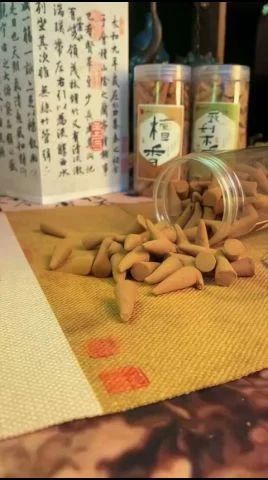
Cone set on a stable heat-resistant burner, the tip lit until it glows, the flame blown out, and the smoke released.
Lighting a cone, step by step
Cone set on a stable heat-resistant burner, the tip lit until it glows, the flame blown out, and the smoke released.
Question not answered here?
Ask it directly. If it is a question we hear more than once it ends up on this page, and either way you get a reply within one business day.