Factory tour
How to Make Incense Sticks — What Actually Happens on the Floor
Eight stages, and a specific failure mode at each one. This page exists because B2B buyers reasonably want to know what they are buying into, and because most of the quality differences in this category are decided on the production floor rather than in the sourcing.
Before you decide
What a visit is actually for
What a factory visit is actually for, if you are deciding whether to make one. Most buyers who come are not checking that the machines exist. They are checking three things that are hard to establish remotely: whether the scale matches the volume being quoted, whether the quality process is a routine or a story, and whether the people answering questions on site give the same answers as the people answering email.
That last one matters more than it sounds. A supplier where the sales answer and the floor answer diverge is a supplier where the specification will drift once you are no longer watching. So ask the same three questions in both places. What is the binder ratio on this line. What happens to a batch that misses the reference. Who signs it off.
If you cannot travel, a live walkthrough on video covers most of it. We will walk the line while you watch, open a carton you choose rather than one we prepared, and burn a stick from it. Book it for a working morning in our timezone so the line is actually running. An empty floor tells you nothing either way.
In more detail
What to ask while you are here
Three questions worth asking on the floor rather than by email, because the answers are checkable in the moment. First: what is the binder ratio on this line, and where is it recorded. You should be shown a batch record rather than told a number. Second: what happens to a run that misses the reference sample. The useful answer names a person and a decision, not a policy.
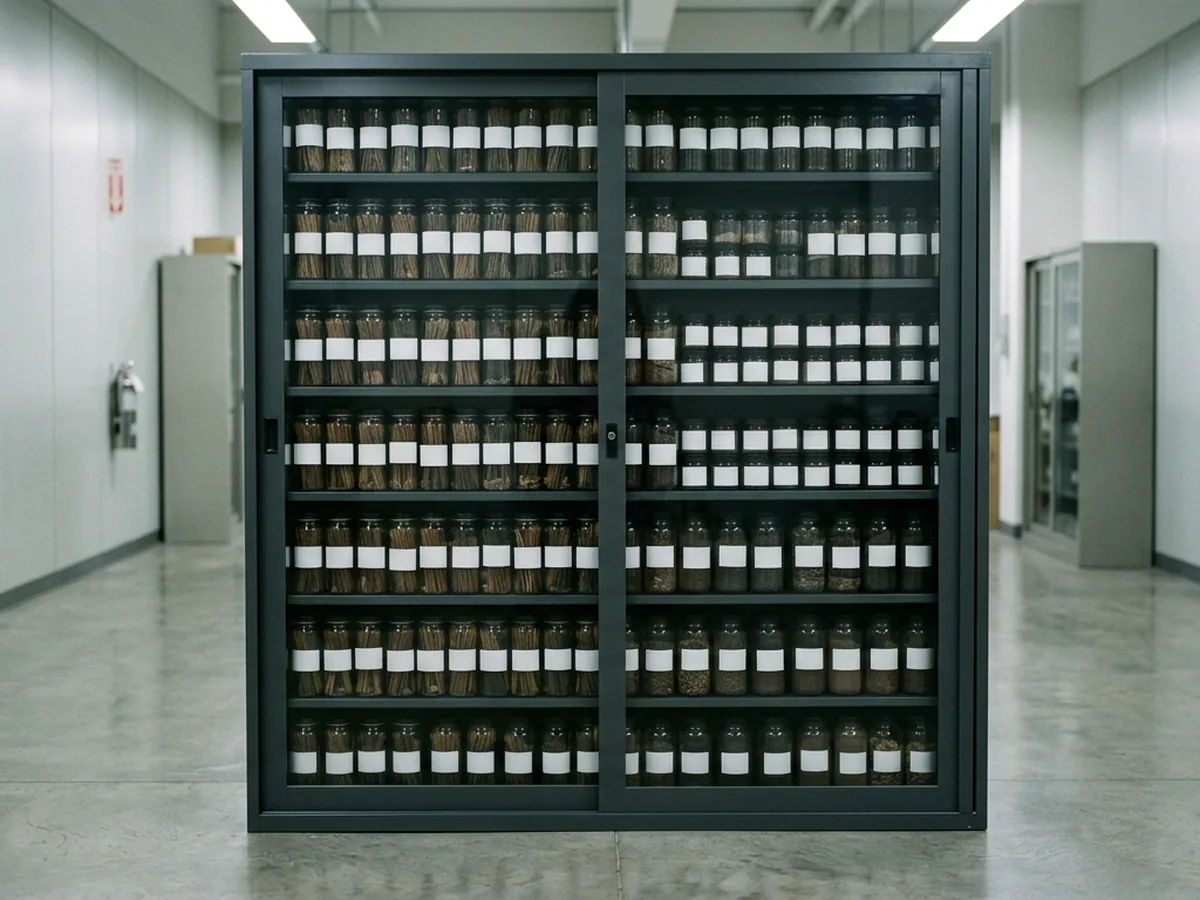
Third: show me the retention samples. A retention cupboard tells you more about a factory than a production line does. It should be organised by batch number, sealed, and dated. If retention samples are kept loosely or only for recent months, the promise of matching a reorder against a reference is not really being kept.
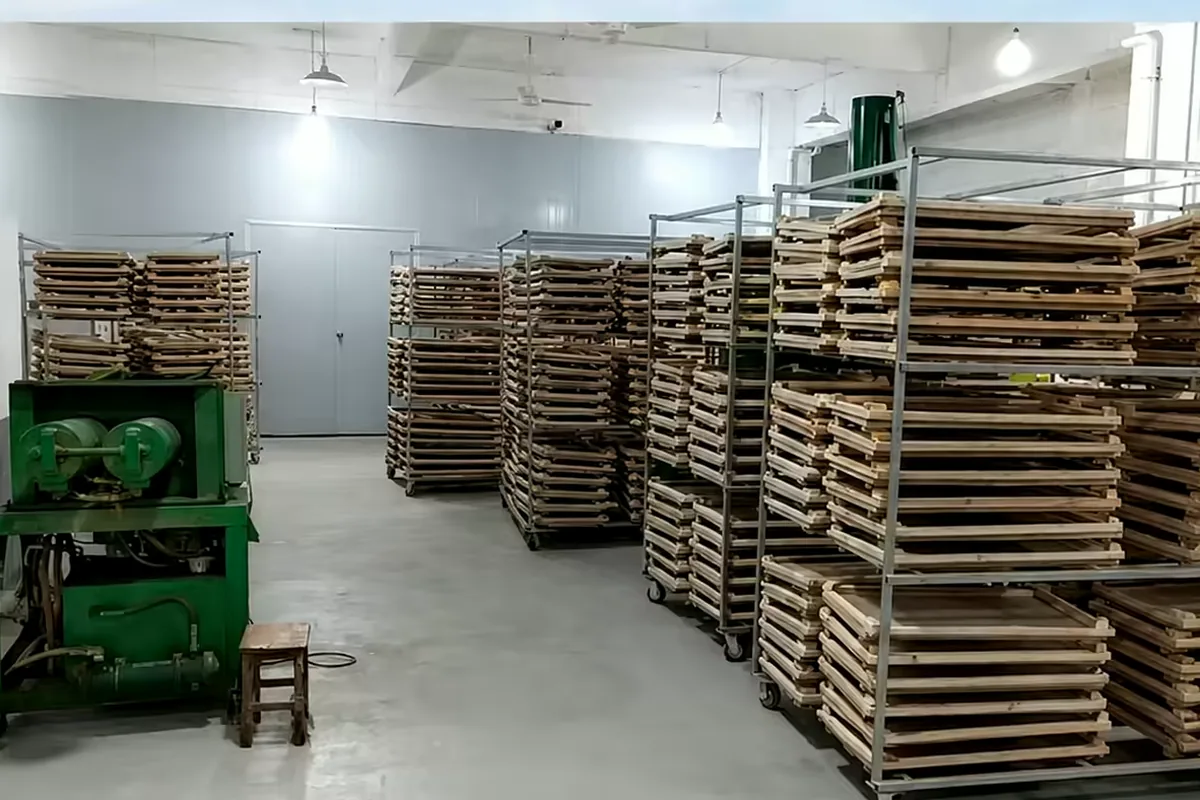
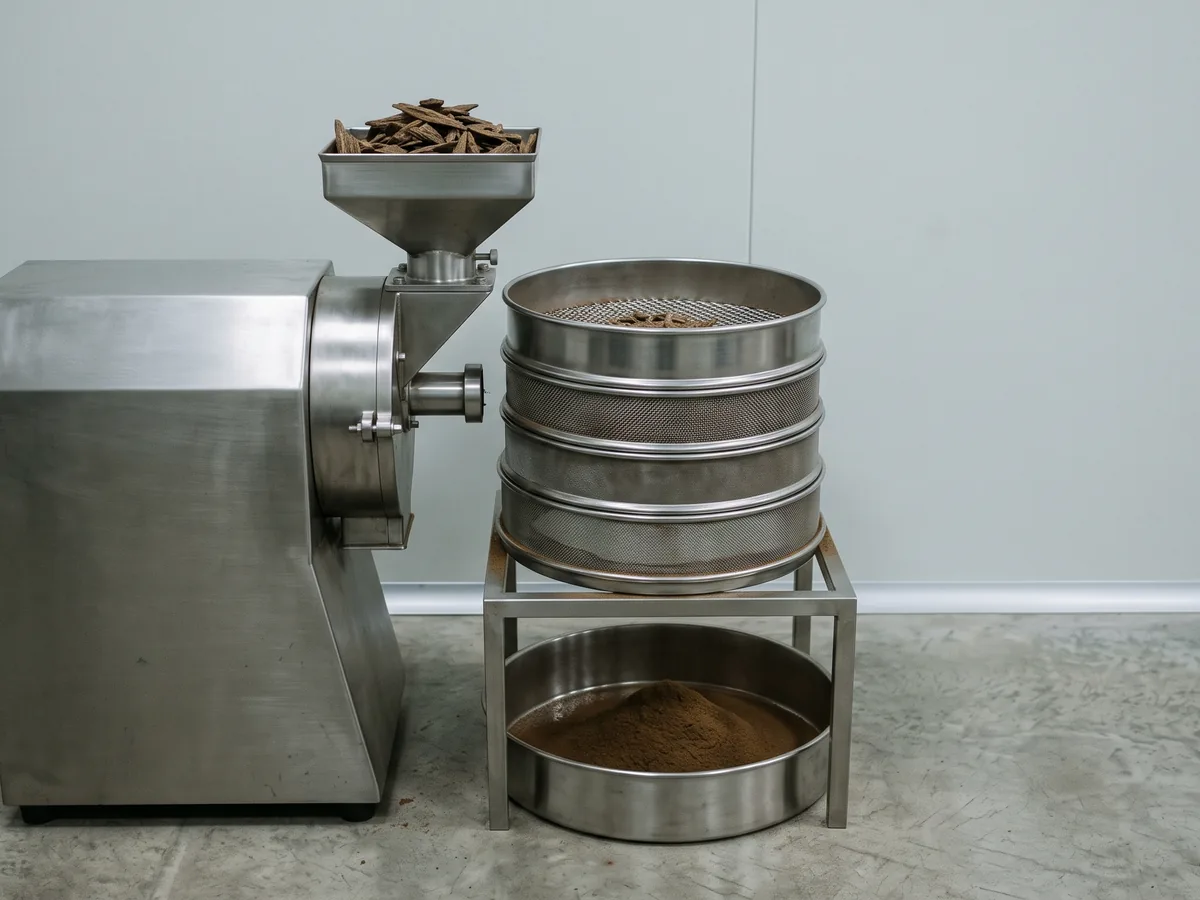
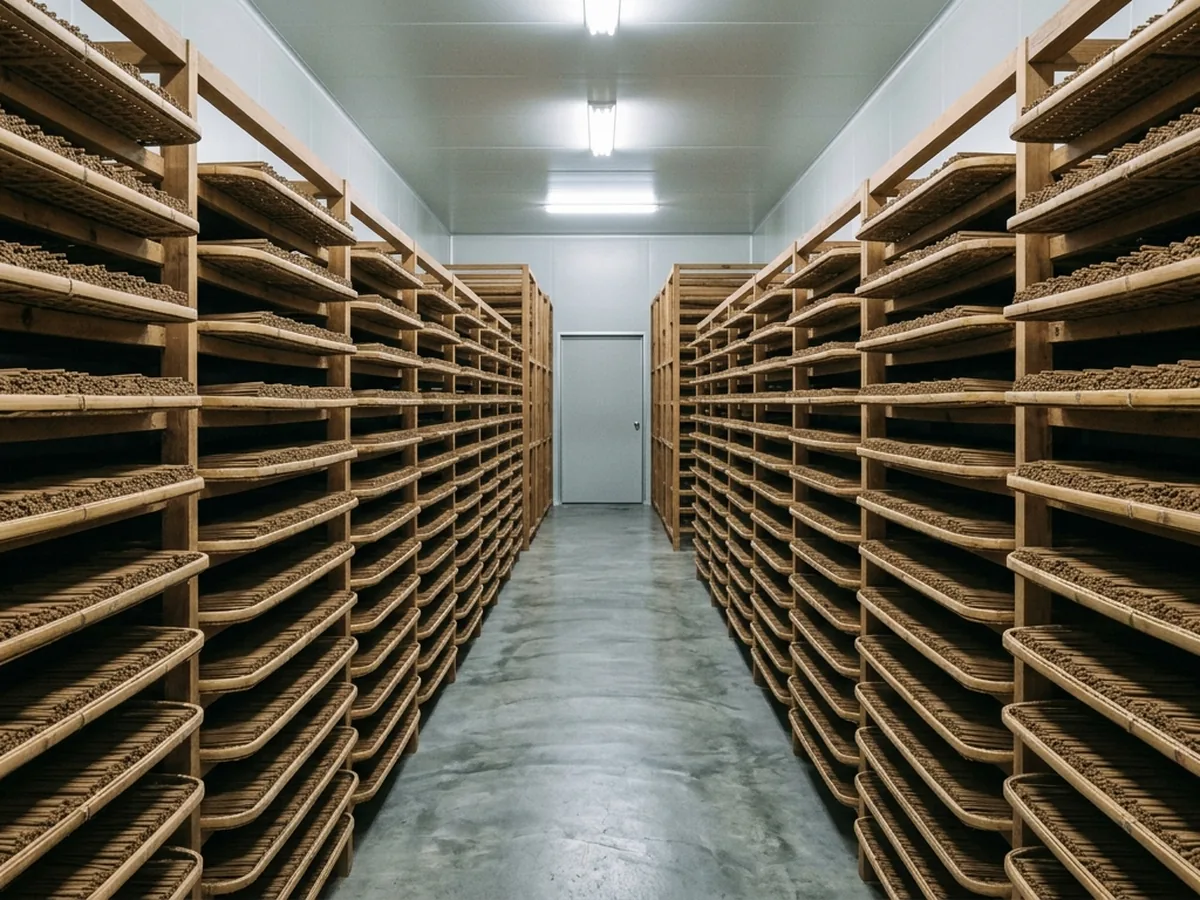
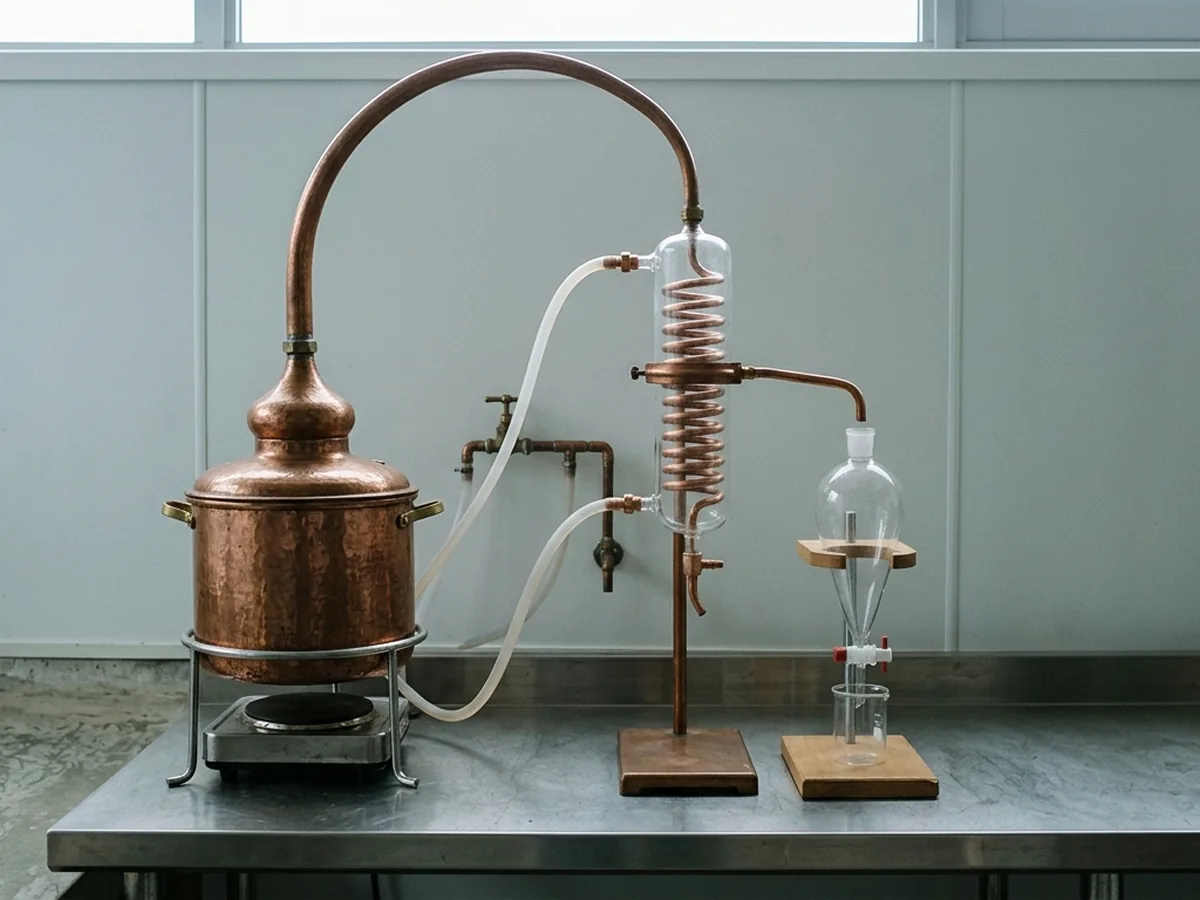
What we will show you without being asked. The mill and the screening deck, because mesh grading is where powder quality is actually decided. The extrusion line running, not idle. The drying racks, including the section that is currently rejected stock, because that is more informative than the good rack. And the distillation room, which is the noisiest and least photogenic part of the operation and the one most worth seeing.
If you cannot travel, ask for a live walkthrough rather than a video file. A recorded tour shows you what someone chose to show. A live one lets you say open that carton, not this one. Book it for a working morning in our timezone so the line is running. An empty floor tells you nothing either way.
After the visit
What to do with what you saw
Write down the three numbers you were given on the floor and check them against the specification pages when you get back. Binder ratio, moisture ceiling, dimensional tolerance. If the floor answer and the published answer differ, ask about it. Either the site is stale or the floor is improvising, and both are worth knowing.
Then ask for a sample from the specific batch that was running while you were here. That closes the loop between what you saw and what you can hold. It gives you a reference point with a date and a batch number attached rather than a general impression of a clean factory.
In practice
Booking a visit
Give us two weeks notice and a working morning. We will have the line running rather than staged. Bring your own sample if you have an incumbent product.
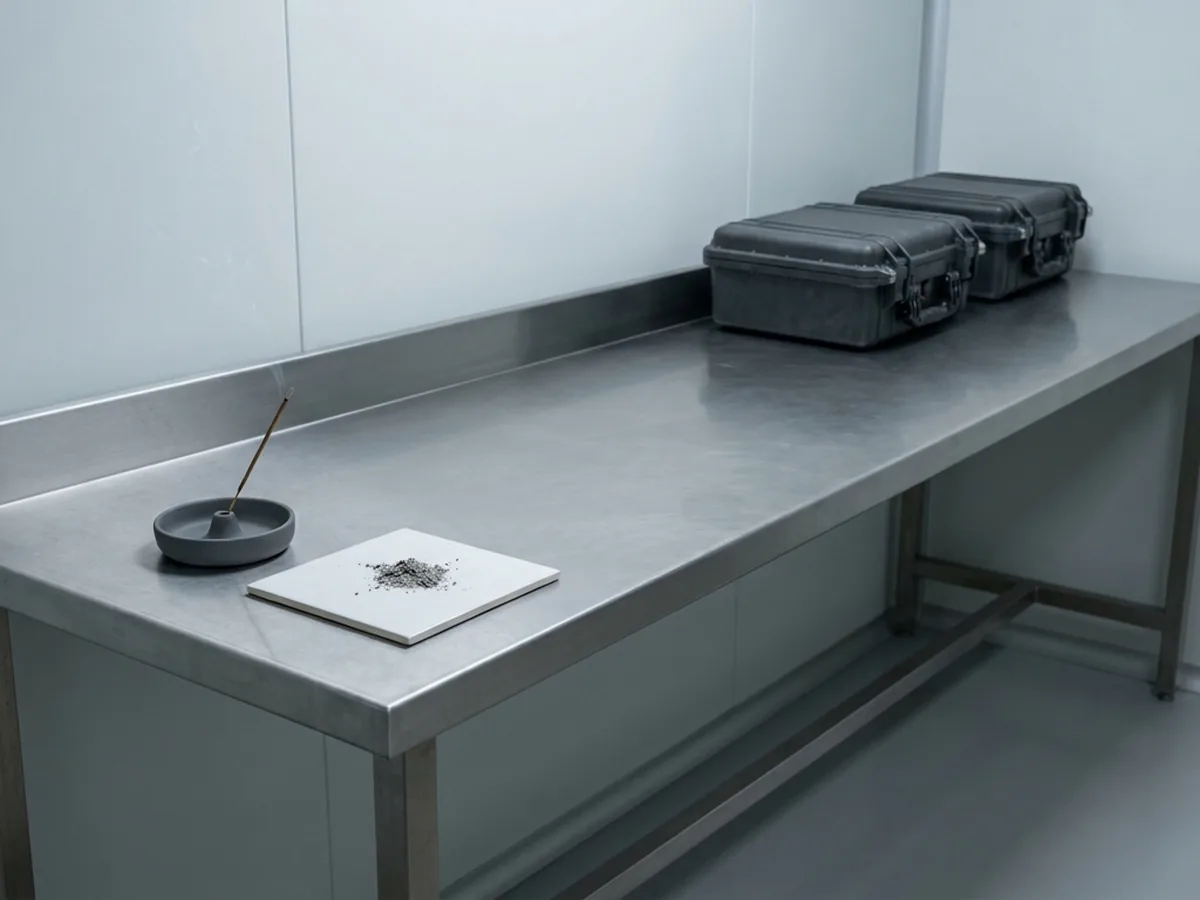
We do not run a showroom. There is a bench, the floor, the drying racks and the retention cupboard. That is the whole visit and it takes about two hours.
If you want to see a specific line running, say which one when you book. Not every line runs every day, and an idle machine tells you nothing.
Visitors are welcome to photograph anything except other buyers artwork. If a private-label run is on the floor that day, we will move it or reschedule.
Watch
Inside the stick incense floor
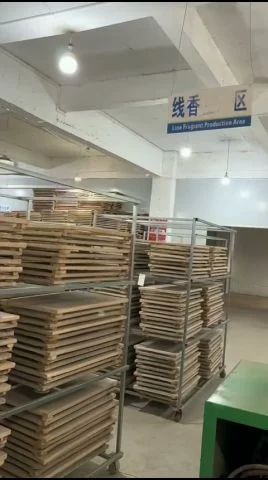
Forming machinery, production trays and racks of finished sticks on the incense floor.
Inside the stick incense floor
Forming machinery, production trays and racks of finished sticks on the incense floor.
Production
How to make incense sticks, stage by stage
- Stage 1
Milling and mesh grading
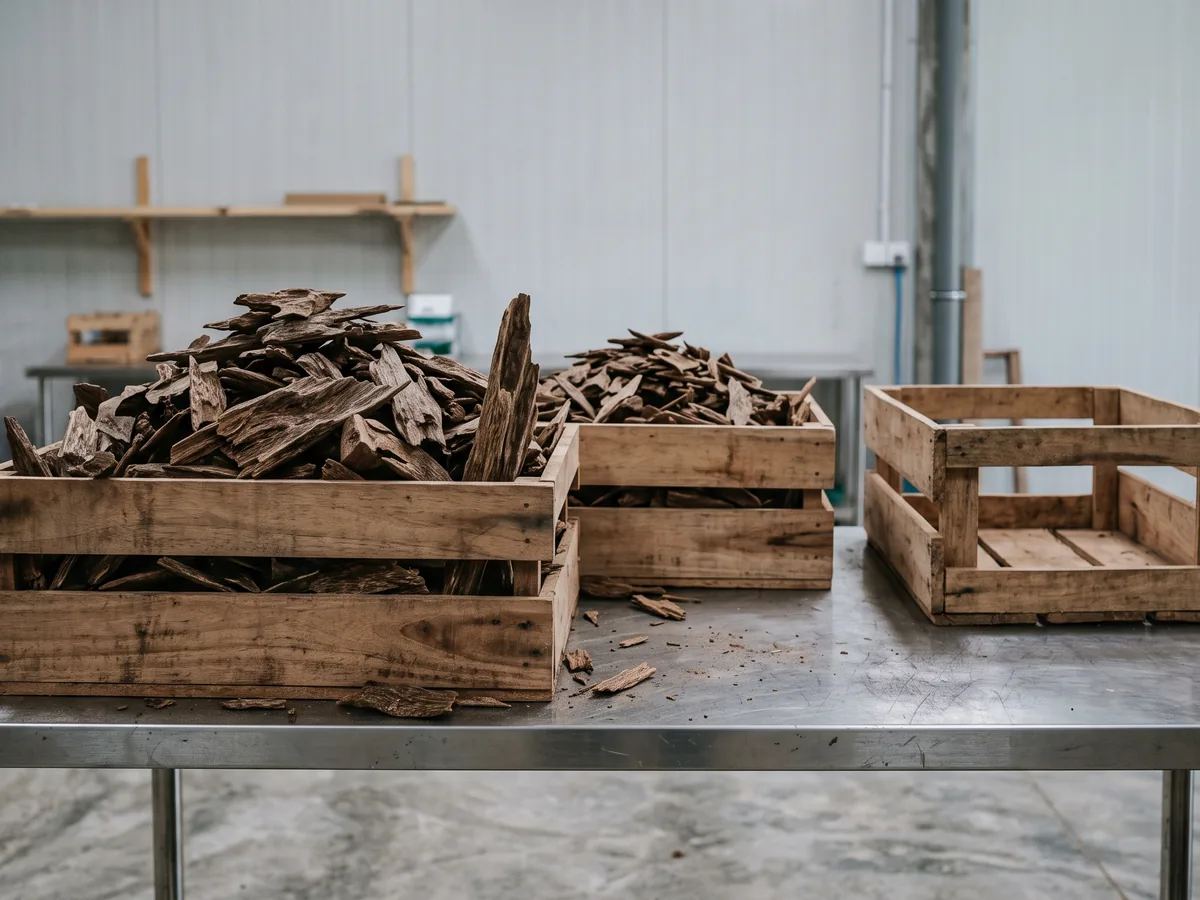
Raw agarwood is milled and sieved into controlled mesh fractions — 40, 80, 120 and 200. Mesh conformity is held at 95% or better against the nominal sieve. This is where the powder line and the stick line diverge from the same input.
- Stage 2
Moisture control
Material is dried before blending and desiccant travels in every master carton. Agarwood powder is hygroscopic and moisture is what most shipments actually fail on, so it is controlled at the start rather than corrected at the end. We do not publish a percentage for it, because we do not own a meter.
- Stage 3
Blending
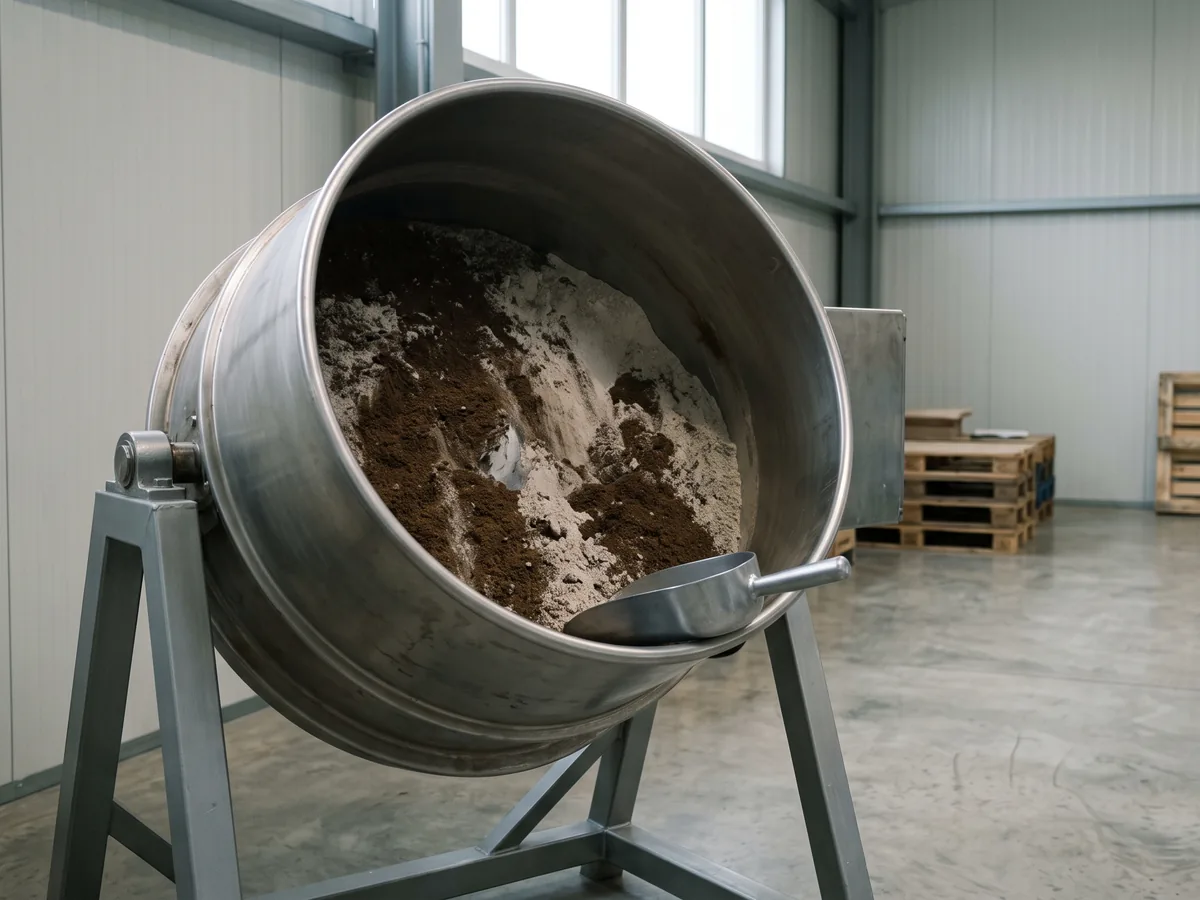
Powder is ribbon-blended with natural makko at a nominated ratio, typically 18–22%, and sampled at three points per batch to hold ratio variance within ±1.5%. No charcoal, no saltpetre, no synthetic accelerant.
- Stage 4
Extrusion or rolling
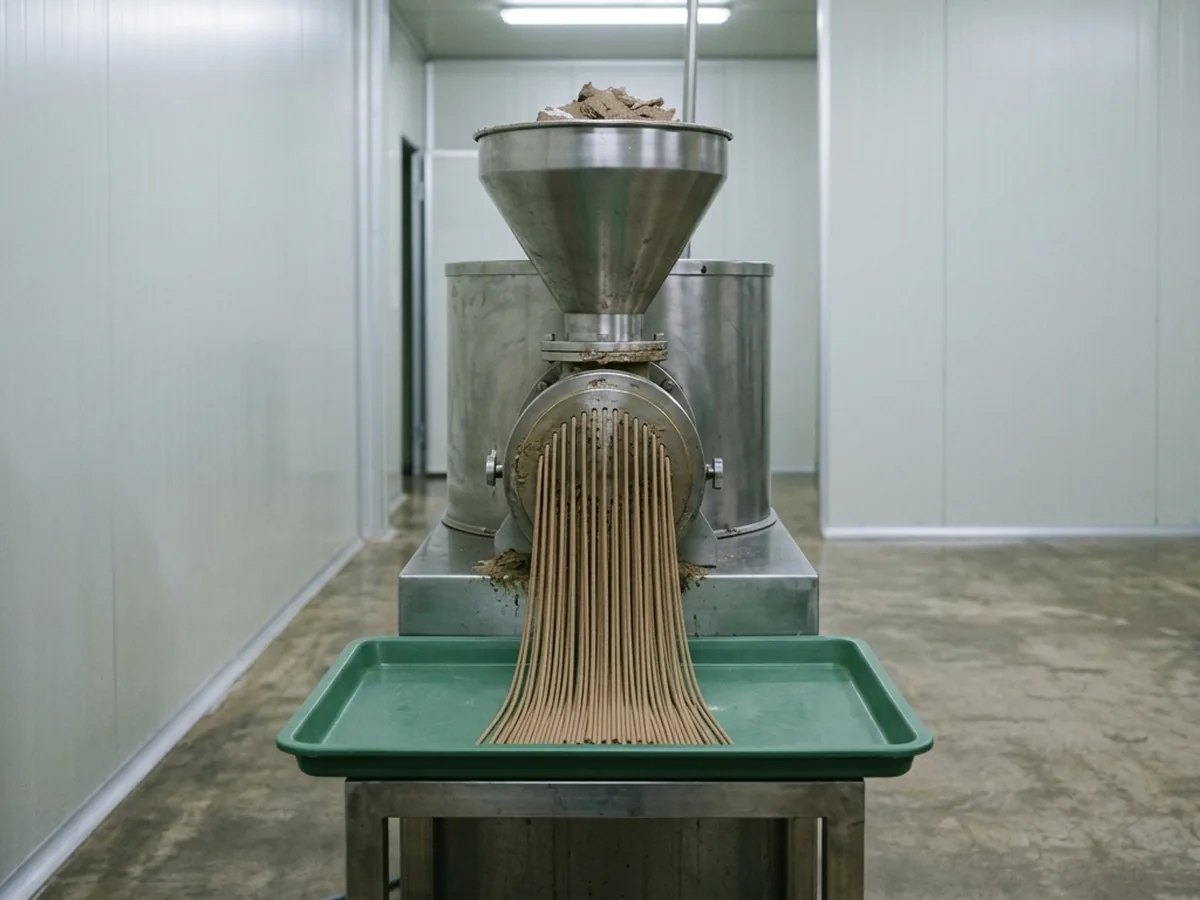
Coreless sticks are extruded as solid rods; cored sticks are rolled around bamboo. Extrusion is slower with a higher reject rate, which is most of why coreless costs more. A test rod is pulled per batch and break strength recorded.
- Stage 5
Drying
Sticks are dried slowly in controlled conditions. Forced fast drying causes surface cracking and dimensional drift, which shows up later as inconsistent burn time — the thing Japanese buyers notice first.
- Stage 6
Distillation
Oil runs two routes. Traditional hydro-distillation with a recorded soak of 7–21 days, and supercritical CO₂ extraction at low temperature. Soak duration, distillation date and yield are recorded per batch.
- Stage 7
QC panel
Every batch runs a QC panel: burn rate, smoke density against reference, ash behaviour, self-extinguish rate, dimensional tolerance. Plantation grades are additionally assessed against a retained reference sample before release.
- Stage 8
Packing and retention
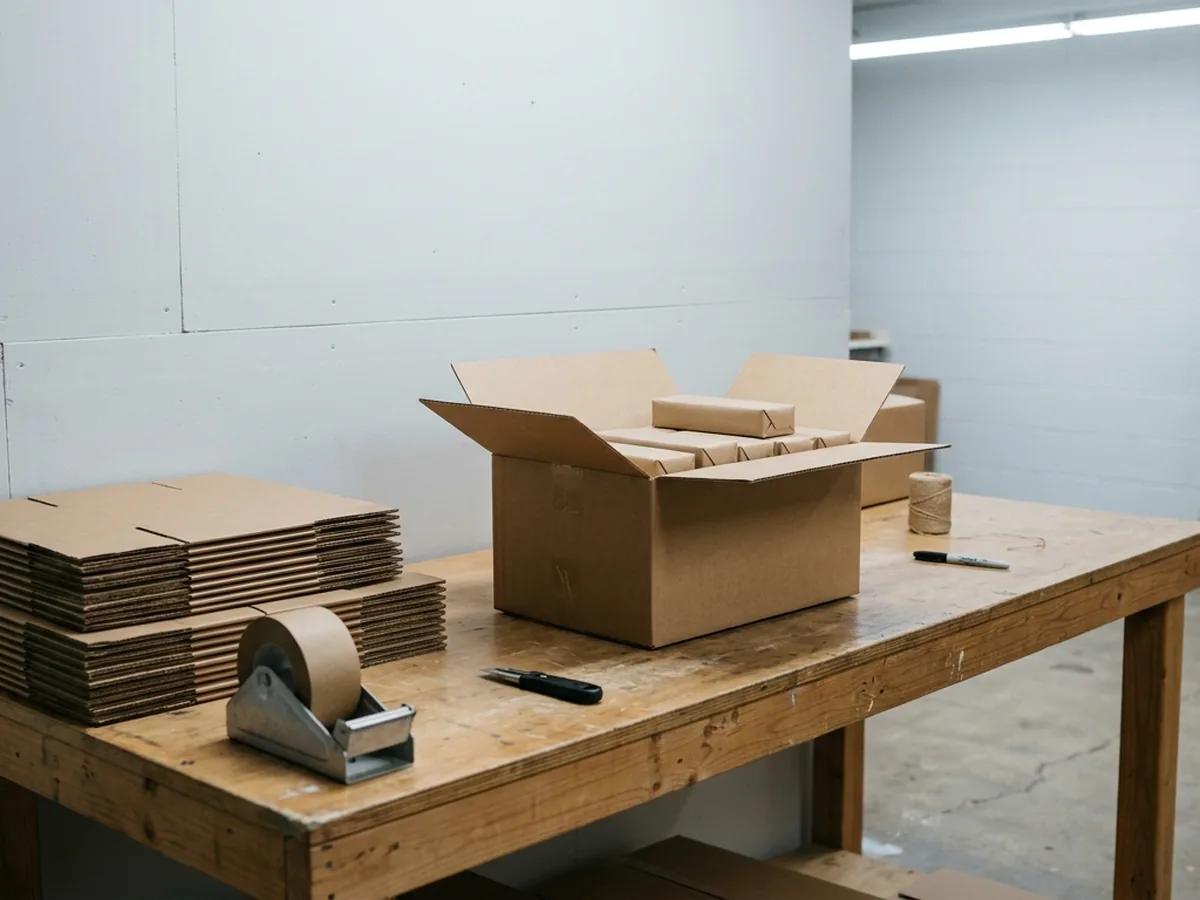
Desiccant into every master carton. Fragile lines individually foam-boxed inside double-wall master cartons. A sealed retention sample of the batch goes into storage before the goods leave.
Photo gallery
Inside the facility
Visiting
Come and see it
We welcome buyer visits and we would rather you came than not. Seeing a drying room and a QC bench answers more questions in an hour than a month of correspondence. It tends to change what buyers specify on their next order.
Give us two weeks notice so we can schedule your visit against a production run rather than an empty floor. There is not much to learn from a quiet workshop. Tell us which lines you are interested in and we will arrange for those to be running while you are here.
If travel is not practical, we can run a live video walkthrough of any stage on request, including pulling a test rod or running a burn panel while you watch. It is not the same thing, but it is considerably better than photographs.
Arrange a visit or a live walkthrough
Two weeks notice lets us schedule you against an actual production run. Tell us which lines matter to you.