Market guide
Incense Wholesale USA — Agarwood Supply for the United States & Canada
Wellness-led and gift-led, with a small but serious niche fragrance and oud enthusiast segment at the top.

Market detail
Incense wholesale for USA and Canada buyers
North America splits into two markets that barely overlap. The larger one is wellness and gifting — customers buying incense as part of a meditation, yoga or evening wind-down practice, largely price-sensitive, heavily smoke-sensitive, and strongly responsive to gift-set presentation. The smaller one is a serious oud enthusiast and niche perfumery segment that is well informed, sceptical about authenticity, and willing to pay collector prices for documented material.
For the larger segment, the low-smoke line and holder-plus-sticks gift sets do most of the work. Apartment living makes smoke volume the dominant complaint, and gift bundling lifts basket size substantially over selling sticks alone. Retailers who merchandise the two together consistently outperform those who do not.
For the enthusiast segment, documentation is the product. This is a community that has been burned repeatedly by adulterated oud and misrepresented grades. And it responds to GC-MS profiles, batch numbers, stated distillation dates and retention samples far more than to marketing language. Our CO₂ extract and koh-grade material are aimed here — plantation, but documented to a standard that segment can actually check.
US enforcement of import formalities is reasonably rigorous and the practical answer is the same as everywhere: whatever your route requires, assembled before dispatch and sent to your broker ahead of arrival rather than produced in response to a query.
What actually moves in this market, and what does not. The wellness channel is the growth end: low-smoke formats, plain ingredient stories, and packaging that reads as considered rather than exotic. The traditional import channel is mature and price-led. Trying to serve both with one SKU produces a product that is too expensive for the second and too generic for the first.
Compliance is lighter here than in the EU on most incense, but it is not absent. Confirm with your broker what your specific route requires before you book freight. For any electrical item, the certification liability sits with you as importer. Ask us for the test reports at enquiry rather than after arrival. A certificate mark without the underlying report behind it is not worth anything if it is ever questioned.
Freight is where margin quietly disappears on this route. Air is our default and is what makes a small first order practical, but incense is bulky relative to its value, so above a few hundred kilos sea usually wins on cost. That means eight to ten weeks door to door. Plan seasonal programmes around that, not around air freight rates you will not want to pay twice.
One practical note on the wellness channel specifically. Buyers there increasingly ask what is in the product, and they ask in writing. Have the answer ready: no charcoal, named binder, stated moisture, plantation source. That answer is more valuable to you than any adjective, because it is the one thing a competitor selling generic imported stock cannot produce on request.
A note on retail packaging conventions here. Ingredient transparency sells; exotic framing increasingly does not. The panel that works is plain: what is in it, what is not in it, how long it burns, how to use it safely. That is also the panel we can fully substantiate, which is why it is the one we recommend.
On quantity and cash flow: this market rewards testing small and reordering often, and there is no minimum on stock lines to get in the way of that. Start at whatever quantity gives you a real read on sell-through. Convert to private label on the second or third order, once you know which SKU is carrying the range.
A final note on channel conflict. If you sell both direct and through distribution here, agree the pricing structure before the first order rather than after a distributor finds your own listing. It is the most common way a promising programme in this market ends. It has nothing to do with the product.
A note on distribution structure, because this market has more layers than most. Importer, master distributor, regional distributor and retailer are often four separate businesses, and each expects a margin. Price your programme against the shelf rather than against the importer, or the product arrives on the shelf at twice what you planned.
And a note on private label here specifically. Retail buyers in this market frequently want their own brand rather than yours, and they want it at low quantity. Our 500-box minimum is often the binding constraint. Where it is, custom retail boxes on a stock product start much lower and reach the same shelf.
What to stock
Formats, price band and channels
Formats that work
- Low-smoke sticks for apartment retail
- Gift sets pairing holders with sticks
- CO₂ extracted oil for niche perfumery
- Roll-on and sampler formats
Price band
Entry to upper-mid, with a small serious collector segment
Channels
- Wellness, yoga and meditation retail
- Gift and lifestyle stores
- Niche perfumery and indie fragrance
- Marketplace and DTC ecommerce
Compliance
Regulatory notes for North America
- US enforcement of import formalities is rigorous — brief your broker early
- Fish and Wildlife Service declaration may be required — confirm with your broker
- Prop 65 considerations for California retail — advisory available
- Smoke-reduction claims should be substantiated with comparative data
Avoidable mistakes
What goes wrong in North America
Specific and actionable rather than cultural generalities — these are the four we see most often.
- Mistake 1
Selling sticks without a holder
A customer who walks out with incense and nothing to burn it on improvises with a saucer and never thinks about your brand again. Holder-plus-sticks gift bundling lifts basket size materially and is the easiest change available in this market.
- Mistake 2
Using the same argument for both segments
North America splits into a large wellness and gifting audience and a small, well-informed oud enthusiast segment, and they barely overlap. The first responds to ritual framing and gift presentation. The second responds to GC-MS reports and batch numbers and is actively sceptical of marketing language.
- Mistake 3
Overlooking the Fish and Wildlife declaration
US imports of plant-derived material can carry filing requirements tied to a designated port of entry, and the wrong port cannot be corrected once the vessel has sailed. Confirm the requirements and the port with your broker before shipping.
- Mistake 4
Underestimating apartment smoke sensitivity
Smoke volume dominates negative reviews across this market, more than scent or price. If your customer lives in a city apartment, the low-smoke line is the correct product and a long high-output stick will generate a return.
Recommended lines
What we would stock for North America
Agarwood Incense Sticks
Stick formats from everyday low-smoke to Japanese koh grade, all plantation Aquilaria. Natural makko binder, no charcoal, no synthetic accelerants.
Incense Holders & Agarwood Stands
Holders, ash catchers and carved agarwood display pieces designed to be bundled with stick SKUs as gift sets.
Agarwood Essential Oil
Two extraction routes, one standard: every lot carries its own batch number and sealed retention sample, with a certificate of analysis and independent GC-MS available on request.
Oud Oil Bottles & Packaging
Bulk perfume bottles for oud and attar: dropper bottles, tola flasks, roll-ons and rigid gift boxes for brands filling and reselling oil.
Case studies
What we have actually shipped into North America
A Launch That Started at Published Minimums
A first order at published minimums rather than a negotiated exception, and a cap redesign found at ten units.
Online retail · since 2023
Watch
A powder session, end to end
Preparing the powder, placing it in the burner, and the smoke coming up.
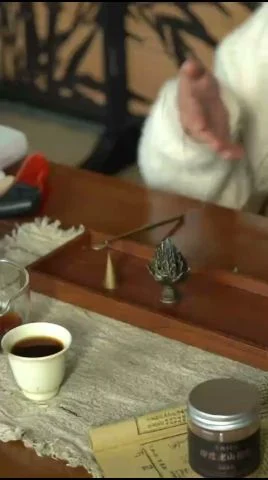
A powder session, end to end
Preparing the powder, placing it in the burner, and the smoke coming up.
Building a range for North America?
Send us the channel and the target price band and we will propose a range — formats, grades and quantities — rather than sending you a catalogue.