AGARWOODWHOLESALE
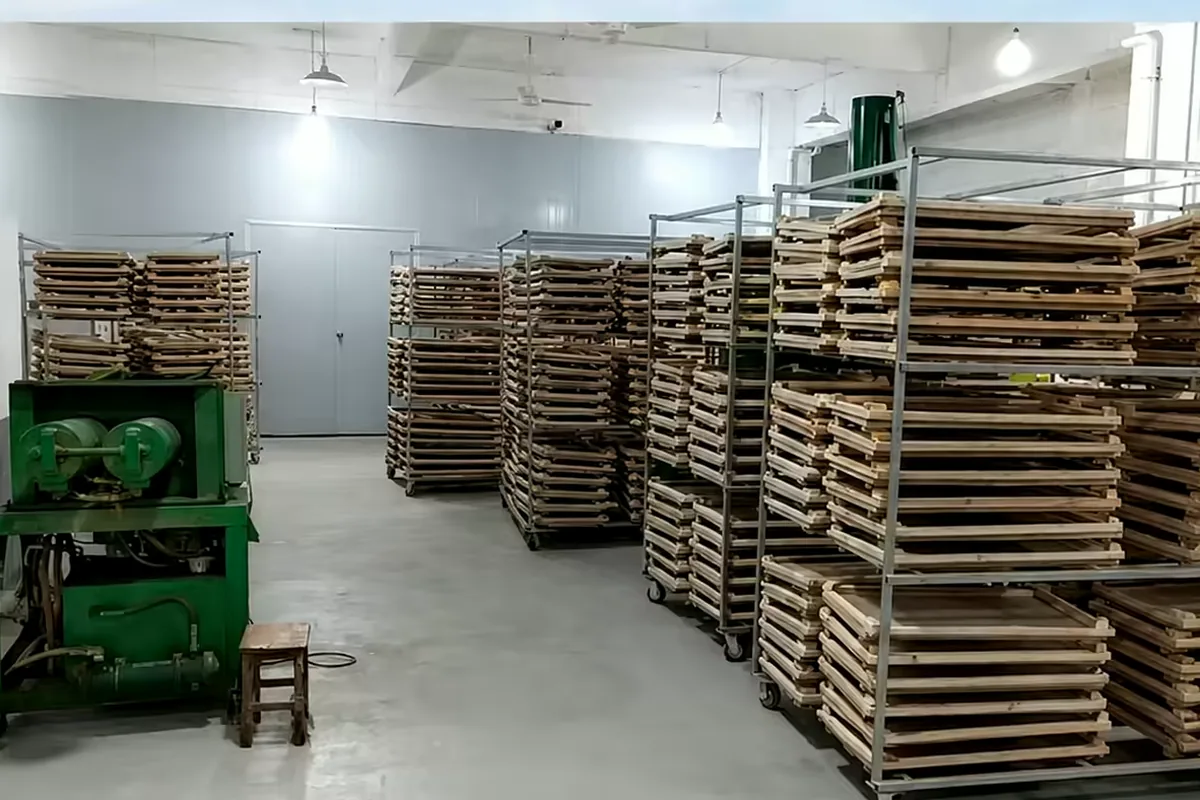
Agarwood incense drying on wooden trays beside the extruder on our production floor

Factory direct · Plantation Aquilaria

Agarwood incense, powder and oud oil — direct from our own floor.

Six core lines and the hardware that sells them, made from plantation Aquilaria we grow and process ourselves. Every consignment carries a batch number on the carton and a sealed retention sample behind it; a certificate of analysis is issued on request.

No minimum order quantity on stock lines

12+
Years exporting
6
Core product lines
2 wks
Stock lead time
30 days
Batch reservation

Six core lines

What we make

Focused deliberately. We do pressed incense, powder and oil properly rather than carrying a catalogue of everything agarwood.

And the hardware that sells them

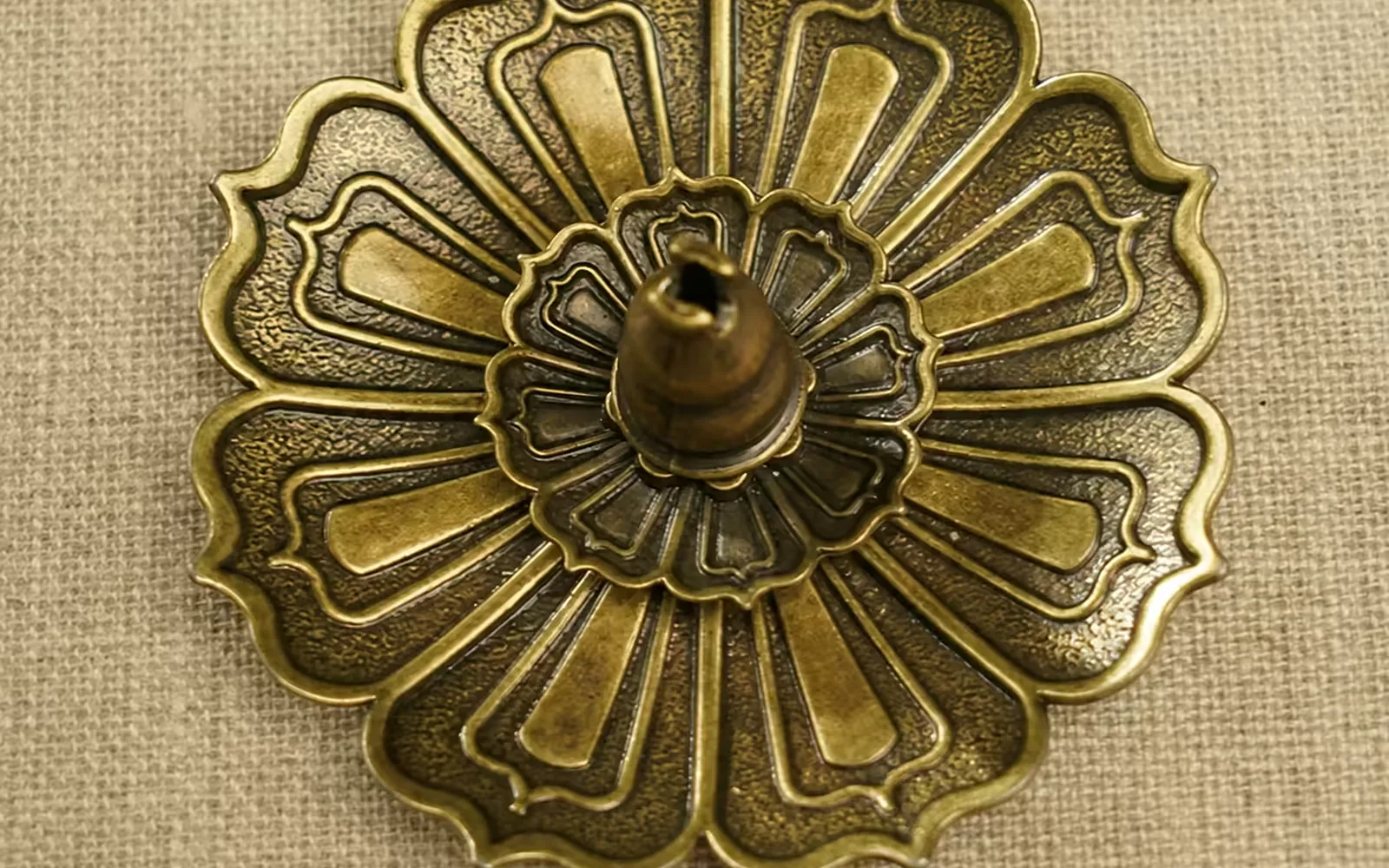
Burners, holders and packaging

Nobody buys one incense stick. The attach lines are where basket size and reorder rates actually come from.

The problem

Agarwood is unusually difficult to buy well

Not because the material is complicated, but because almost nothing that matters about it is visible at the moment you buy.

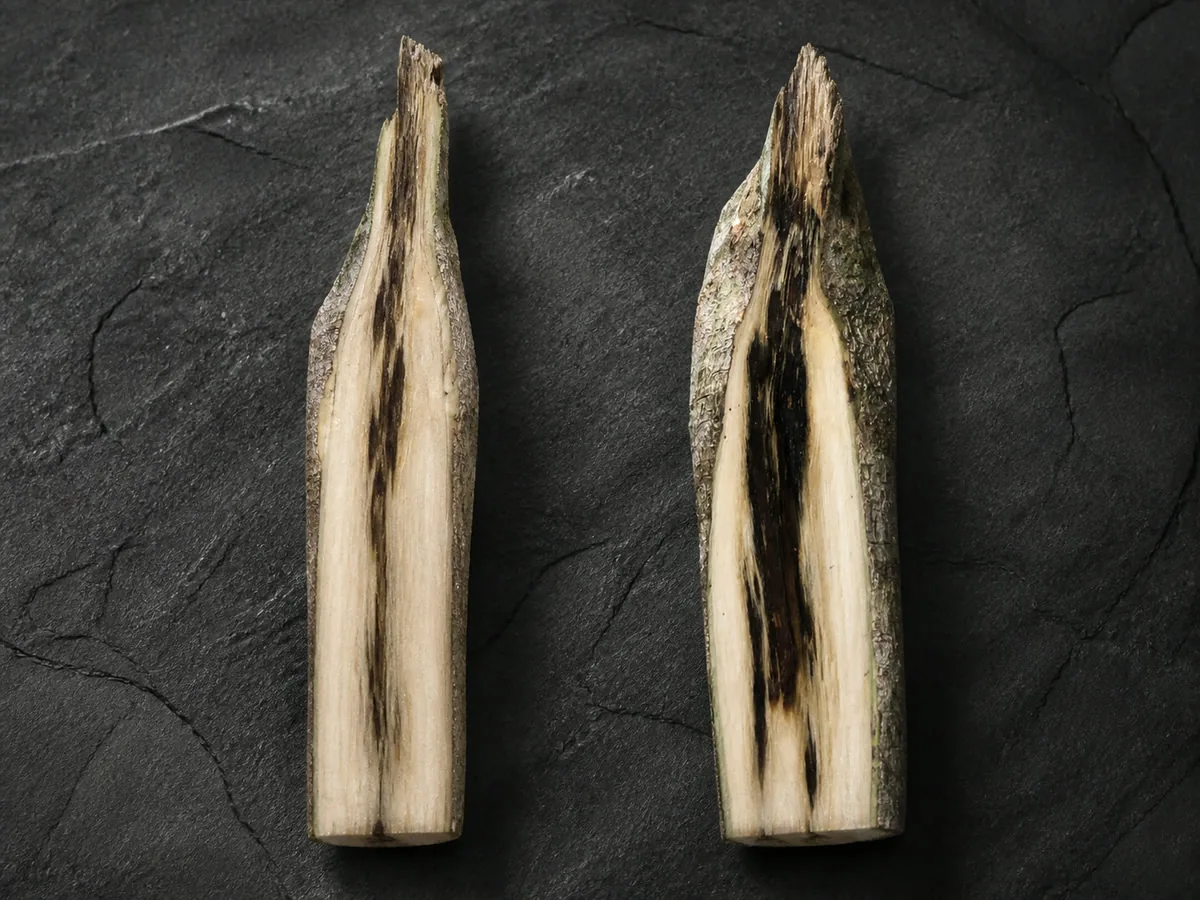
Plantation Aquilaria heartwood split open — resin banding from two induction cycles side by side

Agarwood is among the most frequently misrepresented natural materials in international trade, and the reason is structural rather than moral. The price gap between plantation-grown material and genuine wild resin runs to two orders of magnitude, the difference is difficult to establish by eye, and by the time it becomes obvious the goods have shipped, cleared and been paid for. That combination — high value, low verifiability, delayed discovery — produces the market you are currently shopping in. It is also the reason our range stops where it does: we grow and process plantation Aquilaria and carry nothing else, so the single most profitable misrepresentation in this trade is one we have no material to commit.

The failures repeat with unusual consistency. A buyer pays a wild-material price for plantation stock. Sticks burn correctly for two thirds of their length and then turn papery, because a bamboo core is burning alongside the incense. A container is held at destination because the invoice described the goods generically and customs reclassified a natural binder as a chemical preparation. An oil bought on a beautiful sample arrives cut with a carrier at a percentage no nose reliably catches. None of these are exotic — they are the ordinary ways money is lost here.

What all four have in common is that they are specification and documentation failures rather than fraud in any dramatic sense. They happen where a buyer accepted an adjective in place of a number, or accepted a document that described a product line rather than the batch in the box. So the entire way this site is written is an attempt to remove the adjectives: binder ratio as a percentage, mesh as a number, transport class against the stated dangerous-goods threshold, burn time in hours, and a batch number on every certificate that you can check against the container it arrived in.

That approach cuts both ways, which is the point. A supplier who publishes numbers can be held to them, and a supplier who publishes only adjectives cannot be. We would rather be checkable than flattering — including where the honest answer is unhelpful. We do not issue a chromatogram with every bottle of oil, because a profile only means anything if it was run on the lot you are buying and independent analysis costs real money. We will not describe plantation material as wild on a permit application. We will not run a stick blend below 18% binder because it breaks in the box, whatever the target cost.

And we are deliberately narrow. Six lines and the hardware that sells them, rather than a catalogue covering everything the genus produces. Chips, carvings, bracelets and seedlings are real businesses. They are not ours, and a supplier claiming equal competence across all of them is claiming something implausible.
How it is made

Inside the operation

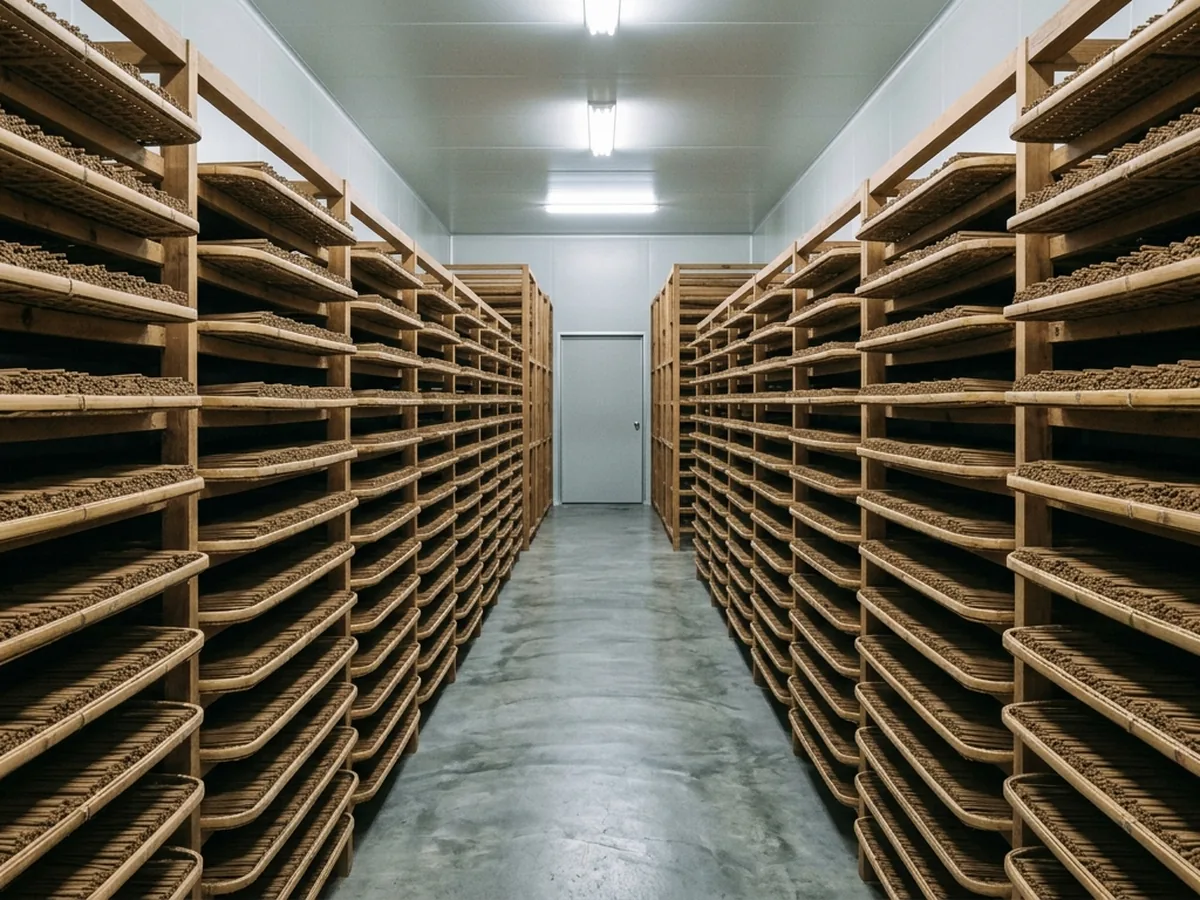
Agarwood incense sticks drying on racks in a controlled drying room

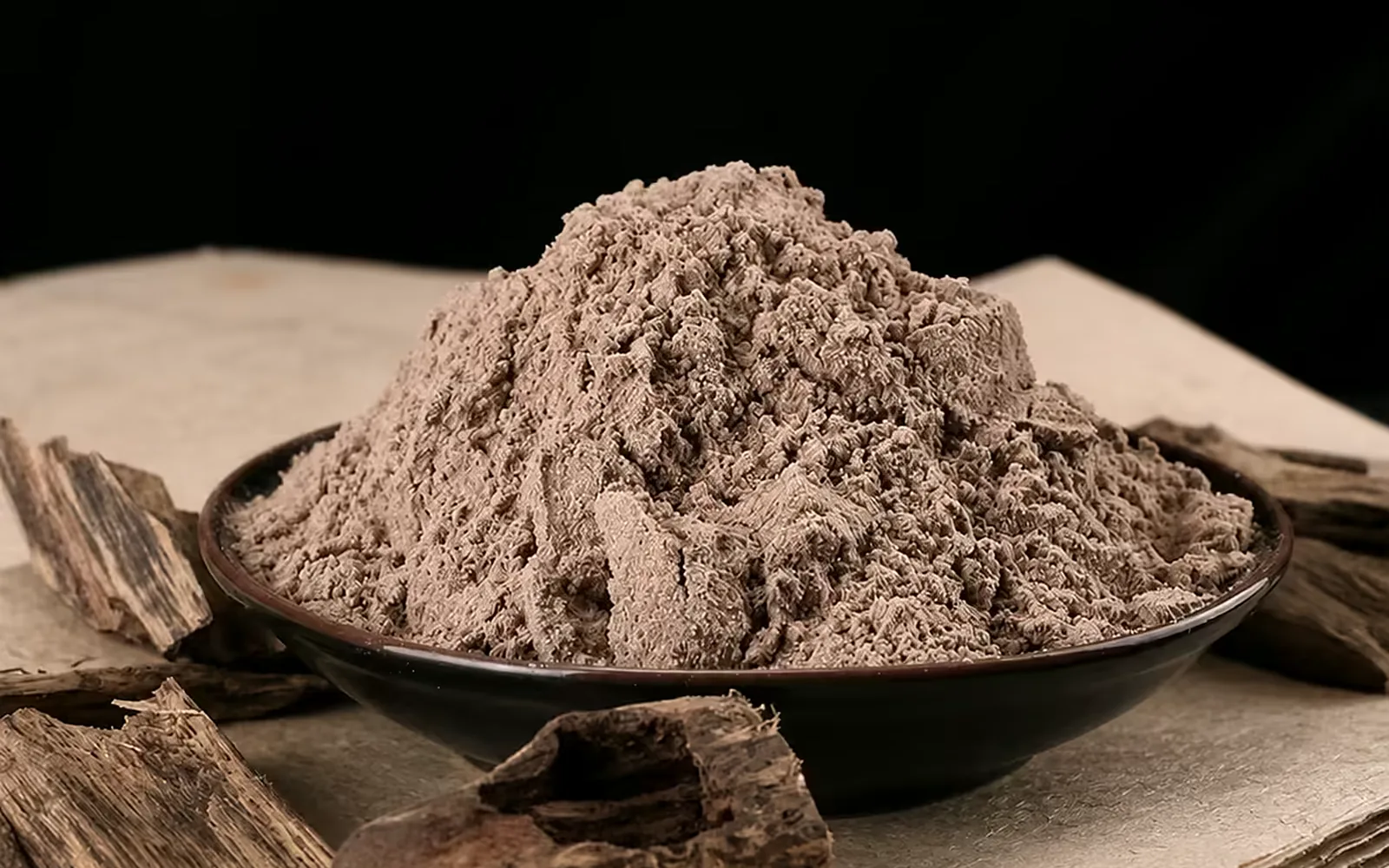
Our production runs on plantation Aquilaria from our own stands in Guangdong and Hainan, inducted, harvested and processed here rather than bought in as finished goods. There is no wild-collected material in the range at any grade. Sticks are makko-bound at 18–22% with no charcoal. Powder is mesh-graded and moisture-controlled under 8%. Oil is distilled in batches and every lot carries its own certificate.

Everything we ship has a sealed retention sample held behind it, three months from dispatch, so that a question raised inside that window is settled against physical material rather than against two parties’ recollections.

At a glance

The numbers, before you have to ask for them

Everything a buyer normally has to extract over three emails. If a figure here turns out to be wrong, we would rather you told us than quietly went elsewhere.

Key commercial and technical figures
Core linesIncense sticks · cones · coils · backflow cones · incense powder · oud oil, plus the hardware each needs
Products online24 specified SKUs across 9 categories
Exporting since2014 — 12 years, 40+ destination countries
Minimum orderNone on stock lines · private label from 500 boxes
SamplesPaid, drawn from a real production batch rather than a display lot
Lead time15–25 days stock · 25–35 days private label from artwork approval
Stick binderNatural makko at 18–22%, no charcoal, coreless available
Powder controlMesh-graded, dried and desiccant-packed
Oil transport classStated as non-dangerous goods on the batch safety data sheet — flash point above the 60 °C threshold
Retention samplesSealed at packing, held 3 months from dispatch
Batch reservation30 days held under your name on any lot you approve
Reply timeOne business day, including the answer that we are the wrong supplier
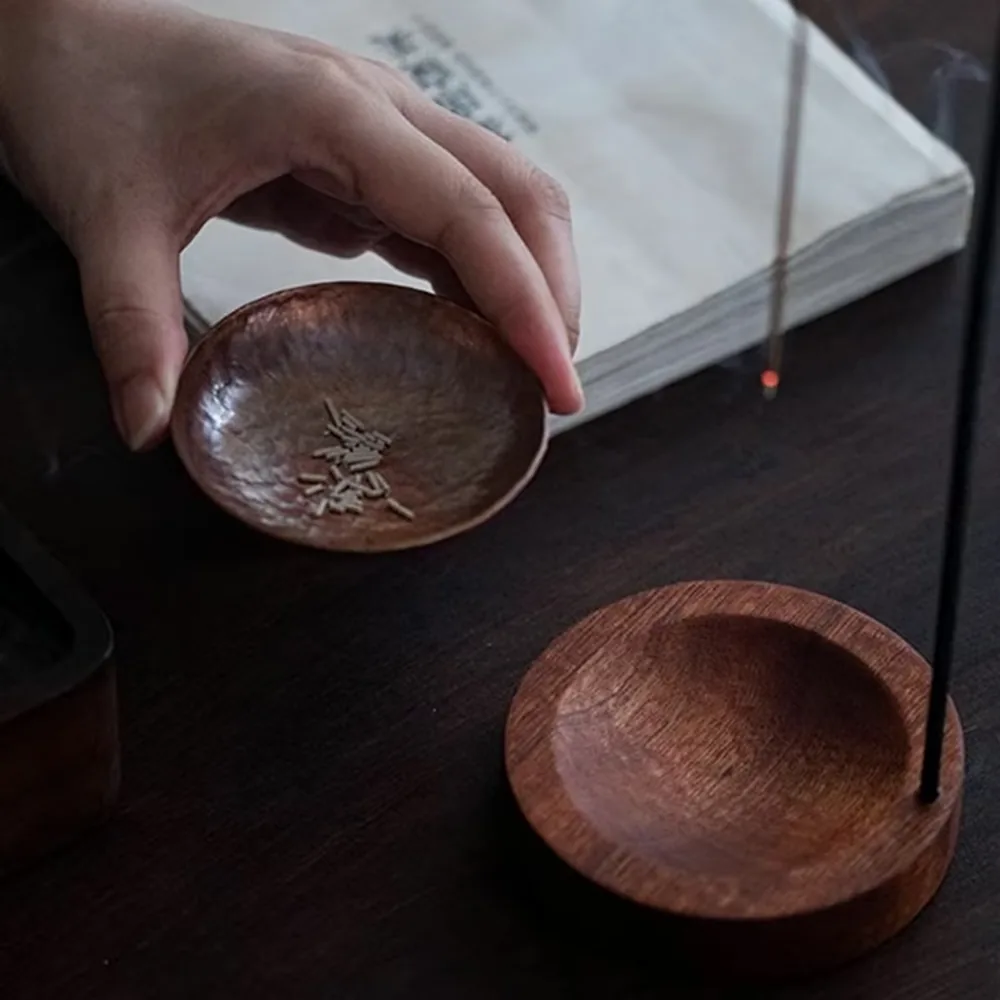
Agarwood incense material in a wooden dish beside a burning stick on its holder

Watch

On the factory floor: finished incense and retail packaging

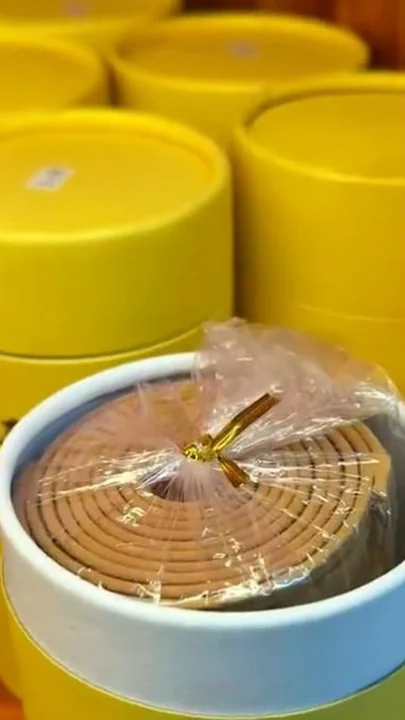
A 28-second clip from the floor — coil incense sealed and stacked into retail packaging tubes.

Coil incense sealed and stacked into retail packaging on the factory floor

On the factory floor: finished incense and retail packaging

A 28-second clip from the floor — coil incense sealed and stacked into retail packaging tubes.

What the numbers are written against

Published standards, so you can check us

Every figure above is written against a standard you can look up yourself, rather than against our own house rules. Three apply to this range.

GB 26386

Burning incense — safety

The mandatory PRC safety standard for burning incense, covering formaldehyde, benzene homologues, TVOC and migratable heavy metals. Compliance is a condition of sale in China, not a marketing option.

T/HAIUA 001-2024

Agarwood burning products

Hainan Agarwood Industry Association. Voluntary, so our lines are specified against it rather than certified to it: moisture ≤ 12.0%, ethanol-soluble extract ≥ 10.0%, straightness ≤ 3.0%.

LY/T 2904-2017

Agarwood identification

With DB46/T 421-2017, the two PRC references for authenticating agarwood itself — four chromone marker peaks by HPLC, plus colour reaction and TLC against a reference sample.

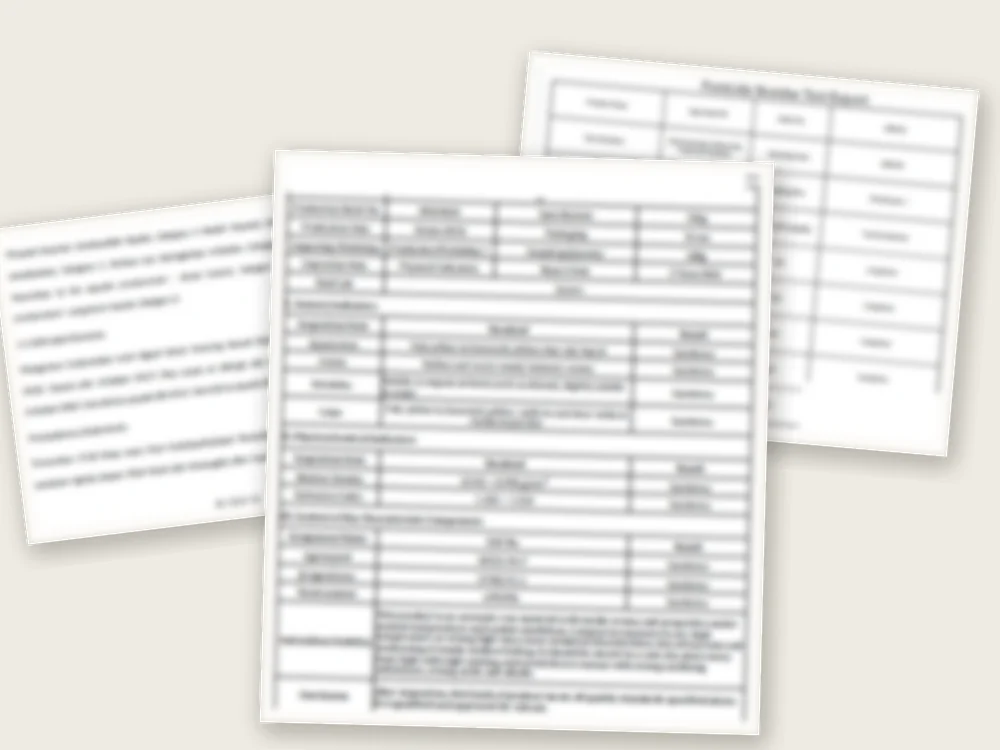
Specified against is not the same as certified to, and we do not use the two interchangeably. Where a figure has been measured we say so and give the test condition; where it has not, the specification page says that instead of quoting a number we cannot stand behind. How we hold suppliers to these

Documentation

The paperwork is where agarwood deals actually fail

Four documents cover almost every shipment. One of them cannot be obtained after a container has left, which is why it is the one to ask for first.

Most held containers are not held because of the product. They are held because a permit expired in transit, or a consignee name was spelled differently on one document than on the bill of lading, or an inspection was requested after sealing and therefore could never exist for that shipment. Every one of those is avoidable with a conversation at order stage.

So we have written out each document in full — what is on it, who issues it, how long it takes, and the specific ways it goes wrong. Including, where it applies, that the document is your responsibility rather than ours: a supplier who claims to be handling your import permits is describing something outside their control.

One line from that section is worth surfacing here, because it changes landed cost rather than just paperwork. Agarwood oil is a heavy sesquiterpene distillate, and closed-cup flash points for it sit above the 60 °C threshold that defines a flammable liquid. Section 9 of the sheet issued for your batch carries the figure, and Section 14 the classification that follows from it. Most essential oils cannot say the same, and most forwarders will assume otherwise until you show them the sheet for the product you are actually buying.

OEM & Private Label

Your brand, our production

Custom stick format, blend ratio, mesh, dilution, bottle and box. Pre-production sample and written sign-off before every main run.

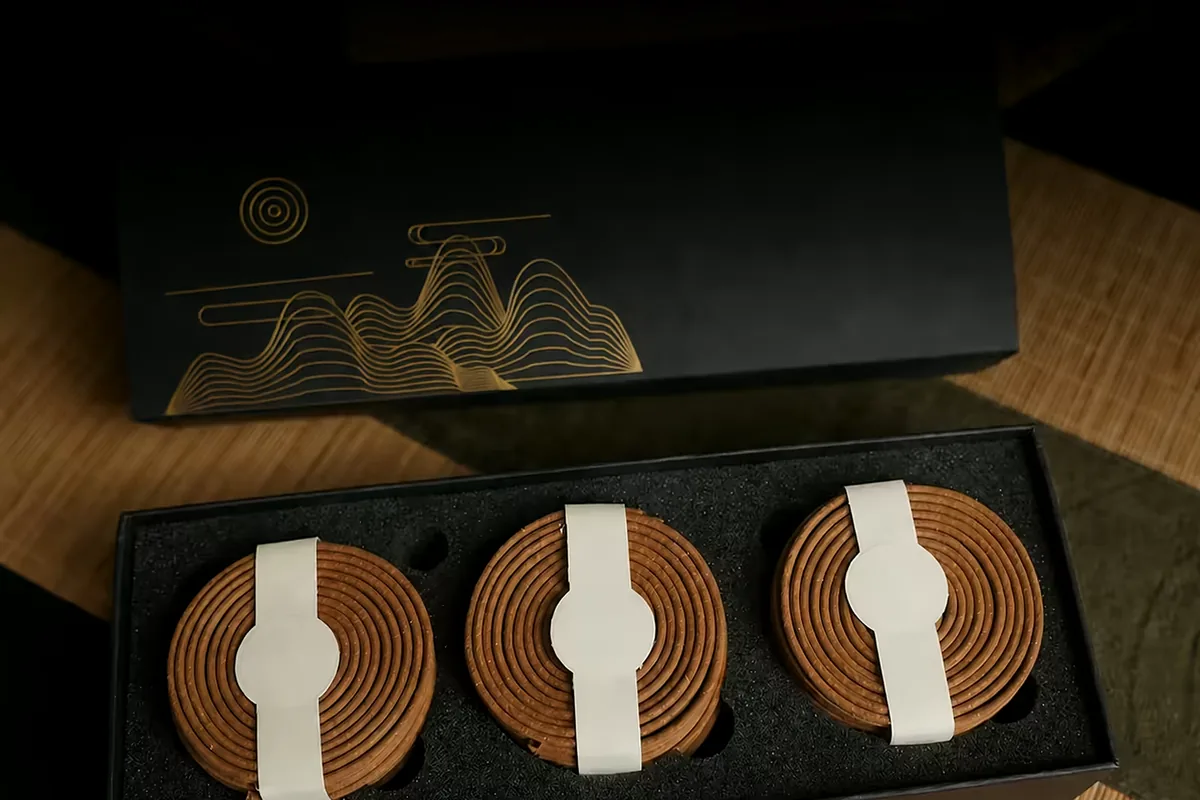
Private label agarwood incense coils in a presentation box, labels left blank for the buyer’s branding

Format

Stick length 8–30 cm, diameter, count per box, coreless or cored.

Blend

Agarwood-to-binder ratio, powder mesh, oil dilution — you nominate it.

Packaging

Box structure, print, rigid gift boxes, assembled shelf-ready.

Process

Dieline → proof → pre-production sample → written sign-off → run.

OEM & private label →

How it works

From first enquiry to dispatch

Five steps, in this order, every time. The sequence exists because skipping a stage is what produces the disputes.

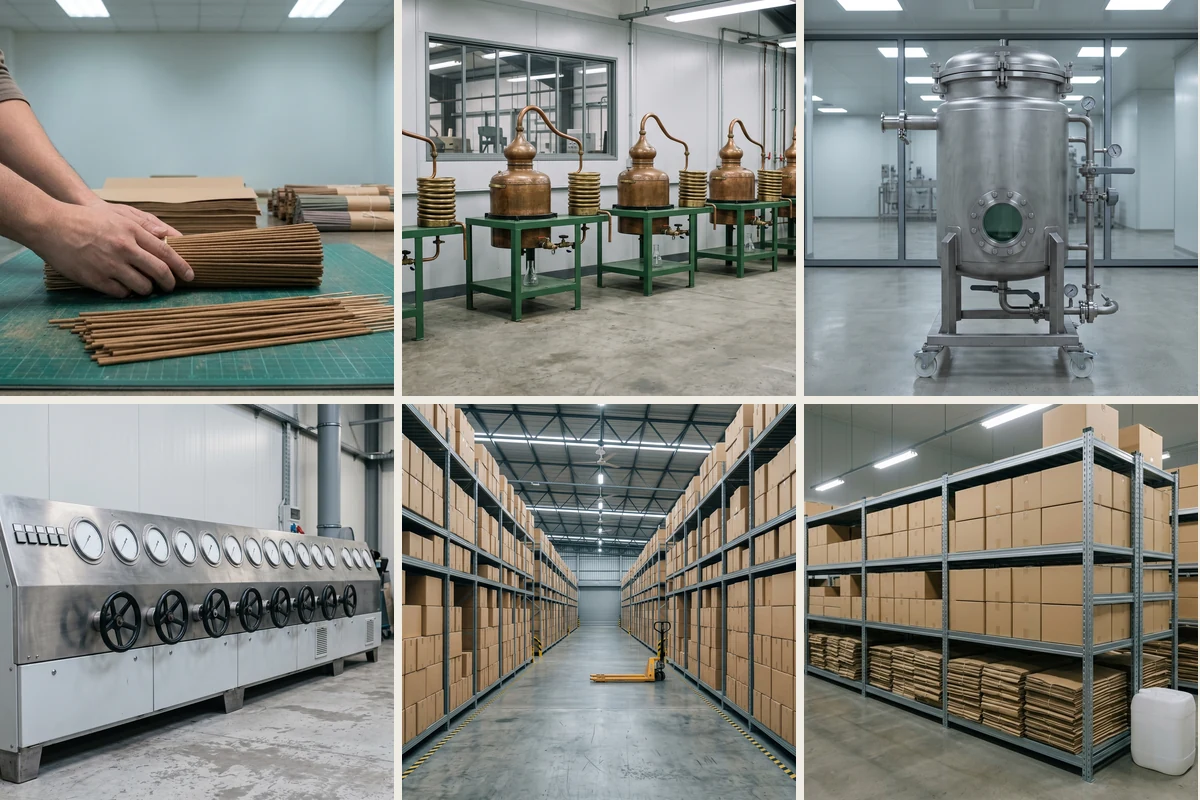
Production and storage areas — stick sorting, distillation, extraction control and finished-goods warehousing
  1. Tell us the specification

    Quantity, grade, format, packaging and destination country. Destination matters at this stage rather than later, because it determines the document set.

  2. Quotation within one business day

    A costed specification, not a price. If we are not the right supplier for what you described, that is what you get instead. It is cheaper for both of us than finding out at sample stage.

  3. Paid sample from a real batch

    Drawn from production, not from a display box, and sent with the written specification for the line. Evaluate oil over several hours rather than on a strip.

  4. Approve, and we hold the lot

    The balance of the batch you approved is reserved under your name for thirty days. No two lots are identical, so the lot you approved is the lot you should receive.

  5. Production, QC and documentation

    Batch checks, sealed retention sample, permits applied for in parallel, and the complete pack sent to your broker before the goods arrive rather than after a query.

  6. Ordering for a seasonal deadline — Ramadan, Eid, year-end gifting — needs working backwards from the shelf date with a 90-day allowance, not forwards from today.

    Start with a sample →

Where these formats sell

Eight settings, and what each one rules out

A wholesale buyer is choosing a shelf, not a scent. Every setting below fixes three things — how long it has to burn, how much smoke and ash the space tolerates, and whether an open flame is allowed at all — and those three decide the format before grade ever comes into it.

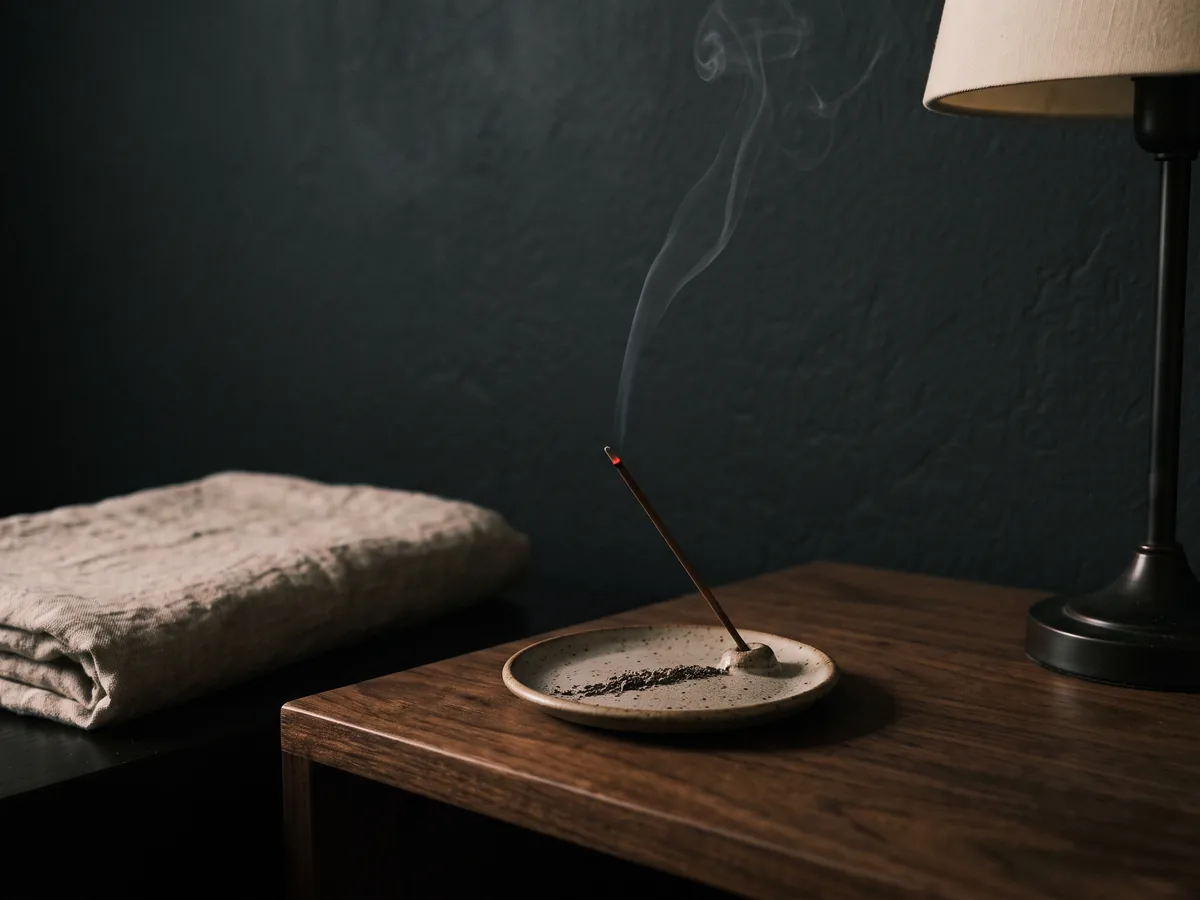
A single incense stick burning on a plate holder on a bedside table in the evening

Bedroom and evening use at home

A small room, one person, twenty minutes to half an hour before the end of the day.

What it constrains
Short burn and low smoke volume. A stick that runs 60 minutes in a bedroom is the wrong stick, and ash that scatters off a plate is the single most common reason a home user does not rebuy.
Formats that fit
Coreless sticks at 13.5 cm · low-smoke sticks · a plate holder that catches the full column
For the buyer
The highest-volume home format and the one most often sold as a boxed set with its holder. Buyers in this segment specify burn time before they specify grade.
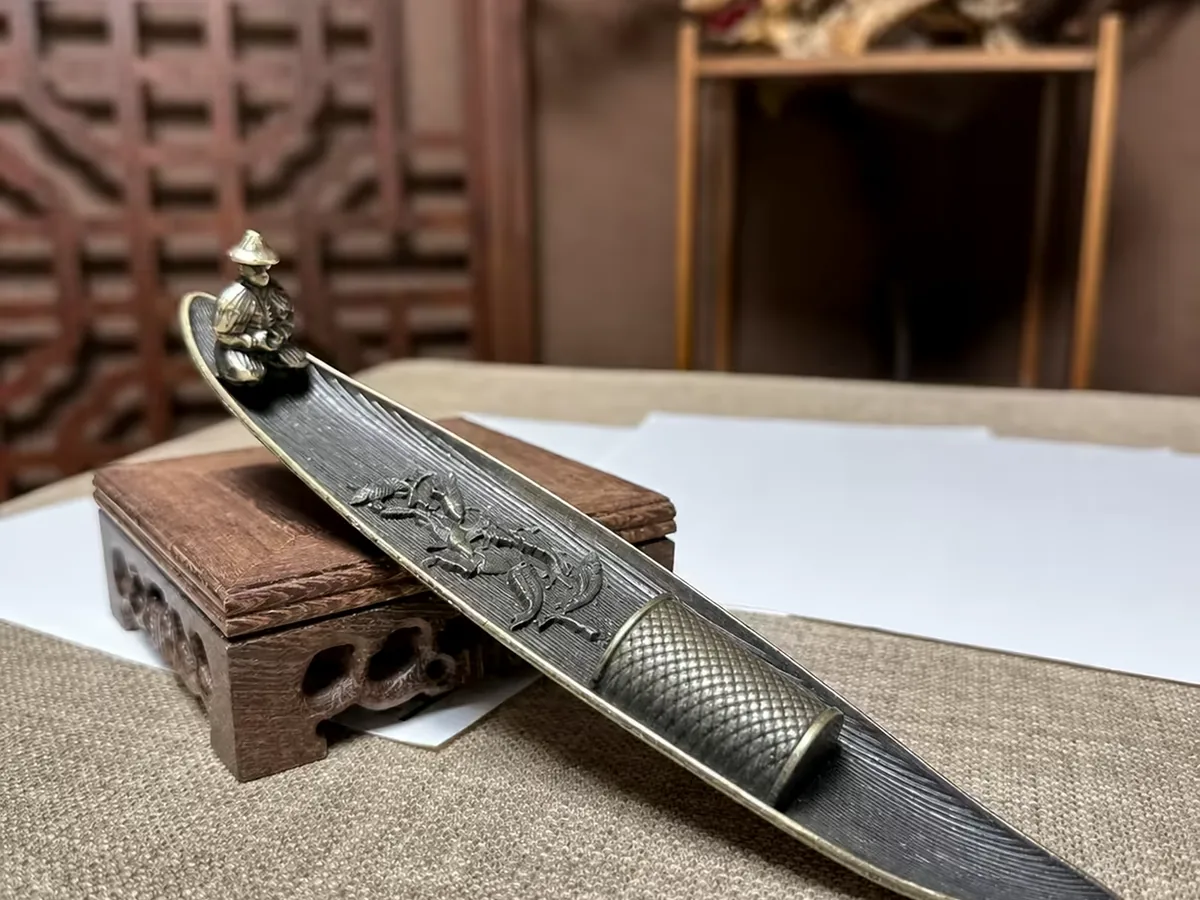
A boat-shaped incense holder on a linen desk mat with loose sheets of paper and a carved wooden box

Study, reading and desk work

One person, one sitting, typically forty minutes to an hour at a desk.

What it constrains
The burn has to last the sitting without being re-lit, and the scent has to stay in the background. A heavy top note competes with the work rather than framing it.
Formats that fit
Koh-grade short sticks · seal incense powder pressed to a session length
For the buyer
The strongest repeat-purchase segment in the range, because the product is consumed on a schedule rather than on occasions. Sells on consistency between boxes.
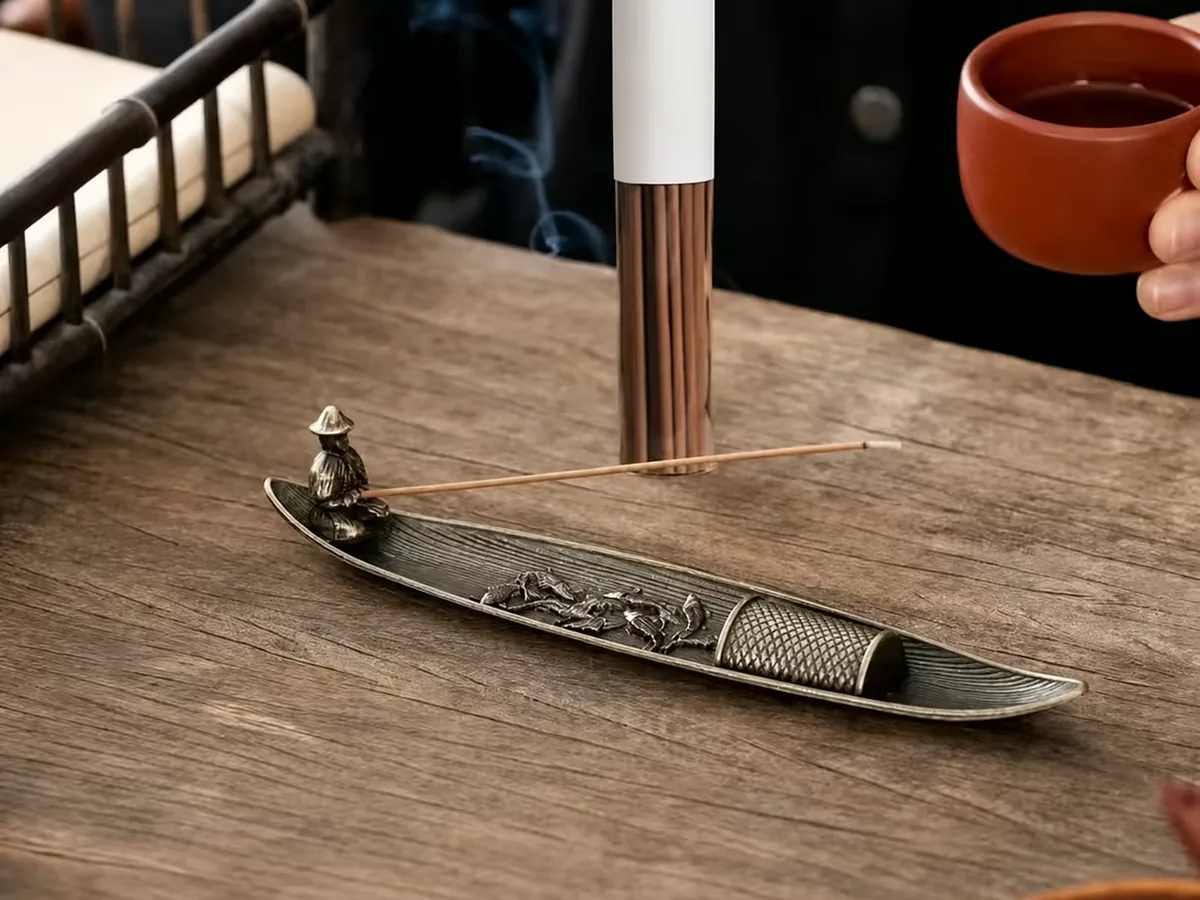
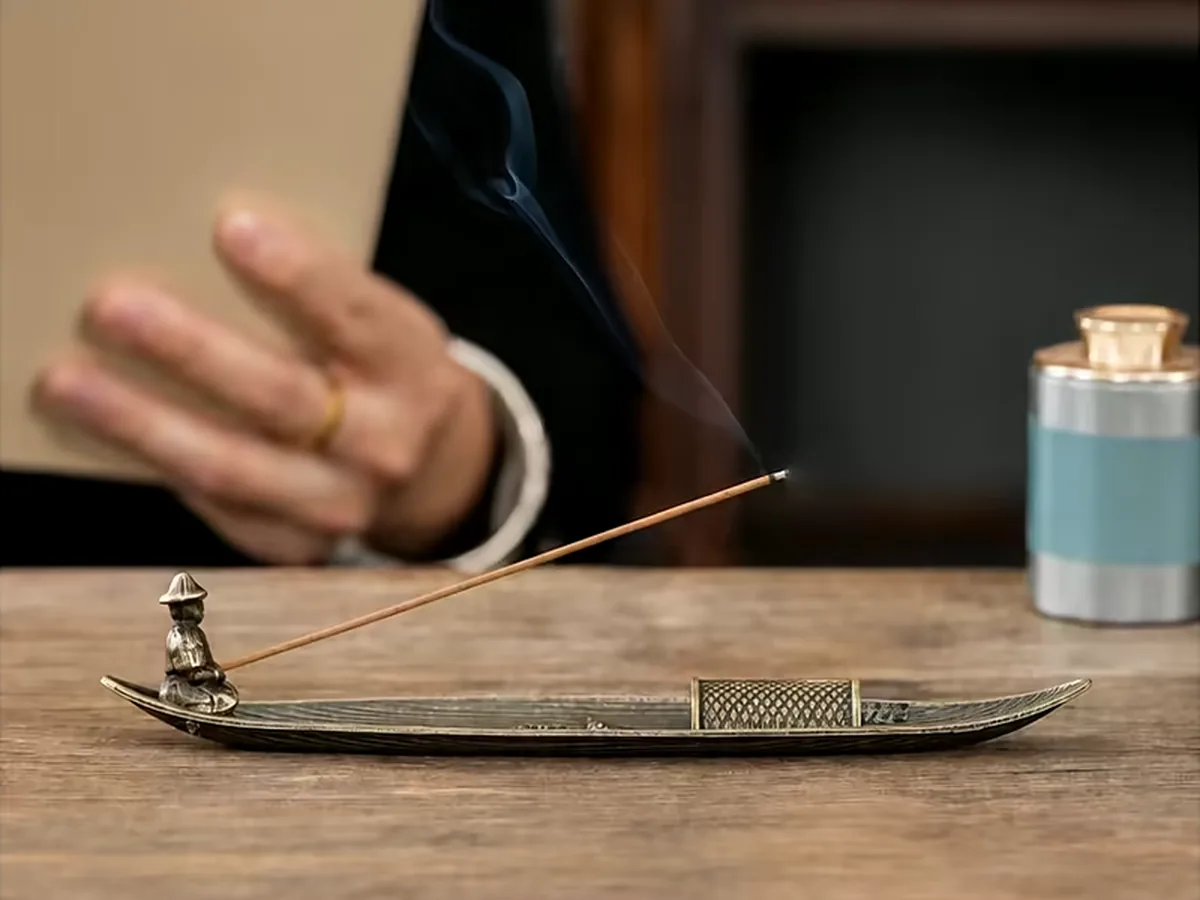
A lit incense stick on a boat holder at a tea table, a hand lifting a red tea cup beside it

Tea room and tea service

A table, two to six people, the length of a tea session.

What it constrains
It cannot compete with the tea. That rules out anything with a loud opening, and it usually rules out a plate holder in favour of a lidded censer that softens the release.
Formats that fit
Koh grade · lightly dosed sticks · ceramic koro censer rather than an open plate
For the buyer
Sold next to teaware, at a price tolerance well above the home shelf. This is the segment that buys the censer and the incense together.
Hands working at a tablet on a desk with an incense stick burning on a boat holder alongside

Offices and shared spaces

A room other people also work in, often all day, sometimes with a no-open-flame rule.

What it constrains
No ash scatter, and in many buildings no open flame at all. This is the one setting where the constraint can rule out combustion entirely rather than just narrowing the format.
Formats that fit
Backflow cones, whose ash falls into the burner rather than around it · temperature-controlled burners, which heat powder without burning it
For the buyer
The electric burner is the only line in the range that clears a no-open-flame policy, which makes it the way into corporate, hotel and clinic accounts that cannot buy anything lit.
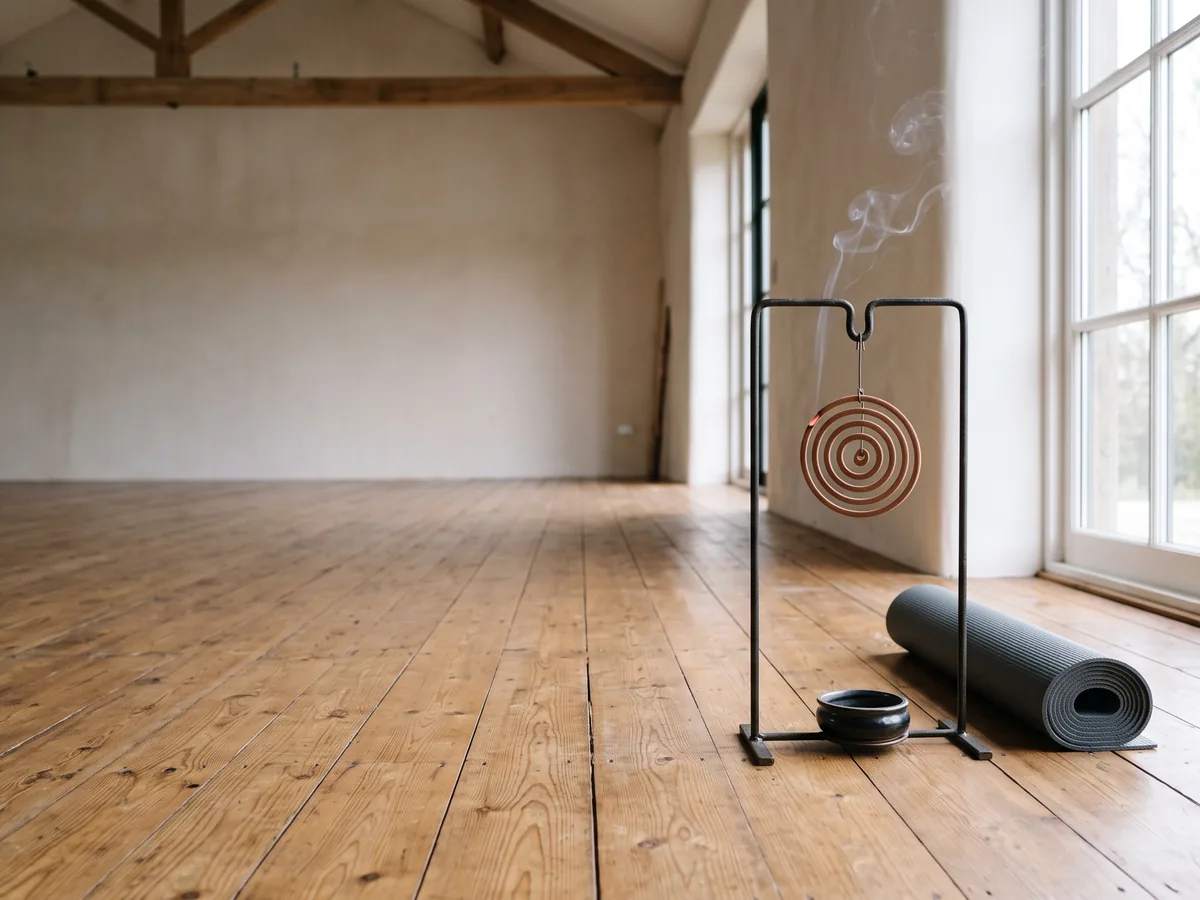
An incense coil burning on a stand at the edge of a studio floor during a class

Yoga and indoor movement

A studio or a cleared room, forty-five to ninety minutes, nobody watching the incense.

What it constrains
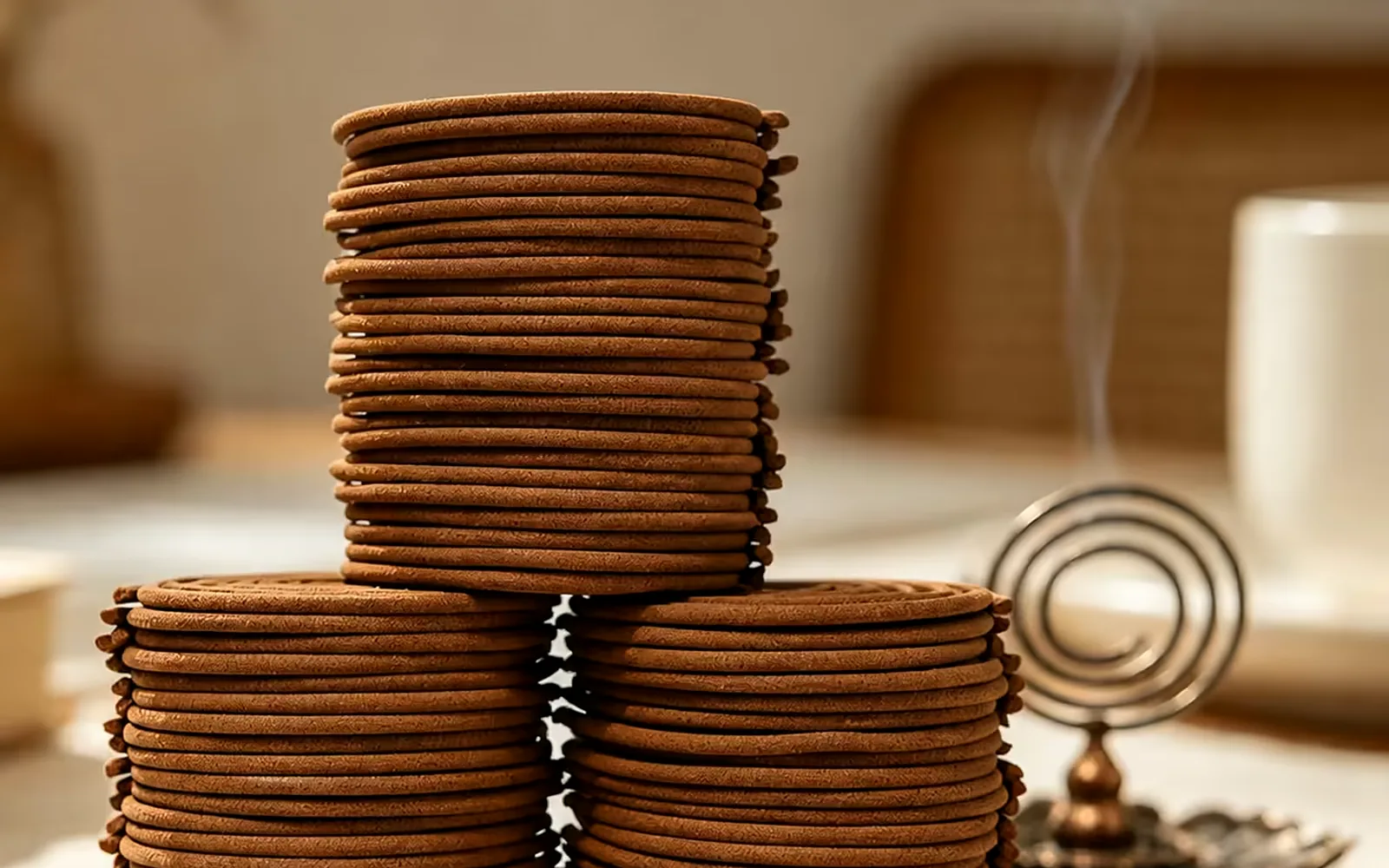
Long and unattended. The burn has to hold for the whole session and finish safely on its own, which is a coil or a long stick rather than anything that needs re-lighting.
Formats that fit
Incense coils · long sticks with a stand that keeps the ash off the floor
For the buyer
Studios buy in bulk on plain packaging and reorder on a fixed cycle. Low unit price, high volume, and almost no interest in gift presentation.
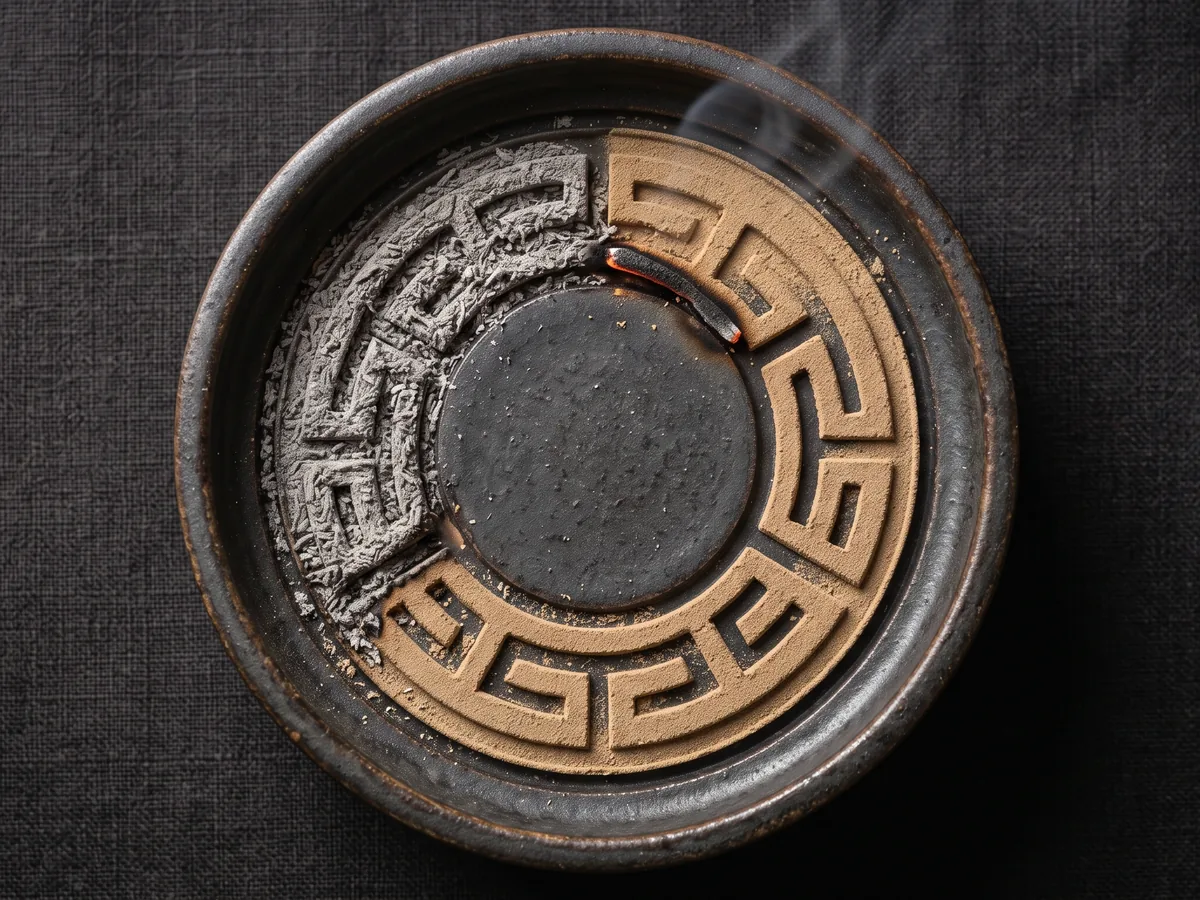
A seal incense pattern burning along its path in a censer during a sitting

Meditation and formal practice

One sitting, and the incense is what measures it.

What it constrains
Burn time has to be repeatable between batches, because here the stick is the timer. A lot that runs eight minutes short changes the length of the practice.
Formats that fit
Seal incense, where the pressed pattern is the duration · coils · temple long-burn sticks
For the buyer
These buyers specify burn time first and scent second, and they will test a new lot against the old one before committing. Batch consistency is the whole sale.
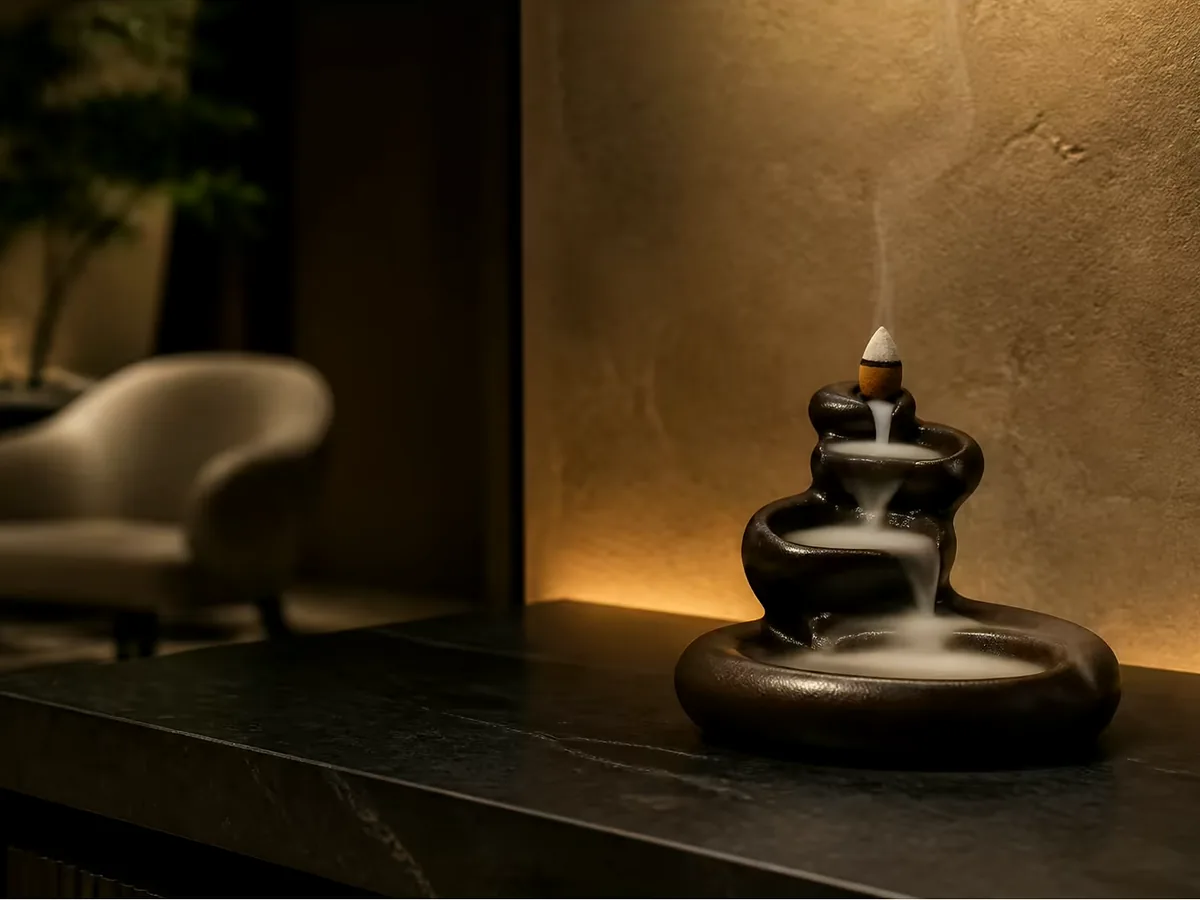
A backflow burner running on a dark console table in a warmly lit lounge, armchair behind

Living rooms and display

A shelf or a coffee table, where the object is on show whether or not it is lit.

What it constrains
The burner is the product. It has to look right cold, because most of the time it is cold — which puts the buying decision on the piece rather than on what burns in it.
Formats that fit
Backflow cones sold with the burner they run on · brass and ceramic censers
For the buyer
The highest gift and impulse share in the range. It sells on the burner, and the cones are the consumable that brings the customer back.
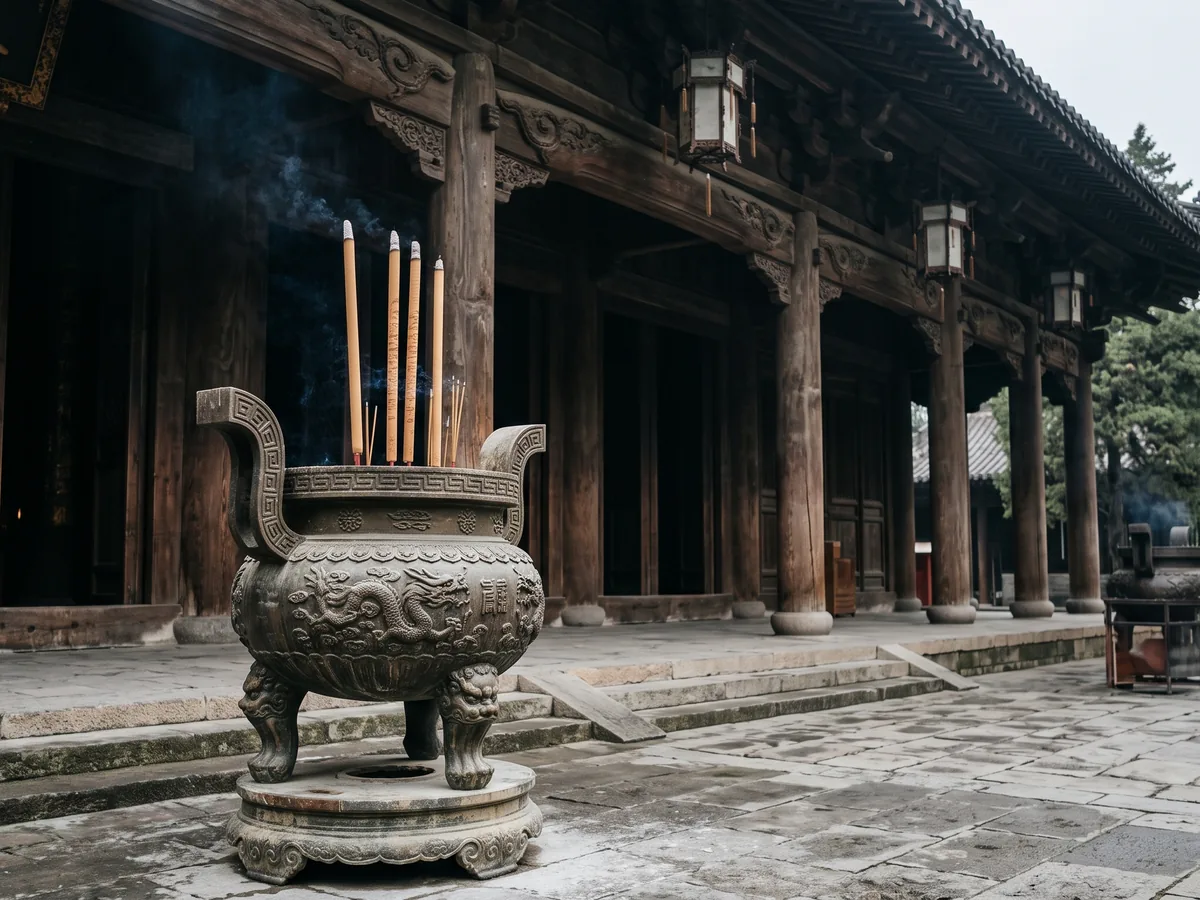
Long temple incense sticks burning in a large open censer outside a hall

Temples and institutional supply

A large hall, open air or high ceilings, two to four hours at a time.

What it constrains
Length and volume. A domestic stick is invisible in this space, and re-lighting through a service is not workable, so length does the work.
Formats that fit
Temple long-burn sticks at 40, 60 and 90 cm · large coils
For the buyer
Contract supply rather than retail: scheduled quantities, plain bulk packing, and a specification that has to hold across a year of deliveries rather than one box.

B2B services

What we handle beyond the product

Documentation, sampling, testing and freight are where most agarwood orders actually go wrong.

Who we supply

Find yourself in one line

The market pages answer where you are selling. These answer who you are — and it is usually the channel, not the country, that decides which format you can actually use.

Case studies

What we did for buyers like you

Three programmes, each with the constraint that shaped it and the way the result was counted. Two more, plus what we do not publish and why, are on the case studies page.

All 5 case studies →

Browse another way

By grade, and by market

By grade

By market

From the blog

Sourcing problems, explained

Written for buyers dealing with held containers, black smoke and adulterated oil — not for search engines.

All articles →

Before you enquire

The questions we get before anyone asks for a price

What is your minimum order?

There is none on stock lines. Tell us what you want and we will quote it — a single carton is a real order here, not a favour. Most stock orders leave within two weeks and go by air, with the freight on your account, which is what makes small quantities work at all. The one exception is private label: 500 boxes, because a print run has a minimum whatever we would prefer.

Are you a factory or a trading company?

We produce. Plantation Aquilaria from our own stands in Guangdong and Hainan, with our own milling, blending, extrusion, drying and distillation. Plantation is the whole range — we do not carry wild-band or kynam material, because neither can be produced the way we produce. We would rather be a narrow supplier you can hold to a specification than a broad one you cannot. The factory tour page shows the floor rather than describing it, and once we have video up you will be able to check that claim rather than take it.

How much does agarwood incense cost wholesale?

The honest answer is that the range is wide and any figure quoted without a specification is meaningless. An everyday low-smoke stick and a koh-grade stick differ by more than an order of magnitude, and the same nominal product varies by resin fraction, binder ratio and format. Tell us quantity, grade, format and destination and you get a formal quotation within one business day. Anyone publishing a fixed price list across the full agarwood range is either selling one grade or not selling agarwood.

Can I get a sample before ordering?

Yes, and you should — we would be uncomfortable with a first-time buyer committing to quantity without one. Samples are paid rather than free and drawn from a real production batch rather than from a display box. They ship with the written specification for the line, which is what we contract to. The batch certificate of analysis is issued with wholesale shipments rather than with samples, and independent laboratory testing can be commissioned at any stage at cost if you want the sample verified before you commit. If you approve a batch we will hold the balance of it under your name for thirty days while you arrange the main order, because no two lots are identical and the lot you approved is the lot you should receive.

What are your lead times?

Within two weeks for stock formats from order confirmation, twenty-five to thirty-five days for private label from written artwork approval. Add ten days if new tooling is required. One thing sits outside our control and needs flagging early: any permit or inspection your import route requires runs on a government timetable rather than ours, and inspections happen on the packed consignment before sealing. These run in parallel with production on a normal order and become the constraint on a rush one.

What documentation ships with an order?

A safety data sheet on oils as standard. A certificate of analysis for the specific batch on request, with the cost quoted before anything is commissioned — the batch-record and sensory sections are ours, the instrument sections come from an accredited laboratory. Independent GC-MS the same way, at the laboratory’s cost. Our documentation section explains each one — what is on it, who issues it and the specific ways it goes wrong. What we do not do is speak for your import route: permit and certificate requirements vary by destination and product form. Your broker is the right person to confirm yours before you book freight.

Do you ship agarwood oil by air?

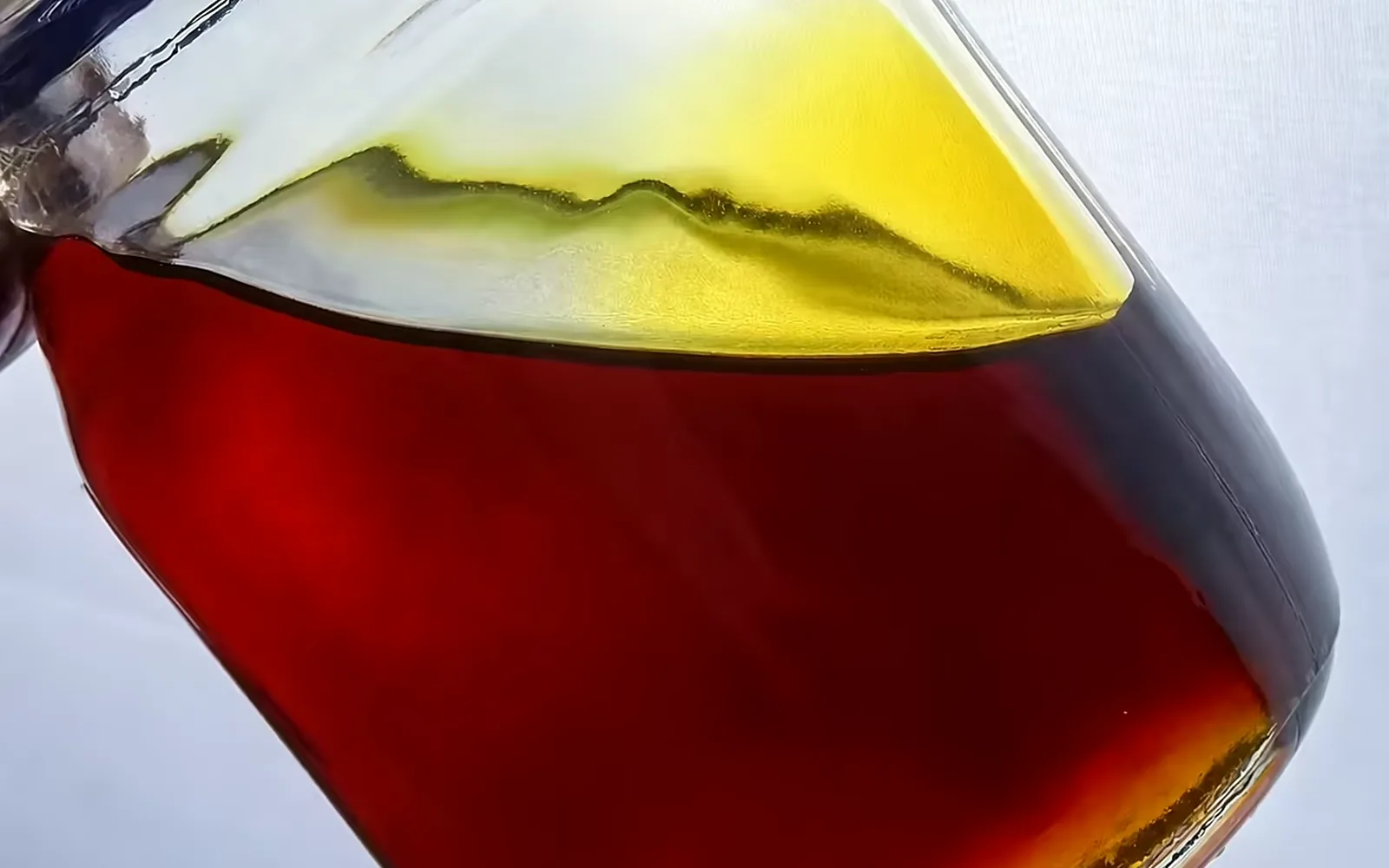
Yes, and more cheaply than most buyers expect. Agarwood oil is a heavy sesquiterpene distillate and closed-cup flash points for this material sit above the 60 °C flammable-liquid threshold, and the safety data sheet issued for your batch is what records the figure and the resulting classification. Where it reads non-dangerous goods there is no dangerous-goods surcharge, no certified packer and no passenger-aircraft quantity limit. Most essential oils cannot say that. Read Section 9 before you book freight, and if a forwarder quotes dangerous-goods handling by default, send them Section 14.

Do you sell wood chips, bracelets or bakhoor?

No. We make incense sticks, cones and coils, backflow cones, incense powder and oud oil, plus the burners, holders and bottles those lines need. Chips, carvings, bracelets, seedlings and bakhoor sit outside our range. We would rather point you elsewhere than sell you something we do not produce well. The focus is the reason the specifications on this site are numbers rather than adjectives.

Ordering, lead time, payment, shipping and claims are answered in full on the buyer FAQ.

Tell us what you need and we will quote it properly

Quantity, grade, format, packaging and destination. We reply within one business day with a formal quotation — or with an honest answer about why we are not the right supplier. No minimum order quantity on stock lines.

Request a quoteWhatsApp