Service
Agarbatti HSN Code and Agarwood Customs Declaration — Right the First Time
We run the paperwork sequence so the pack is complete before the goods move. Most agarwood customs problems are paperwork problems, not product problems.
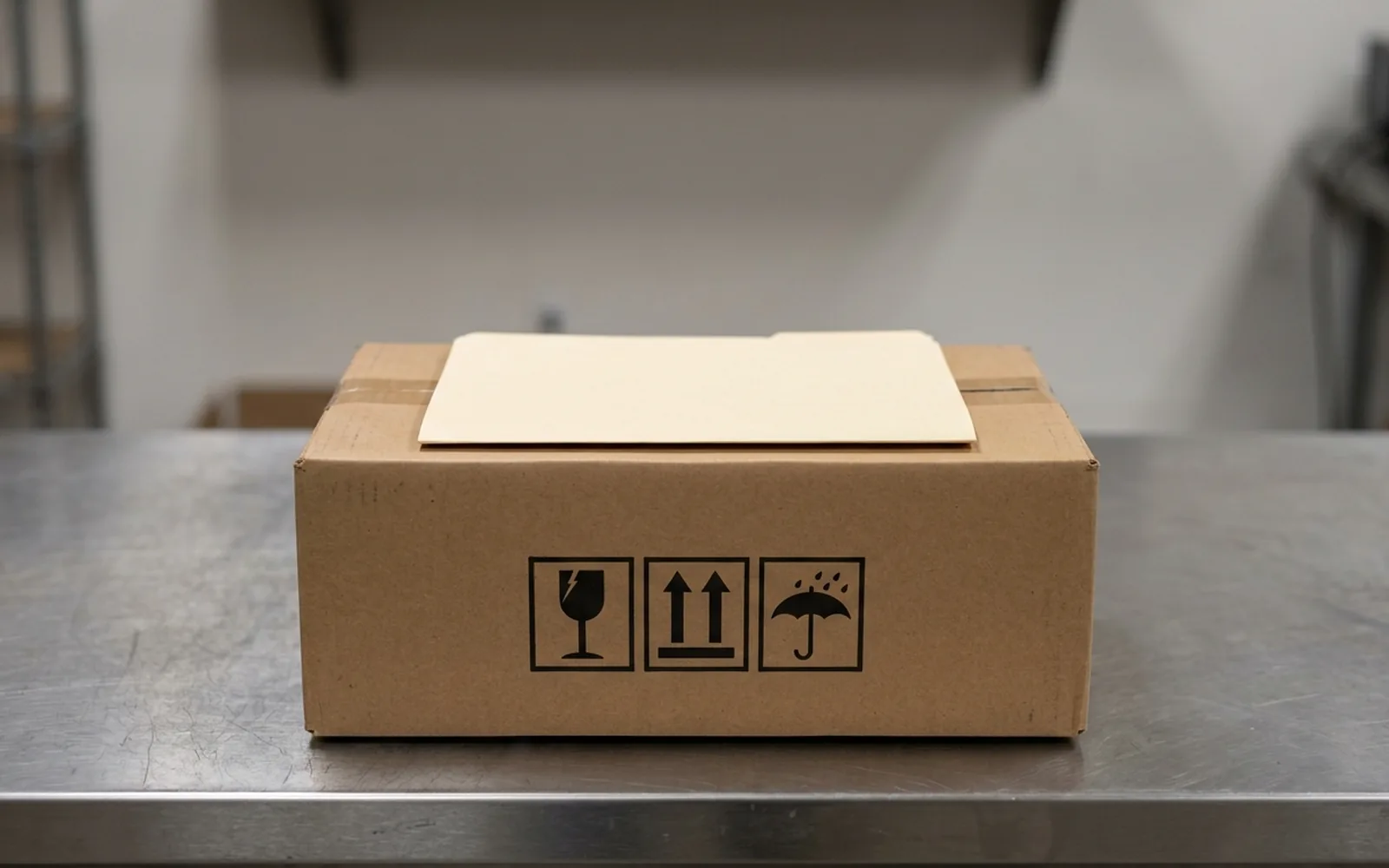
Detail
How export documentation works
Almost every customs problem in this category is a documentation problem rather than a product problem. And the most common failure is not the agarwood at all. It is a binder or fragrance declaration that does not match the physical goods, which gets the consignment reclassified as a chemical preparation and held. If you have had an agarwood shipment held at customs before, that reclassification is the single likeliest reason. It happens on the commercial invoice rather than on any permit.
We address that at source by declaring the natural makko binder explicitly on the commercial invoice rather than describing the goods generically. It removes the single most frequent failure mode before it can start. It costs nothing except the discipline of doing it every time.
What we issue as standard is a commercial invoice carrying a full material declaration, and a safety data sheet on oil shipments. A certificate of analysis for the batch and independent GC-MS are both available on request and charged to you, quoted before anything is commissioned. Permits and government-issued certificates are set by your import route rather than by us — tell us the destination and we will tell you plainly which parts of the pack we can produce and which sit with your broker. If you want to know what each of those documents actually contains and how long it takes, that is set out document by document in our export documentation reference.
The critical practical point is timing, and it is the reason this is a service rather than a form. Some paperwork cannot be produced retrospectively at all: anything attesting a physical inspection of a packed consignment is fixed once the container is sealed, and anything from a government authority runs on that authority's cycle. Once a container is held, producing documentation retroactively takes weeks and demurrage runs the whole time. Tell us the destination country on the enquiry and we will confirm the exact document set required before you place the order.
The one rule that prevents most problems: assemble the pack before dispatch, not in response to a query. Producing documentation retroactively routinely takes weeks. During those weeks the container is accruing demurrage, and in a seasonal programme it may miss the window entirely. Everything else on this page is detail around that single sequencing decision.
A second rule that follows from the first: give us your broker at order stage. We send the pack directly to them at dispatch rather than to you, and you stay copied. That removes a forwarding step at exactly the moment when a day matters. It means the broker is reading the documents before the goods arrive rather than after a query.
One thing we cannot do, stated plainly. We can tell you what we are able to issue and how long it takes. We cannot tell you what your national authority will require on the import side, because that varies by destination, by product form and over time. Your broker can, and asking them before you book freight costs nothing.
A closing note on reissues. Batch records are archived against batch numbers, so a certificate can still be issued from them after the fact — on the same terms as the first one, on request and charged. Send us the batch number from the drum or the carton. What cannot be reissued is anything certifying a physical inspection of a packed consignment: that inspection either happened before the container was sealed or it did not, and no amount of goodwill changes that afterwards.
A note on what to keep on your side. Archive the document pack against the batch numbers rather than against the shipment date. Queries arrive months later and they arrive about a batch, not about a container. A pack filed by date takes an afternoon to search; one filed by batch takes a minute.
Process
Step by step
- Step 1
Destination confirmed
Tell us the destination country and port on the enquiry.
- Step 2
Document set specified
We confirm the exact pack required before you place the order.
- Step 3
Declaration drafted
Material breakdown written onto the invoice before the goods are packed.
- Step 4
Pack assembled pre-dispatch
Our part of the paperwork is ready before the goods move.
- Step 5
Copies sent ahead
Your broker receives the pack before arrival, not on demand.
What you receive
Deliverables
- Certificate of analysis on request, matched to the carton
- Commercial invoice with explicit material and binder declaration
- Safety data sheet on oils
- GC-MS arranged on request via independent laboratory, at cost
- Complete pack sent to your broker ahead of arrival
Reference
What each document actually contains
This page covers the service — the sequencing, the declarations and getting the pack to your broker ahead of arrival. If what you need is the detail of an individual document, the documentation reference takes each one in turn: what is on it, who issues it, how long it takes and how it goes wrong. The most consulted are the safety data sheet — which records the batch flash point against the dangerous-goods threshold, and the transport classification that follows from it.
Watch
The goods the paperwork describes
Finished incense sealed and stacked into retail packaging.

The goods the paperwork describes
Finished incense sealed and stacked into retail packaging.
Buyer Questions
Agarbatti hsn code — frequently asked questions
What is the most common reason agarwood shipments get held at customs?
A material declaration that does not match the goods — typically a generic description that leads customs to reclassify the consignment as a chemical preparation because of the binder. We declare the natural makko binder explicitly on the commercial invoice, which removes that failure mode before it can start.
My agarwood shipment is already held. Can you help?
Sometimes, and the honest answer depends on why. If the problem is a description or classification mismatch on the invoice, an amended declaration with a proper material breakdown often resolves it. We can produce that, including for goods we did not supply. If the problem is a missing or expired permit, it is far harder, because permits cannot generally be issued retrospectively for goods already in transit and the authority is not ours to petition. Send us the customs notice and we will tell you which of the two you are in rather than taking a fee to find out.
What is the correct customs declaration for agarwood incense?
It should name the material composition rather than describe the goods generically — agarwood powder percentage, natural makko binder percentage, and explicitly no synthetic fragrance where that is true. A line reading only "incense sticks" invites a customs officer to decide for themselves what is in them, and the decision they reach when a binder is undeclared is usually the expensive one. HS classification is ultimately your import authority's determination, so confirm the code with your broker rather than relying on ours.
How long does export documentation take?
We run the applications in parallel with production so it does not add to your lead time in normal circumstances. What does add time is starting the process after the goods are ready, or discovering a destination-specific requirement late. Confirm the destination at enquiry stage.
Do you send documents to my broker in advance?
Yes, as standard. Your broker receives the pack before arrival rather than after a request. Producing documentation retroactively against a held container takes weeks while demurrage accrues, and it is entirely avoidable.
Ordering, lead time, payment, shipping and claims are answered in full on the buyer FAQ.
Other services
What else we handle
OEM / Private Label
Your brand on our production. Custom format, blend ratio, packaging and print, with a pre-production sample before every main run.
Sample Service
Buy a small quantity of the exact batch first. We then reserve the balance of that batch under your name for 30 days.
Authentication & Grading
Verification of what you actually have, including material bought elsewhere. Sometimes the answer is that it is not what you were told.
Logistics & Shipping
Air by default so a small order does not wait for a container, sea when volume makes the weeks worth it, and packing specified against the real transit risk rather than the cheapest option. Freight is quoted separately and charged to you.
Enquire about export documentation
Describe your situation in as much detail as you can. Specific questions get specific answers; generic enquiries get generic ones.