Kyara Wood Grade Explained: What Justifies a Tenfold Price Difference
The most misused word in the agarwood trade, and the documentation that separates a real claim from a marketing one.
Wang Jianyu
Founder & Chief Sourcing Officer
Twelve years exporting agarwood incense, powder and oud oil, working from plantation Aquilaria sinensis grown in Guangdong. Advises wholesale buyers in the Gulf, Europe and East Asia on grade selection, specification and the document set each destination needs.
The word "kyara" appears on a great deal of material that is not kyara. It appears on marketplace listings priced at a fraction of what genuine kynam costs, on packaging from suppliers who have never handled it, and on invoices from people who genuinely believe what they were told upstream.
Understanding what the term actually denotes is the difference between paying a justified premium for a genuinely rare material and paying a large premium for a label. This article covers what the grade is, why the scarcity is real rather than manufactured, what documentation separates a credible claim from an empty one, and whether carrying it makes commercial sense for your range.
What the grade is, and why it cannot be farmed
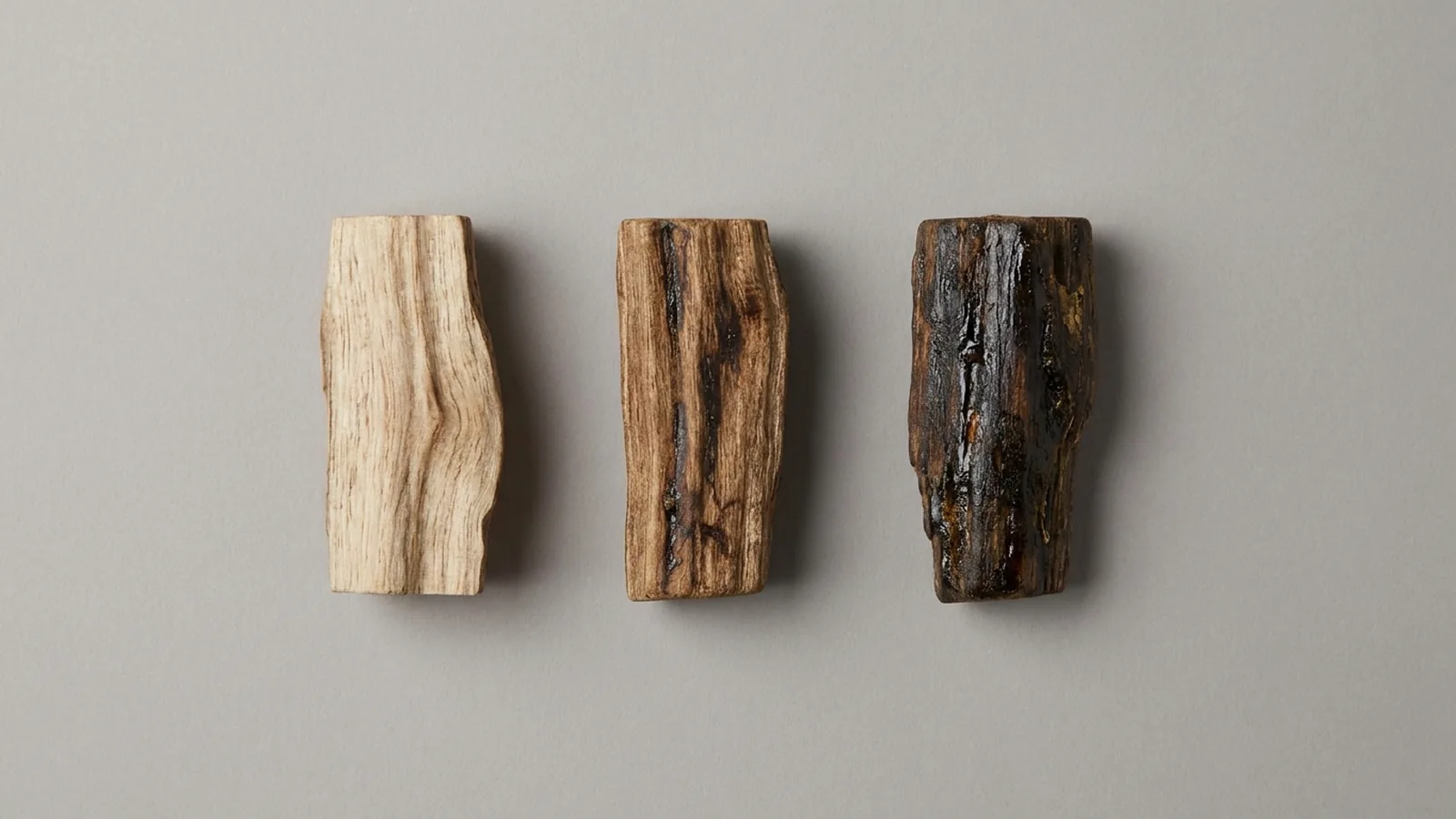
A distinct class, not the top rung of a ladder
The most common misunderstanding is that kyara is simply agarwood with more resin — the same material, further along a continuum. It is not, and the distinction matters practically rather than semantically.
Kyara is a distinct sensory class. It reads cool on the palate in a way no other grade does, a genuinely unusual quality in a material category otherwise characterised by warmth. It is bittersweet rather than sweet. And it carries a near-floral high note that simply does not appear in lower grades at any concentration or any price.
This is why a superb wild-band lot is not "almost kyara". It is a different thing that happens to be excellent. Practitioners who know the material identify genuine kynam within seconds and are not persuaded by very good substitutes. That is precisely why misrepresentation at this level is a short-term strategy.
The Japanese kōdō tradition, which developed the classification system, treats it this way explicitly. Kyara sits apart in the six-country-five-flavours framework rather than at the top of a linear scale.
Why the scarcity is real
Agarwood resin is a defensive response. The tree produces it after injury or infection [1]. That means agarwood is a pathology rather than a normal product of the plant. Plantation cultivation works by inducing that response deliberately — wounding or inoculating the tree and waiting.
Induction produces agarwood reliably [2]. It does not produce kynam. The specific conditions that yield kyara-grade material are not understood well enough to be reproduced on demand, despite substantial commercial motivation to figure it out. What is reproducible is the coarse effect: the treatment applied to a tree measurably shifts how much sesquiterpene it lays down [3], which is a long way from controlling which class of material results. Genuine kynam therefore comes from rare natural occurrence, and no amount of investment in plantation capacity changes the supply curve.
That is an unusual situation in luxury goods, where scarcity is more often a distribution decision than a physical constraint. It also has a practical consequence for buyers: any offer of kyara from a fixed price list at open-ended quantity should be treated sceptically, because that structure is inconsistent with how the material actually reaches market.
The documentation that makes a claim credible
No single document proves a grade. Together, a specific set of them converts an assertion into an audit trail. That trail is a meaningful part of what you are paying for at this price band.
GC-MS issued as standard rather than on request, confirming exceptional resin markers. A grading certificate tied to a specific batch or lot number. A sealed retention sample of that lot, held long enough to outlast your own claims window, available for independent testing. Chain of custody recorded from source lot to sealed container. And on distillate, tamper evidence — we wax-seal and photograph at dispatch.
Ask for all five. A supplier who has genuine kynam will supply them without friction because the documentation costs little relative to the value of the material and protects both parties. A supplier who becomes evasive at this question has answered it.
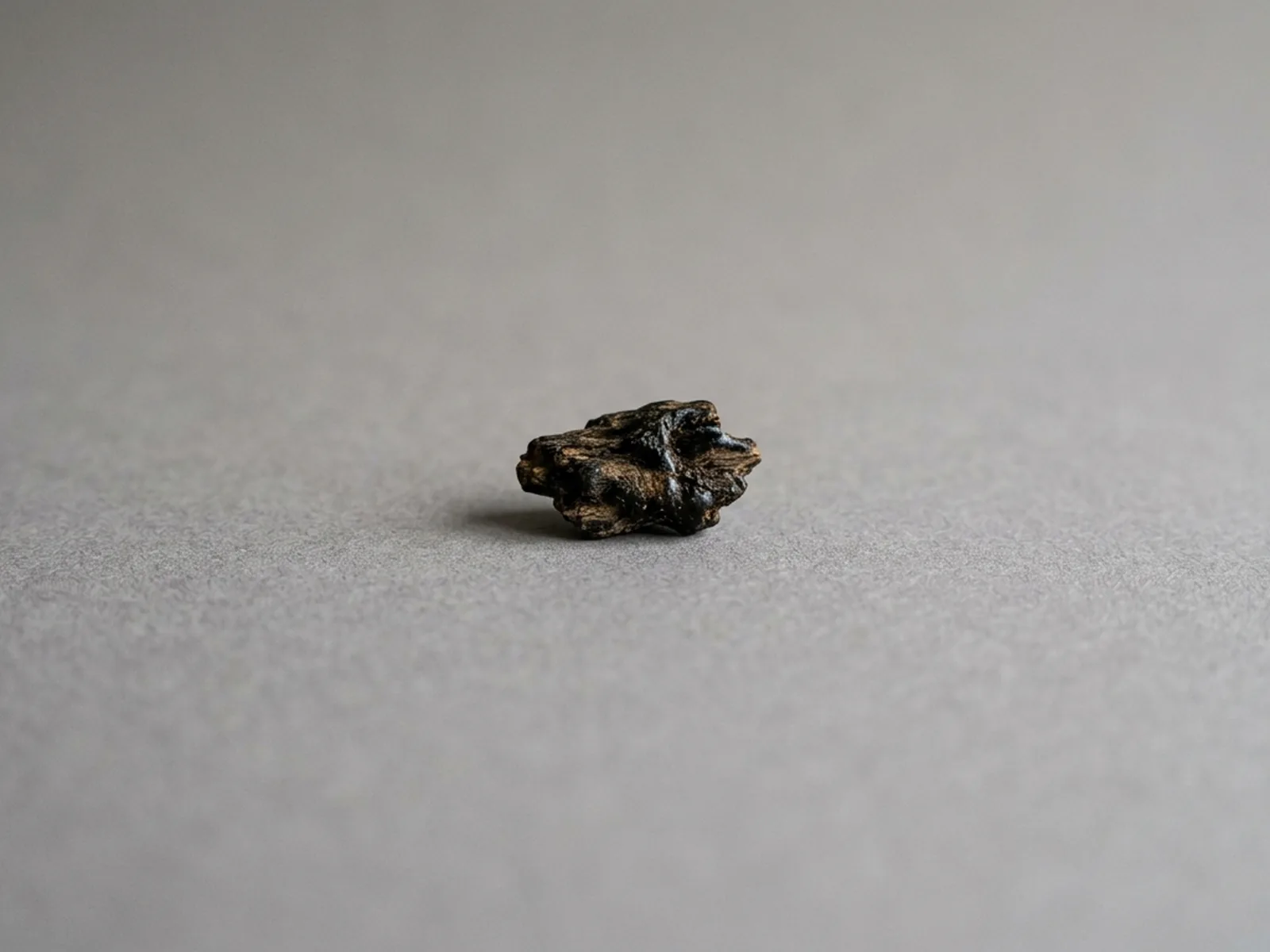
A documented object, not a stock line
How kyara is priced, and why it is never listed
First, our own position: we do not sell kyara. Everything we make is plantation Aquilaria, and kyara cannot be plantation-produced. So it is outside our range by definition rather than by choice. What follows is written so you can read a kyara offer from someone else properly. It is the grade we get asked about most, and the one most often misrepresented.
Kyara is allocated rather than stocked. A credible seller commits against current holdings and does not promise open-ended resupply, because nobody can honestly promise what they cannot reliably obtain.
Pricing tracks actual availability at the time of enquiry rather than sitting on a rate card. This frustrates buyers who want to plan, and the alternative — a fixed price that must be padded to cover supply uncertainty — is worse for everyone.
Lots should never be pooled. Blending two kynam lots averages away the specific character that makes an individual lot worth its price. It makes the grading documentation meaningless. What you approved from a sample should be what ships — get that in writing.
Kyara wood against high-grade plantation material
| Kyara wood | High-grade plantation agarwood | |
|---|---|---|
| Formation | Decades of undirected resin accumulation in a wild tree | Induced resination on a managed 8–15 year rotation |
| Supply | Single pieces, with no reorder | Repeatable against a retained reference sample |
| Documentation | Provenance chain and independent assessment | Batch number, certificate of analysis, sealed retention sample |
| Commercial role | One collector piece that anchors the range | The lines that carry your turnover |
Saturation against banding
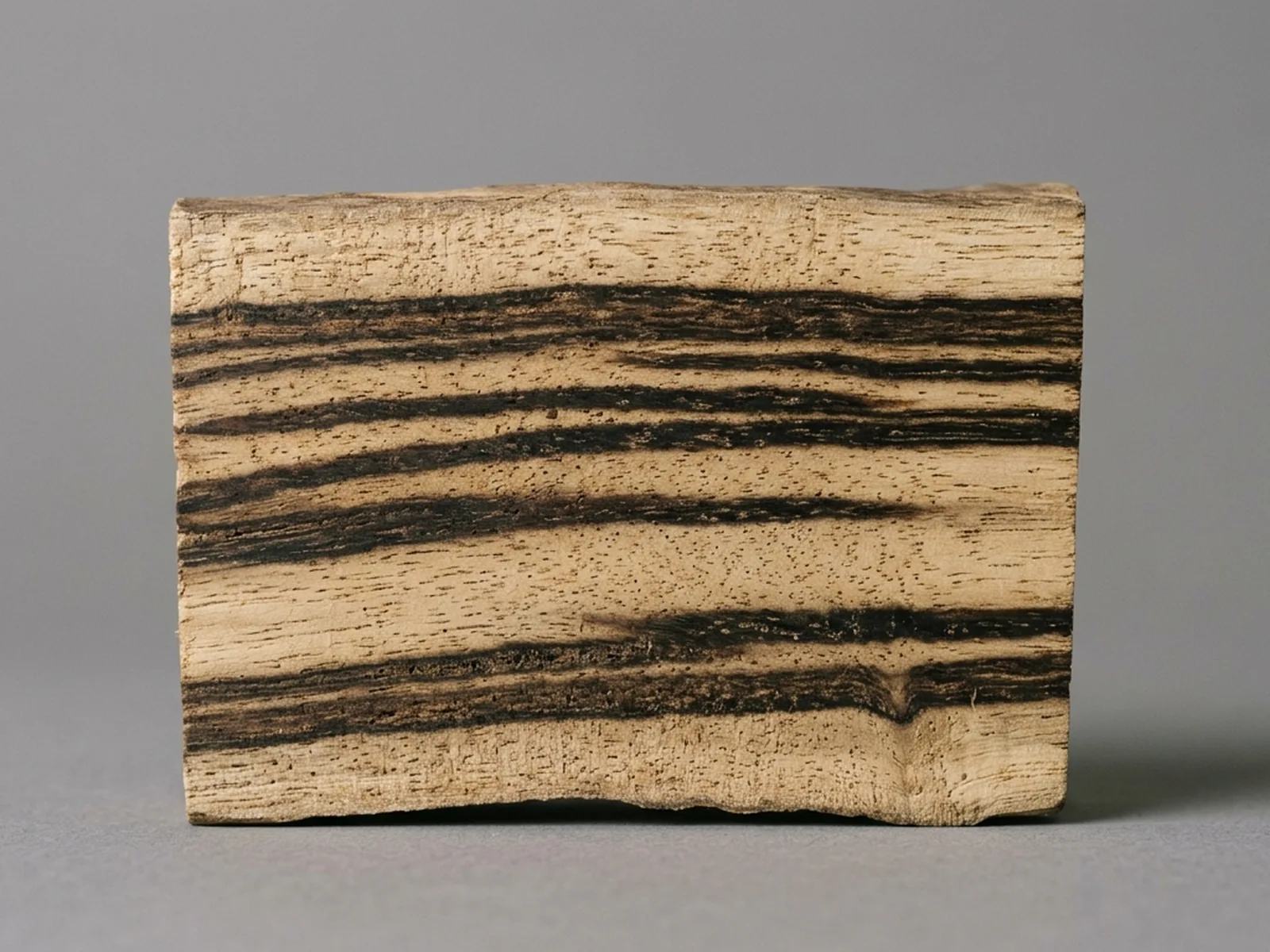 A
AHigh-grade plantation: banded, even, reproducible.
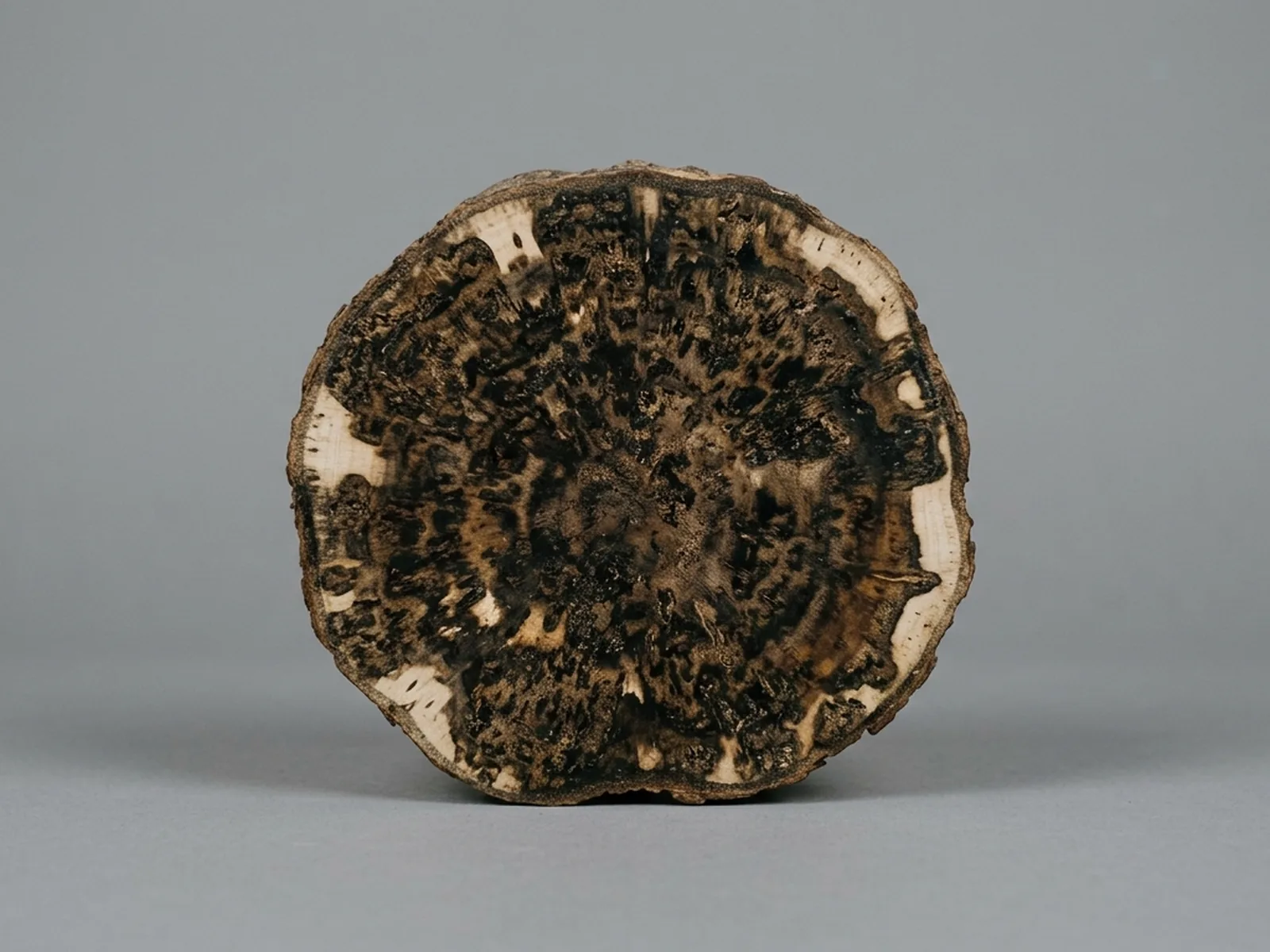 B
BKyara class: saturation rather than banding.
Positioning it: the tier, the vocabulary and the fixture
The commercial case for carrying one kyara SKU
Partly that it sells. Mostly that it makes the rest of your range legible. This second effect is worth more than the direct margin.
Consider a shelf that runs from an entry low-smoke box at one price, through a coreless premium in the middle, up to a documented kyara box at ten or twenty times the entry price. That structure tells a customer that grades mean something in this category, that your middle tier is a considered choice rather than the only thing available. And that you understand the material well enough to source at the top of it.
Now consider the same shelf without the top end. Every product on it looks like it might be the cheap one, because there is no reference point. Customers trade down in the absence of an anchor and trade up in the presence of one.
The practical implication is that a kyara SKU earns its place even at low unit volume, provided it is merchandised as the top of a coherent tier rather than as an isolated expensive object. Pairing it with a lidded koro censer rather than the entry-line ceramic plate holder reinforces the same signal.
Where kyara sits in the kōdō classification
The Japanese framework is worth understanding because it is the source of the terminology everyone in the trade borrows, usually without knowing where it came from.
Kōdō classifies agarwood by rikkoku gomi — six countries, five flavours. The six "countries" are traditional origin designations: kyara, rakoku, manaka, manaban, sumotara and sasora. Despite the name they function as material classifications rather than strict geographic ones, since the trade routes that produced the labels no longer map onto modern borders.
The five flavours are sweet, sour, hot, salty and bitter — a taste vocabulary applied to scent. That is itself telling about how the tradition understands the material. Kyara is characterised as carrying all five in balance, with bitterness as the distinguishing note. That is a useful practical handle: if a sample reads as straightforwardly sweet and deep, it is very good agarwood rather than kynam.
Two things follow for a buyer. First, the vocabulary gives you a more precise way to describe what you want than "high grade" — a supplier who knows the framework can respond to a request framed in it. Second, kyara sits within the classification as one of six categories rather than at the top of a scale. That is the structural reason it is a class apart rather than a rung.
You do not need to master this to buy well. Knowing it exists, and using its vocabulary when specifying, marks you out to a serious supplier as someone worth taking time over.
Merchandising a collector tier without cannibalising the range
A common mistake with a kyara SKU is placing it in the general assortment, where it reads as an inexplicably expensive box next to reasonable ones and makes customers suspicious of your pricing generally.
The tier needs to look like a tier. That means at least two products at the top rather than one — the kyara stick alongside a lidded koro censer, for instance, rather than the kyara stick next to the same ceramic plate holder that sits with your entry line. Two objects at a price point read as a considered range; one reads as an outlier.
It also means physical separation. A distinct shelf, a case, or a different surface. The signal you want is that this is a category with its own rules, not a premium version of the thing beside it.
Documentation should be visible rather than filed. The grading certificate displayed with the product does more selling than any descriptive copy, because it demonstrates that the claim is answerable. Customers at this price point have usually been burned before and respond to evidence far more than to adjectives.
Finally, train someone to talk about it. A collector SKU with nobody on the floor who can explain what kyara is will not sell, and worse, will make the whole tier look like decoration. One person who can describe the cool bittersweet signature and why it cannot be farmed is worth more than any point-of-sale material.
How to buy it for the first time
Buy the smallest paid sample of the exact lot from whoever is offering it — 1 g of powder or distillate, or a single box of sticks. Burn it properly: a quiet room, attention across the full arc, ideally alongside a reference sample you already trust for contrast.
What you are checking for is the cool bittersweet signature and the near-floral top. If it reads simply as very good agarwood — deeper, sweeter, more resinous than what you know — it is very good agarwood. And it may be excellent value at whatever it costs, but it is probably not kynam.
Then, if you proceed, confirm batch reservation. Approve a lot and have the balance held under your name while you arrange the order. On material this variable and this expensive, receiving a different lot than the one you evaluated is not a technicality.
Set your expectations about quantity before you start, because this is where first-time buyers lose money. You are not opening a supply line. You are buying a specific object, once, and there will be no second one like it.
Budget for a piece rather than for a programme, decide in advance what you will do when it sells rather than assuming you can replace it, and write the retail story around the fact that it is singular. A collector tier that quietly restocks is not a collector tier and your customers will work that out faster than you expect.
Two practical safeguards. Insist on receiving the piece before final payment clears, or on an escrow arrangement, because remote purchase at this value with no possibility of substitution is exactly the situation that attracts misdescription.
And photograph what arrives against the grading certificate on the day it arrives, with the lot number visible in the frame. Neither of these is an accusation. Both are simply the standard of care you would apply to any other single object at the same price, and nobody serious will be offended by them.
One further note on where the piece sits once it arrives. Do not put it in the same cabinet as the range it is meant to anchor.
A collector piece displayed alongside stock lines reads as the expensive end of a shelf rather than as a different category. That is precisely the impression the price cannot survive. Give it its own light, its own certificate on display, and its own conversation.
The tier below sells harder when the top of the range is visibly not part of it. Budget for the fixture at the same time as the piece, because a documented rarity sitting on a standard shelf quietly undoes most of what you paid for it.
Buying a first kyara lot
Set a budget you can lose
At this tier the first purchase is tuition. Anyone who tells you otherwise is selling.
Buy a documented piece, not a described one
Photographs and adjectives are not provenance. What you want is a specific piece with a record attached to that piece.
Smell it heated, not cold
Cold wood tells you very little at this level. The evaluation happens on a mica plate at controlled temperature, and it takes longer than a showroom visit allows.
Compare against high-grade plantation material at the same session
Without a reference in the room you are calibrating against memory. The gap is what you are paying for, so make yourself see it.
Keep a retained fragment of what you bought
It is how you check that a second purchase from the same seller is the same class of material.
References
- [1]Tan C.S., Isa N.M., Ismail I., Zainal Z.. Agarwood induction: current developments and future perspectives. Frontiers in Plant Science 10:122, 2019.
- [2]Liu Y., Chen H., Yang Y., Zhang Z., Wei J., Meng H., et al.. Whole-tree agarwood-inducing technique: an efficient novel technique for producing high-quality agarwood in cultivated Aquilaria sinensis trees. Molecules 18:3086–3106, 2013.
- [3]Van Thanh L., Van Do T., Son N.H., Sato T., Kozan O.. Impacts of biological, chemical and mechanical treatments on sesquiterpene content in stems of planted Aquilaria crassna trees. Agroforestry Systems 89:973–981, 2015.