What Is Oud Scent? Describing It Precisely Enough to Order Against
Every answer to this question is either too vague to order against or too specific to be true of more than one batch. Here is the version you can put on a specification.
Wang Jianyu
Founder & Chief Sourcing Officer
Twelve years exporting agarwood incense, powder and oud oil, working from plantation Aquilaria sinensis grown in Guangdong. Advises wholesale buyers in the Gulf, Europe and East Asia on grade selection, specification and the document set each destination needs.
The honest answer to what oud smells like is that it depends on which piece of wood you are holding, and that is not evasion. Agarwood is not a species scent the way sandalwood or cedar is. It is a wound response, and the profile you get out of it is a record of what happened to that particular tree.
That makes the question commercially awkward. A buyer asks what oud smells like because they are deciding whether to carry it, and the accurate answer sounds like a hedge. Meanwhile every supplier answers with the same six adjectives, which tells the buyer nothing and cannot be held to on a second order.
This article does something narrower and more useful. It explains what actually moves the profile. It describes what the arc across a burn sounds like when it is working. And it shows how to write a scent requirement a supplier can hit, and that you can reject if they miss.
Why the question has no single answer
Oud is a wound response, not a species smell
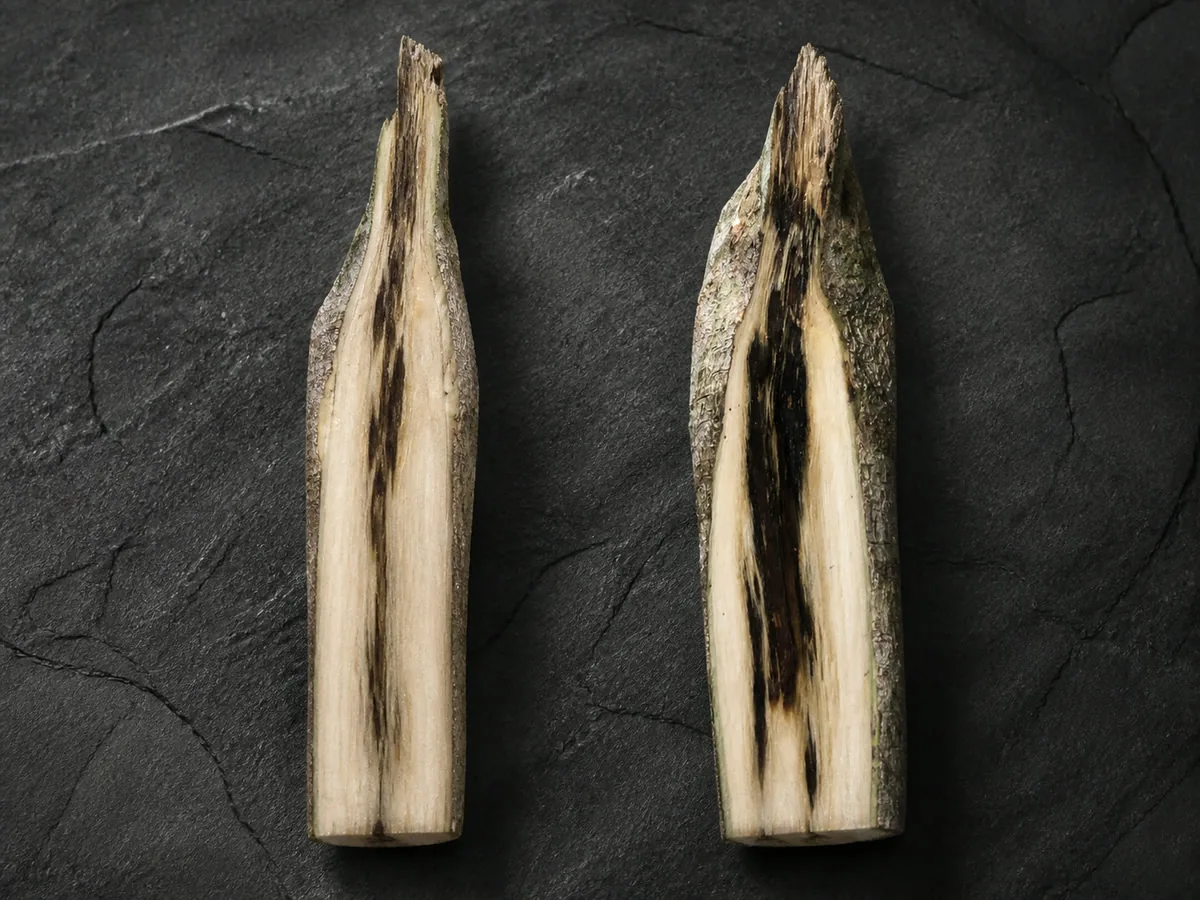
Aquilaria trees produce ordinary pale, light, almost odourless wood. Resin only forms where the tree is injured or infected, as a defence. The aromatic compounds people buy oud for are that defence deposit, not the wood itself. An uninjured Aquilaria is not weak oud; it is not oud at all.
The compounds involved are well characterised. The volatile and semi-volatile fraction of agarwood is dominated by sesquiterpenes and chromones [1]. What a nose reads as character comes from the ratios between them, not from the presence of any single marker.
Two consequences follow for a buyer. First, no two trees deposit the same mixture, so batch variation is the normal state of a genuine material rather than a sign of a sloppy supplier. Second, the variation is not random noise: it tracks specific, nameable things about the tree and the process, which is what makes it possible to specify at all.
The four variables that move the profile
| Variable | What it changes | How much it moves the profile |
|---|---|---|
| Resin density | How much aromatic material there is per gram of wood | The largest single factor. Low resin reads thin and woody however good the tree |
| How resination was induced | Which compounds the tree lays down, and in what ratio | Substantial. Different treatments measurably change sesquiterpene content |
| Species | The baseline character of the deposit | Real but smaller than buyers assume, and easily swamped by the two rows above |
| Process (burn, distil, extract) | Which compounds survive to reach the nose | Large, and the one you control. A soak and a cold extraction of the same wood are different products |
The arc: what a good oud does across a burn
Opening, middle and drydown
Described as a static thing, oud is a set of adjectives. Described as an arc, it becomes something you can check. A well-formed piece of agarwood moves through three recognisable phases when heated, and the movement is more diagnostic than any single moment in it.
The opening is resinous and slightly sharp, sometimes with a green or bitter edge in the first seconds as the lightest fraction goes first. The middle is where most of the character sits: warm, spiced, faintly sweet, with the woody body underneath it. The drydown is cooler and quieter, sweeter than the middle, and it should still be recognisably the same material rather than a different one.
This is why the trade evaluates on heat rather than on cold wood. Cold, a piece of agarwood tells you almost nothing beyond density and colour. The evaluation happens on a mica plate or an electric burner at a controlled temperature, and it takes longer than a showroom visit usually allows.
Why the final third is where suppliers get caught
On sticks in particular, the last part of the burn is where construction and blending shortcuts become audible. A bamboo core burns alongside the aromatic material. It contributes a dry, papery note that grows as the paste layer thins. So the drydown of a cored stick is partly the smell of burning skewer, not the material you bought.
The same window exposes fragrance oil. A blend that carries its aromatic load on added oil rather than resin opens loudly, then falls off a cliff. The oil has volatilised, and there is not much underneath it. Burn one stick and pay attention only to the last five minutes and you will learn more than an hour of discussion produces.
If you are evaluating incense rather than raw wood or oil, this is the single most useful test available to you, and it costs one stick.
Species, origin and how the tree was treated
What actually changes with species
Aquilaria sinensis, Aquilaria crassna and Aquilaria malaccensis are the three you will meet most often on documentation, and they do differ. But take two pieces of the same species at different resin densities. The gap between them is routinely larger than the gap between two species at the same density. That is why origin claims alone are a weak basis for a purchase decision.
Origin labels carry an additional problem: the traditional names in circulation are material classifications inherited from historic trade routes rather than modern geography. A supplier using them fluently may be describing a character rather than a place, and a supplier using them loosely may be describing nothing at all.
The practical test is to ask what the origin claim would change about the goods if it turned out to be wrong. If the answer is nothing you could detect, the claim is doing marketing work rather than technical work, and it should not carry a price premium on its own. Where origin genuinely matters is as a proxy for a supply chain you can audit. A named stand you can trace a lot back to is worth something. A country name on an invoice is worth very little.
What changes with how the tree was treated
This is the variable buyers most often miss, and it is measurable rather than folkloric. Biological, chemical and mechanical induction methods produce different sesquiterpene contents in the stems of planted trees [2]. Two lots from the same plantation and the same species can therefore sit meaningfully apart on profile, purely because they were induced differently.
For a plantation programme that is good news, because it is the part that can be held constant. Same stand, same induction method, same rotation age, same processing, and the profile becomes reproducible enough to match against a retained reference. That is the whole basis on which a continuing supply relationship works. It is also why we run everything on plantation Aquilaria from our own stands, rather than on collected material.
Resin is the part you are smelling
Distillation changes the scent more than buyers expect
Hydro-distilled against CO₂
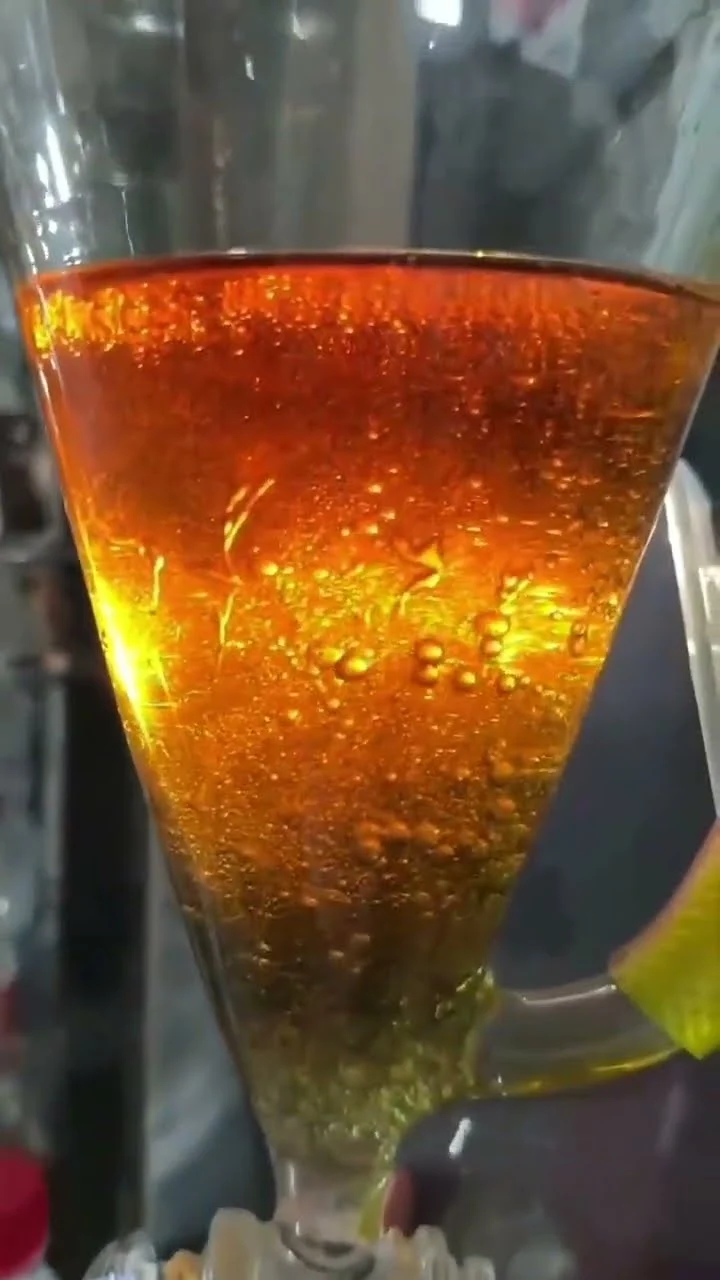
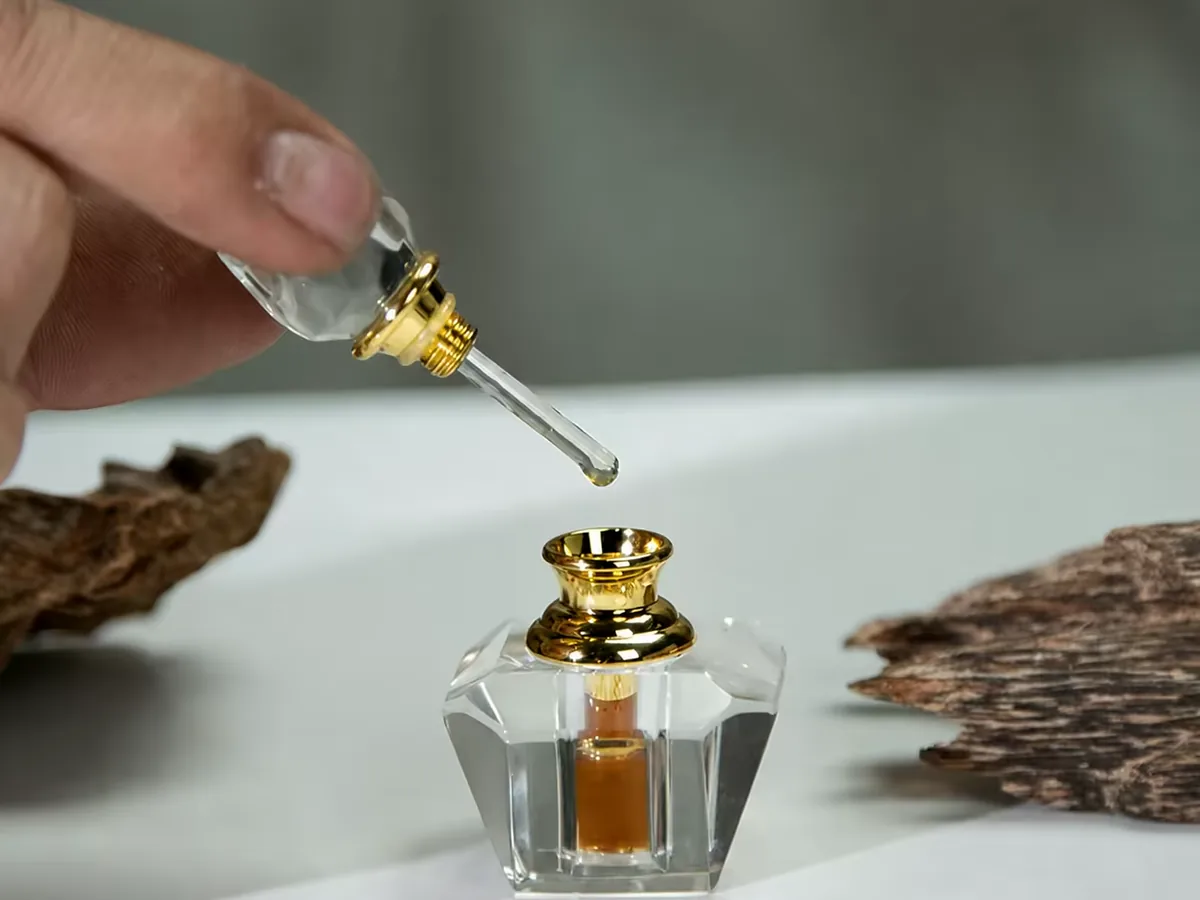
Two oils from identical wood can smell like different materials, and neither is adulterated. Traditional hydro-distillation begins with a soak of one to three weeks that ferments the wood. That soak produces the barnyard, animalic depth the Gulf market expects. The heat of distillation then destroys the lightest volatiles. The finished oil has weight but little top.
Supercritical CO₂ extraction runs cold and without a soak. The volatile top survives, the fermentation notes never form, and the result reads brighter, cleaner and closer to the smell of the wood itself. Buyers accustomed to dehn al oud sometimes conclude a CO₂ extract must be synthetic on that basis. It is not; it is a different process applied to the same material.
Which one you want is a market question rather than a quality one. Buying the wrong process for your application is a far more common and more expensive mistake than buying an adulterated oil.
It also decides what you can honestly say on a label. An oil that never went through a soak cannot be described as dehn al oud, however good it is. A buyer selling it as such will be corrected by the first customer who knows the difference. Match the process to the claim you intend to make, and settle that before the sample stage rather than after the artwork is printed.
Where in the process each note is made or lost
Sorting by resin density
Everything downstream is bounded by this. Low-resin material cannot be distilled into a rich oil; it can only be distilled into less oil.
Soak, or no soak
One to three weeks of fermentation creates the animalic depth. Skip it and that character never exists in the batch, whatever you do later.
Heat during extraction
Hydro-distillation destroys the lightest fraction. That is the trade for the depth the soak produced, and it is not recoverable afterwards.
Cut points on the run
Where the operator starts and stops collecting decides how much of the sharp opening and the heavy tail end up in the bottle. Two operators, same still, different oil.
Rest before bottling
A freshly run oil is rougher than the same oil a few months later. Ask for the distillation date rather than for the word aged.
How to describe a scent so a supplier can hit it
The words that do not survive translation
Rich, deep, premium, high quality and authentic are the five most common words in agarwood enquiries and none of them constrains anything. They cannot be tested against a delivered batch. That means they cannot be the basis of a rejection. Which means they are not part of the specification, even when they appear on it.
Sensory vocabulary that does work is comparative and structural. Which of the three phases you want emphasised. Whether you want the fermented character or not. How sharp an opening your customer tolerates, and what the drydown has to still be doing at the end. Those are all things a supplier can act on and a batch can fail.
The Japanese kōdō framework gives a more precise vocabulary than most buyers realise, describing incense in terms of five tastes rather than adjectives. You do not need to master it, but a request framed with any structural vocabulary at all marks you out as someone worth taking time over.
The reference-sample method
The only scent specification that reliably holds is a physical one. Send the supplier a sealed sample of the profile you want, ask them to match it, and ask what they retain as their own reference once you approve a batch.
Then ask the question that separates a described process from a real one: what happens to a production run that no longer matches that reference. If the answer is that it ships anyway, the reference is decorative. If the answer is that it gets held, reworked or sold as something else, you are dealing with a supplier whose second batch will smell like the first.
Analytical testing supports this rather than replacing it. Gas chromatography paired with mass spectrometry is the method the published work on agarwood oil quality is built on [3]. A profile tied to your batch number turns a sensory judgement into evidence. Two parties can then argue about the same thing.
Evaluating a sample properly
Setting, timing and what to write down
A quiet room, one sample at a time, and a controlled heat source. Evaluating two ouds side by side tells you they differ but not which is better, because the second one is always read against the first. If you must compare, leave a gap and re-baseline your nose between them.
Record the three phases separately with timings, and record the ambient conditions, because humidity moves how a stick burns and therefore how it reads. A note that says warm and sweet is worth nothing in three months. Write the arc instead: sharp for the first minute, spiced and sweet from four to twelve, cooler and still sweet at the end, at 24 degrees and moderate humidity. That is something you can hold a future batch against.
Keep a sealed retained sample of anything you approve. Suppliers keep retention samples to protect themselves; keeping your own means a disagreement has evidence on both sides rather than one.
Store the retained sample the way the goods will actually be stored, not in ideal conditions. A reference kept in a sealed jar in an air-conditioned office drifts. A product sitting in a humid warehouse drifts differently. When the two stop matching, you cannot tell whether the batch changed or your reference did. Date it, label it with the batch number, and replace it when you approve a new profile rather than accumulating a shelf of undated jars.
What to do when the second batch smells different
First establish whether it is different or merely later. Storage moves a material: incense picks up moisture in a humid warehouse and burns differently, and an oil continues to change in the bottle. Compare against your retained sample from the same period rather than against your memory of the first shipment.
If it is genuinely different, ask what changed upstream rather than whether it changed. Source lot, induction batch, distillation run, blend ratio and drying schedule are all answerable questions. A supplier who can answer them is running a process, not buying whatever is available that month.
Sometimes the honest answer is that the source lot moved. The useful supplier tells you that before shipping, rather than waiting to see whether you notice.
References
- [1]Naef R.. The volatile and semi-volatile constituents of agarwood, the infected heartwood of Aquilaria species: a review. Flavour and Fragrance Journal 26:73–87, 2011.
- [2]Van Thanh L., Van Do T., Son N.H., Sato T., Kozan O.. Impacts of biological, chemical and mechanical treatments on sesquiterpene content in stems of planted Aquilaria crassna trees. Agroforestry Systems 89:973–981, 2015.
- [3]Ismail N., Ali N.A.M., Jamil M., Rahiman M.H.F., Tajuddin S.N., Taib M.N.. A review study of agarwood oil and its quality analysis. Jurnal Teknologi 68, 2014.