Importing Incense Sticks: HS Codes, Declaration Wording and Why Shipments Get Held
Most held agarwood shipments are not held because of the agarwood. They are held because a material declaration did not match the goods.
Wang Jianyu
Founder & Chief Sourcing Officer
Twelve years exporting agarwood incense, powder and oud oil, working from plantation Aquilaria sinensis grown in Guangdong. Advises wholesale buyers in the Gulf, Europe and East Asia on grade selection, specification and the document set each destination needs.
Most buyers arrive at their first agarwood order worrying about permits. Permits are a real constraint, and your customs broker is the right person to tell you which ones your route needs. But in our experience they are not what holds containers.
What holds containers is far more mundane, and it is entirely within your control: a commercial invoice that describes the goods too generically, which leads a customs officer with no context to reclassify the consignment as a chemical preparation. The container then sits while demurrage accrues and both parties scramble to assemble paperwork retroactively.
This article covers the specific declaration language that prevents the most common reclassification, the sequencing that keeps documentation ahead of the goods rather than behind them, and the destination-specific requirements that catch first-time importers.
What customs is deciding, and what the pack has to prove
What customs is actually deciding
Agarwood-producing Aquilaria species are listed on Appendix II of CITES, the Convention on International Trade in Endangered Species [1]. Appendix II covers species that are not necessarily threatened with extinction now but may become so unless trade is controlled. Trade is permitted, but it requires an export permit issued by the management authority of the exporting country. That permit must be presented at the point of import.
Three practical consequences follow. First, the permit is issued against a specific consignment — quantity, species, and destination — so it cannot be reused or issued generically in advance for an open volume. Second, it takes time to obtain, which is why we run permit applications in parallel with production rather than after it.
Third, the species must be stated correctly: Aquilaria sinensis, Aquilaria crassna and Aquilaria malaccensis are the three you will most commonly see on our documentation. And they are not interchangeable on a permit.
A point worth understanding: cultivation does not change what the goods are in the eyes of customs. What it does is make the source lot traceable. That makes any paperwork request straightforward and makes the consignment less likely to attract secondary scrutiny at the border. That difference in friction is one of the practical arguments for building a volume programme on plantation Aquilaria rather than wild-band material.
The standard documentation pack
What travels with every consignment regardless of route is the commercial invoice and the packing list. On our shipments those are accompanied by a certificate of analysis for the batch, and by a safety data sheet on oils. Which permits and government-issued certificates your particular import route additionally requires differs by destination country and by product form — settle that with your broker before you book freight, not while a container is sitting at a port.
For agarwood essential oil, add three more: a GC-MS profile tied to the batch number, a certificate of analysis, and an MSDS. Oils attract more scrutiny than finished goods because value density is high and because the material cannot be identified visually.
For electric burners and any other powered hardware, add a CE declaration of conformity and a RoHS declaration, each backed by the underlying test reports. This matters more than most buyers realise, because for goods entering the EU or the UK the regulatory liability sits with the importer rather than with the manufacturer. If a supplier cannot produce the test reports on request, the certification effectively does not exist — and the exposure is yours, not theirs.
For EU and UK destinations on oils, you may also need an IFRA statement and an allergen declaration depending on the end application. Tell your supplier the destination and the intended use at enquiry stage and this gets confirmed before you order rather than discovered at the port.
The pack travels with the goods, not behind them
The documentation pack at a glance
| Document | Issued by | Lead time | If it is missing or wrong |
|---|---|---|---|
| Commercial invoice | Us, per shipment | With dispatch | The binder is unnamed, so the declaration no longer matches the goods |
| Packing list | Us, per shipment | With dispatch | The physical count cannot be reconciled and the container is opened |
| Certificate of analysis | Us, per batch | With dispatch | You have no batch-level evidence when a query is raised |
| Safety data sheet | Us, per product | On request, 3 days | Oil is treated as an unclassified flammable and held pending review |
| Certificate of origin | Your side, via chamber or FTA | 5–10 days | Preferential duty is lost and the full rate applies |
The two lines that decide the outcome
Why the binder declaration is the single most important line
Here is the specific failure we see most often, and it has nothing to do with permits. An invoice describes the goods as "incense sticks, 500 boxes". A customs officer, reasonably, asks what holds the stick together. Nothing on the paperwork answers that. The conservative assumption is a synthetic adhesive, which changes the tariff classification and can trigger a chemical-goods inspection regime the shipment was never prepared for.
Natural makko is powdered bark from the Machilus thunbergii tree. It is a plant material, it is both adhesive and clean-burning fuel. It is entirely unremarkable — but only if someone says so. Naming it explicitly on the commercial invoice costs nothing and removes the ambiguity that drives the reclassification.
Our invoices state the species, the binder by botanical name, the binder percentage, and an explicit negative declaration that the product contains no charcoal, no saltpetre and no synthetic accelerant. That last part sounds excessive until the first time a shipment clears in two days instead of three weeks.
The same logic applies across the range. Powder invoices state mesh grade and whether the material is pure or pre-blended. Oil invoices state extraction method. Anywhere an officer would otherwise have to guess, the paperwork answers first.
Sequencing: documentation before dispatch, not after a query
The practical difference between a routine clearance and an expensive one is almost entirely a matter of timing rather than content. The same documents assembled two weeks earlier produce an entirely different outcome.
The sequence that works: permits applied for in parallel with production, so documentation time overlaps manufacturing time rather than adding to it. The complete pack finished before the goods physically move. Copies sent to your customs broker ahead of arrival, unprompted. So the broker is preparing an entry rather than responding to a hold.
The sequence that fails: goods ship, documentation follows, a query arrives, and everyone begins assembling paperwork against a container that is already accruing demurrage. Producing documentation retroactively routinely takes weeks, and the demurrage runs the entire time. We have seen the storage cost on a held consignment exceed the freight cost several times over. That is a remarkable amount of money to spend on a sequencing error.
If you take one operational change from this article, make it this: ask your supplier to send the document pack to your broker at the point of dispatch as standard practice, not on request. We do it by default. Many suppliers will if asked and never volunteer it.
Where it goes wrong, and what that costs
Destination-specific traps
The United States can require filings tied to a designated port of entry for plant-derived material. Confirm this with your broker before shipping rather than after, because the wrong port of entry is not something that can be corrected once the vessel has sailed.
Japan views plantation source documentation favourably and it is worth including even where not strictly required. It costs nothing to provide and it positions the consignment as low-risk. Japanese buyers themselves often ask for it independently of customs.
Several Southeast Asian states are themselves agarwood producer countries. That means their authorities know the material well and scrutinise origin claims closely. A vague provenance statement that passes elsewhere will be questioned there. Document the origin properly or do not claim it.
The EU and UK add the importer-liability dimension on any powered goods, as covered above, plus potential IFRA and allergen requirements on oils. Australia and New Zealand apply strict biosecurity rules to plant material, and inspection requirements there are heavier than almost anywhere else — worth confirming with your broker early rather than late.
What a held container actually costs
It is worth putting numbers on this, because the abstraction "documentation delays" does not convey the scale and buyers consistently under-budget for it.
A held container accrues demurrage from the moment free time expires — typically 3–7 days at most ports, sometimes less. Rates escalate in tiers, so the daily cost on day fifteen is substantially higher than on day five. Add detention charges if the container itself is held beyond its allowance, plus storage if the goods are moved to a bonded warehouse, plus your broker's time on an exception file rather than a routine entry.
Against that, consider the alternative. A consignment where the invoice names the species and binder, where the permit was applied for during production, and where your broker received the pack before the vessel arrived, clears on the normal timeline. The incremental cost of doing all three is a few hours of administrative attention spread across a production cycle.
The asymmetry is the point. Getting documentation right is cheap and boring. Getting it wrong is expensive in a way that scales with how long it takes to notice.
There is a second-order cost that buyers forget: the retail consequence. A shipment intended for a Ramadan or year-end window that clears three weeks late has missed its season entirely. The goods sit in your warehouse for eleven months. That loss dwarfs the demurrage.
A worked example: what the invoice line should say
Abstract advice about "explicit declarations" is easy to nod along with and hard to act on, so here is the concrete difference.
What causes problems: "Incense sticks — 500 boxes — HS 3307.41". Accurate, incomplete, and it leaves every material question unanswered.
What clears: "Agarwood incense sticks (Aquilaria sinensis, plantation-cultivated), natural makko binder (Machilus thunbergii bark powder, 20%), bamboo core. Contains no charcoal, no saltpetre, no synthetic accelerant, no added fragrance oil. 500 boxes × 40 sticks. HS 3307.41. Batch no. [number]."
Every clause in the second version answers a question an officer would otherwise have to resolve by assumption. The species is named, so it matches whatever permit travels with the consignment. The binder is identified by botanical name so it reads as plant material rather than an unspecified adhesive. The negative declarations pre-empt the chemical-classification path. The permit number ties the paperwork together.
For powder, add mesh grade and whether the material is pure or pre-blended. For oil, add extraction method and, where applicable, that the product is a natural distillate rather than a preparation. For hardware, state materials and voltage.
None of this is difficult. It is simply a matter of deciding that the invoice is a compliance document rather than a billing formality.
Same goods, different outcome
 A
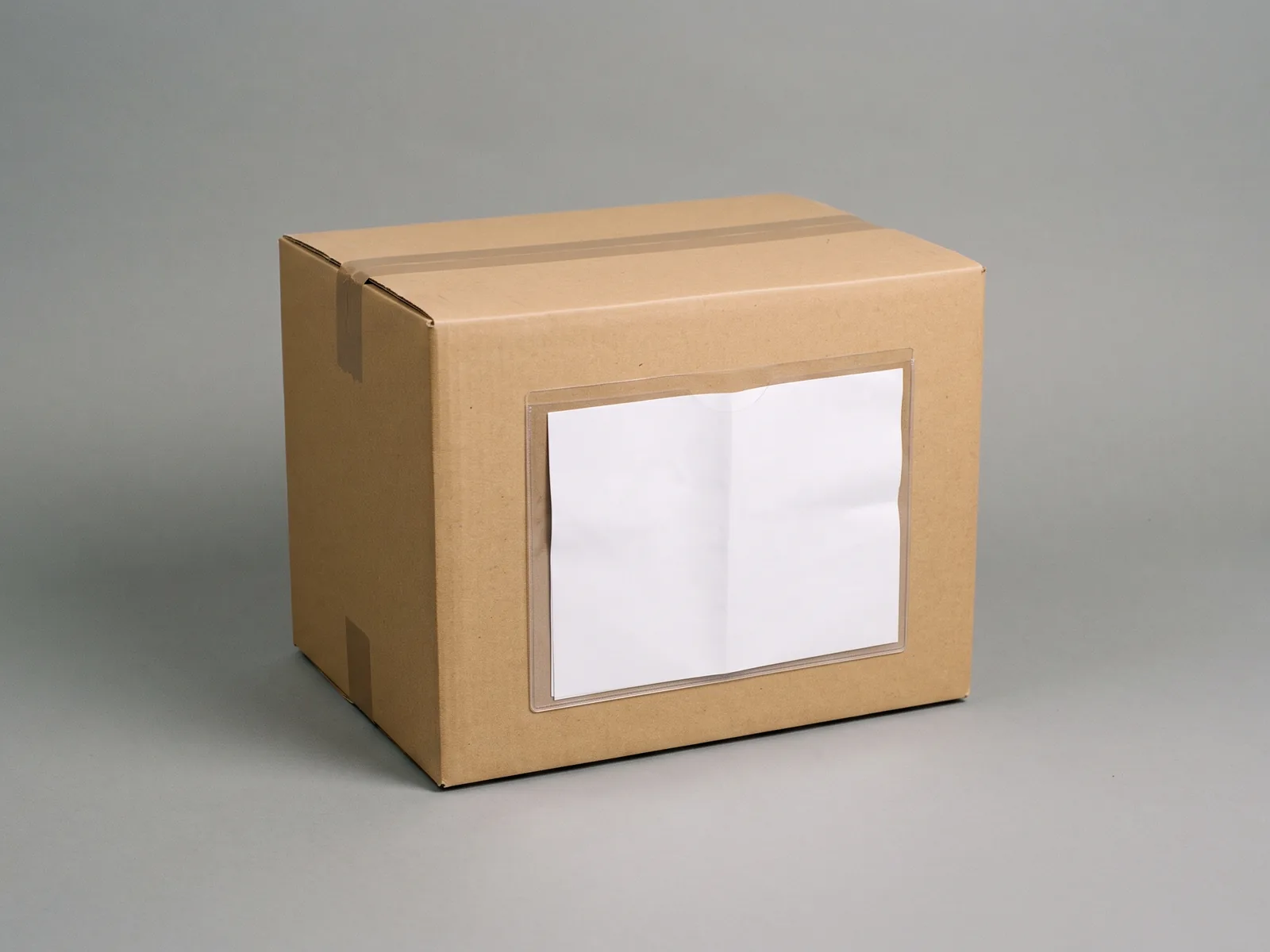
ACarton leaves with its pack attached.
 B
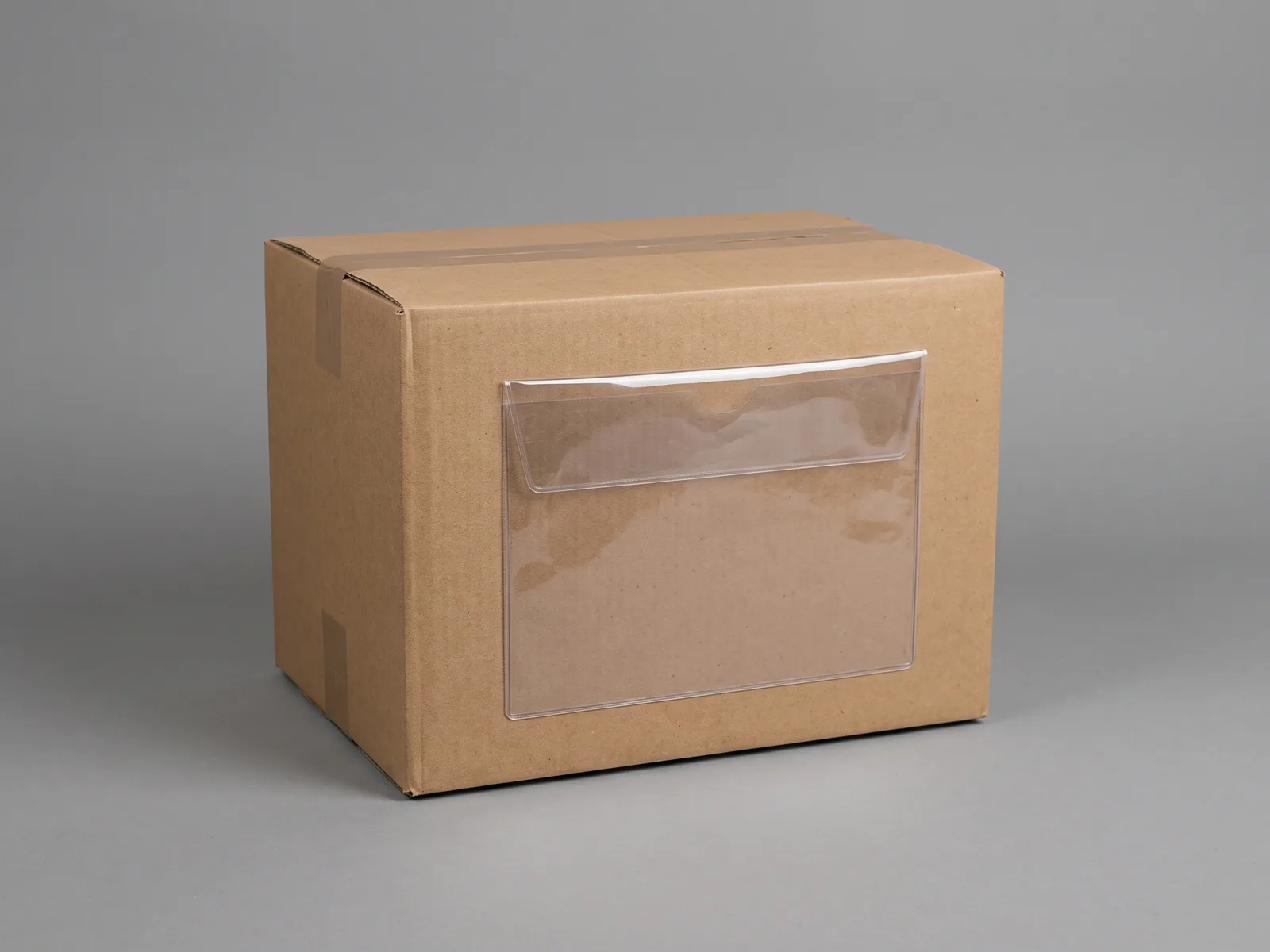
BSame goods, empty wallet.
Working with your supplier and your broker
What to ask a supplier before you order
Four questions, and the answers tell you a great deal about whether the supplier has actually shipped to your market before.
First: what exactly is on the commercial invoice? If the answer is a generic product description, you have found your future problem. Second: when do the permits get applied for — before or after production? Third: will documentation go to my broker before arrival as standard? Fourth: what is the exact document set for my destination country and port?
A supplier who can answer the fourth question specifically has shipped there. A supplier who answers it generically has not. That is not disqualifying but does mean you should budget more of your own attention to the clearance.
The declaration sequence, in order
Fix the material description first
Everything downstream copies this line. Agree the exact wording — species, form, binder — with your supplier before anything is printed, because correcting it after the invoice exists means reissuing the whole pack.
Match the HS code to that description
The code follows the goods, not the other way round. A code chosen first and a description written to fit it is the most common way a shipment ends up misdeclared.
Confirm destination-specific requirements
Ask your own broker, not only the supplier. Requirements attach to the importing country and the supplier has no visibility of what your customs authority asked for last month.
Have the supplier issue the pack against the approved wording
Invoice, packing list and safety data sheet must repeat the same description verbatim. Three documents that paraphrase each other is the second most common hold.
Check the pack before the container is sealed
A discrepancy found on the dock costs an afternoon. The same discrepancy found at the destination port costs demurrage and, on agarwood, an inspection queue.
A note on what documentation cannot fix
Documentation makes lawful trade smooth. It does not make unlawful trade lawful, and it is worth being direct about the boundary.
Wild Aquilaria populations are under genuine pressure, which is why the genus is internationally protected at all [2]. Material sourced outside permitted channels cannot be documented into legitimacy [3]. A supplier who is casual about this is telling you something about the rest of their operation. We took the simplest route out of that risk: we do not handle wild-collected material at all. Every lot we ship is plantation Aquilaria from our own stands, and the permit says so.
The commercial argument aligns with the ethical one here. That is convenient but also true: a properly documented plantation supply chain is the version of this business that still exists in fifty years. And it is also the version that clears customs on schedule.
References
- [1]CITES Secretariat. Appendix II listing of Aquilaria spp. and Gyrinops spp. (CoP13, in force 12 January 2005). Convention on International Trade in Endangered Species of Wild Fauna and Flora, 2005.
- [2]Barden A., Anak N.A., Mulliken T., Song M.. Heart of the Matter: Agarwood Use and Trade and CITES Implementation for Aquilaria malaccensis. TRAFFIC International, Cambridge, 2000.
- [3]Chakrabarty K., Kumar A., Menon V.. Trade in Agarwood. TRAFFIC India / WWF-India, New Delhi, 1994.